S-NODES
A critical exploration into the present and future of solar energy technologies
This is a key project that has helped me develop a unique approach to speculative design driven industrial innovation. In this project from my masters diploma project at AHO, I was looking to build on a project that would answer how Industrial Design would actually address the issues of climate change integrating foresight strategies, systemic design and industrial design to develop industry pathways beyond the usual new shiny gadget with a million ecological issues. In many ways this project has laid the foundations for my design research practise which I have developed further in my PhD and Postdoc.
With this project, I wanted to explore life in a world completely transformed by climate change that goes beyond the naive techno-utopia and the paralysing dystopian collapse scenarios. I wanted to ask what would the future of renewable energy look like? With this project I wanted to explore and bring together climate issues, systems thinking, speculative fiction and industrial design through both process and artefact-making and unpack the most taken for granted hero of renewable energy—solar cells. In a way this was to test the taken-for-granted incumbent technologies and use design fictions to speculate on better alternatives for solar futures. I was not interested in being a materials scientist, but a designer making material change today. It was a tall order to expect from a project like this. Nevertheless, the project made two product concepts, one informed by future foresight strategies in the far future of 2075 where I could ‘time-travel’ through speculative design fiction and then used that concept space to backcast a more feasible product concept to the present. I proposed a final concept, a 3D printed optical solar cell is a manifestation of that future transposed back to the present, as a potential alternative to existing sheet solar cells.
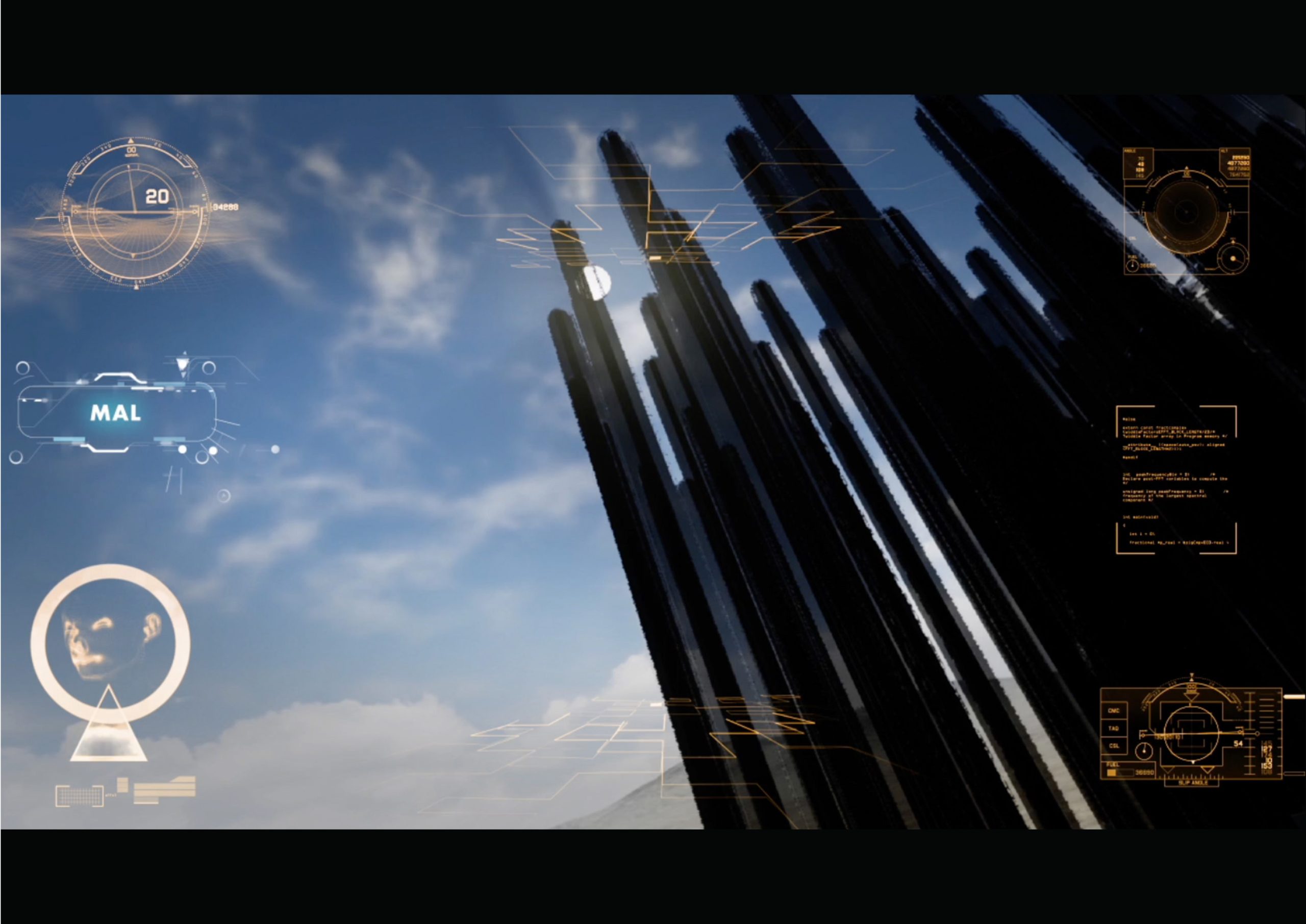
Video: Concept film "Blockchain Radioactive" showing a design fiction exploring the future of renewables energy in a post nuclear soils of Chernobyl in 2075.
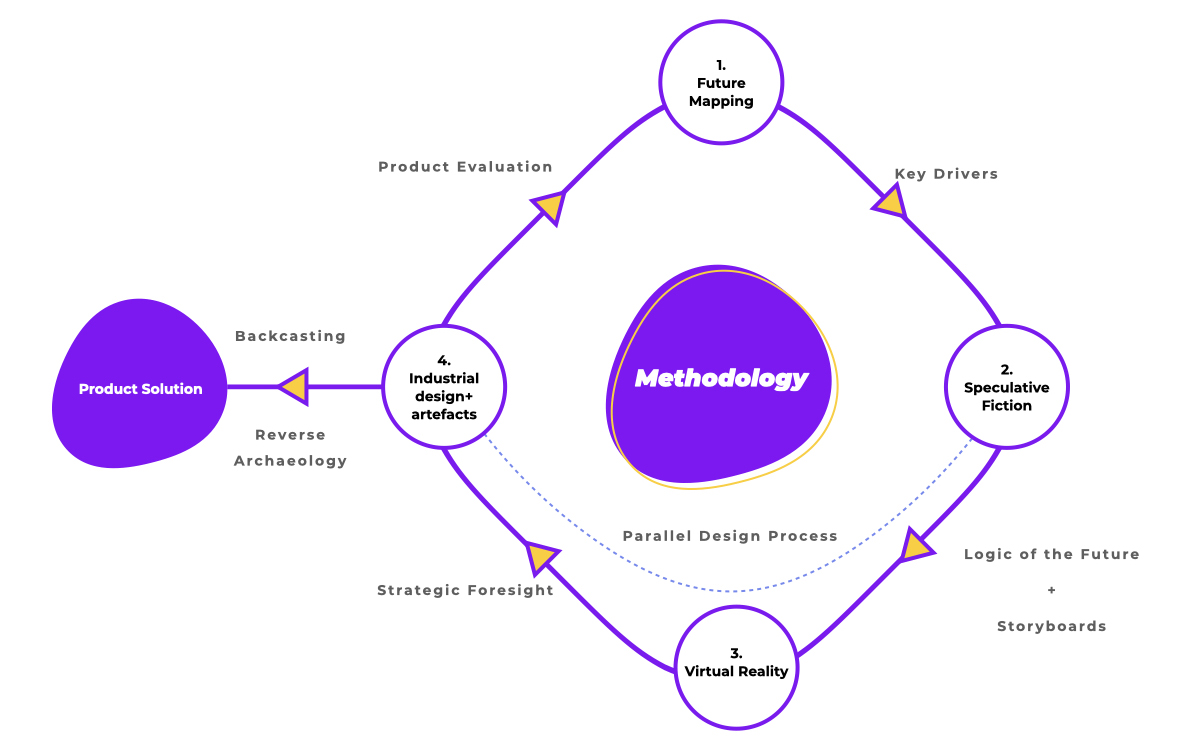
Design Futures Framework
This project was an ambitious exploration on many fronts, not the least was its systematic interdisciplinary integration of systems oriented design (SOD), future studies, speculative fiction and industrial design prototyping and practise. As you can see in the figutre this work was both developing future scenarios and strategy work using speculative fiction, VR, concept film-making and then backcasting it to develop industrial design concept prototypes.
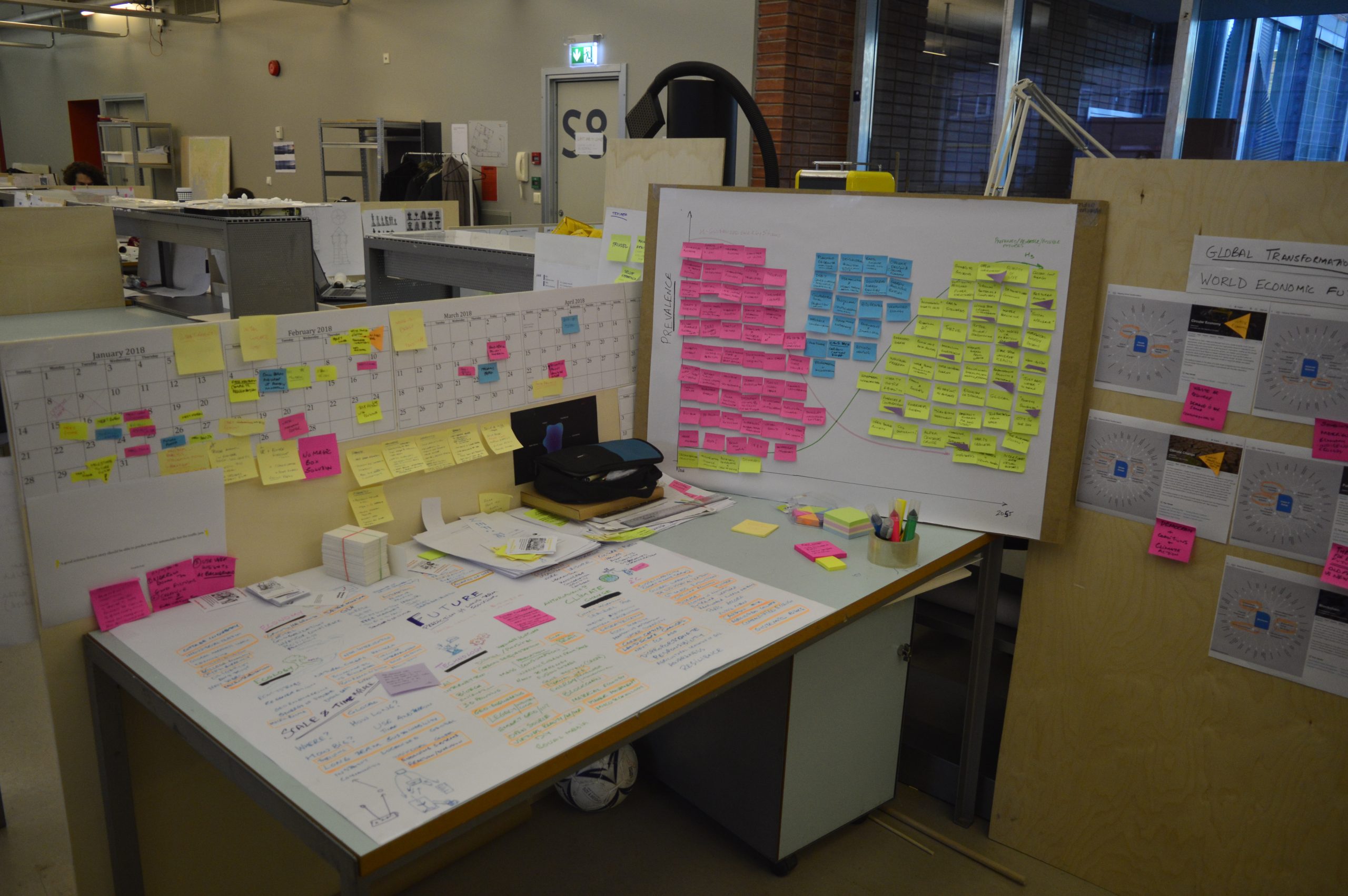
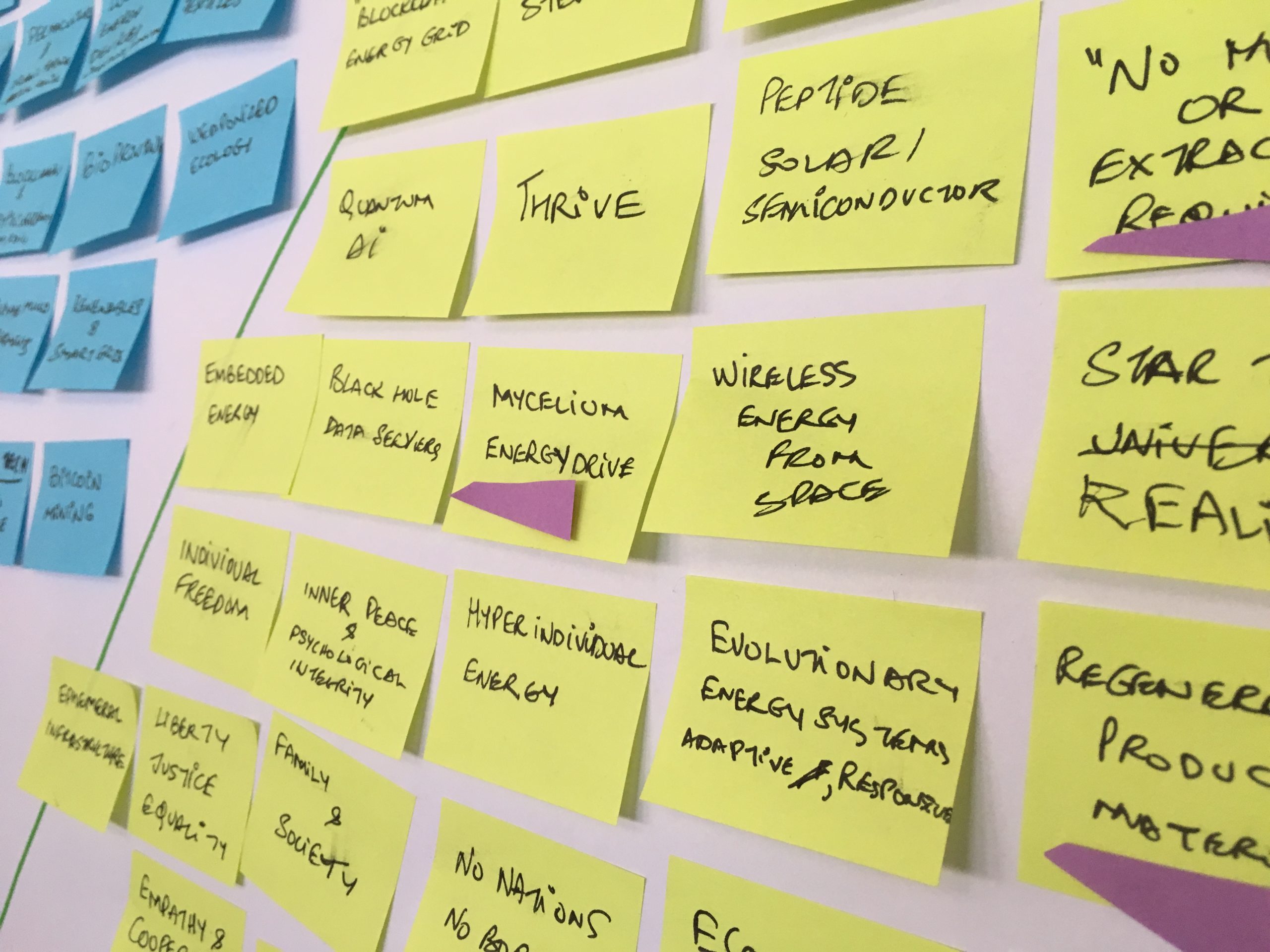
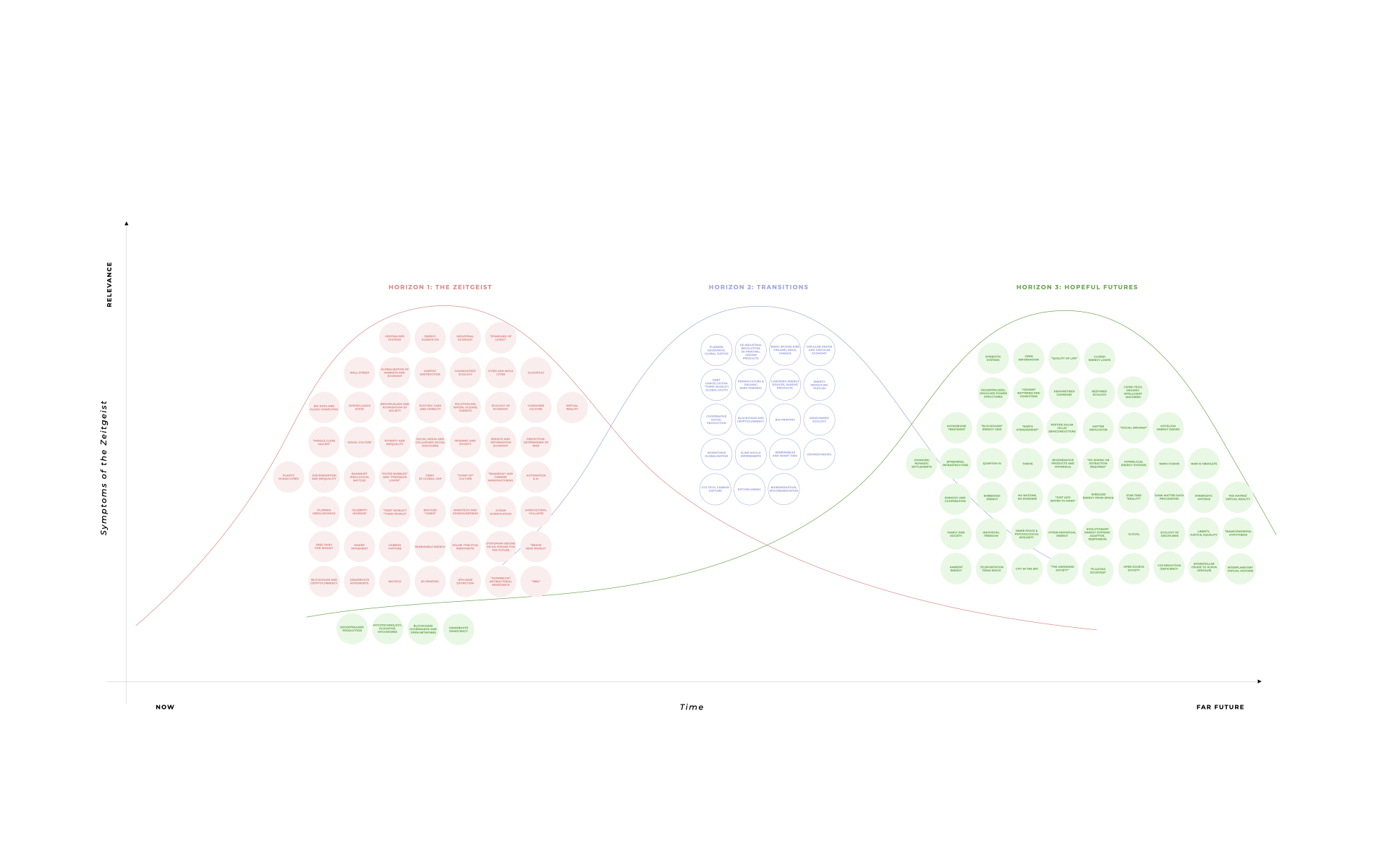
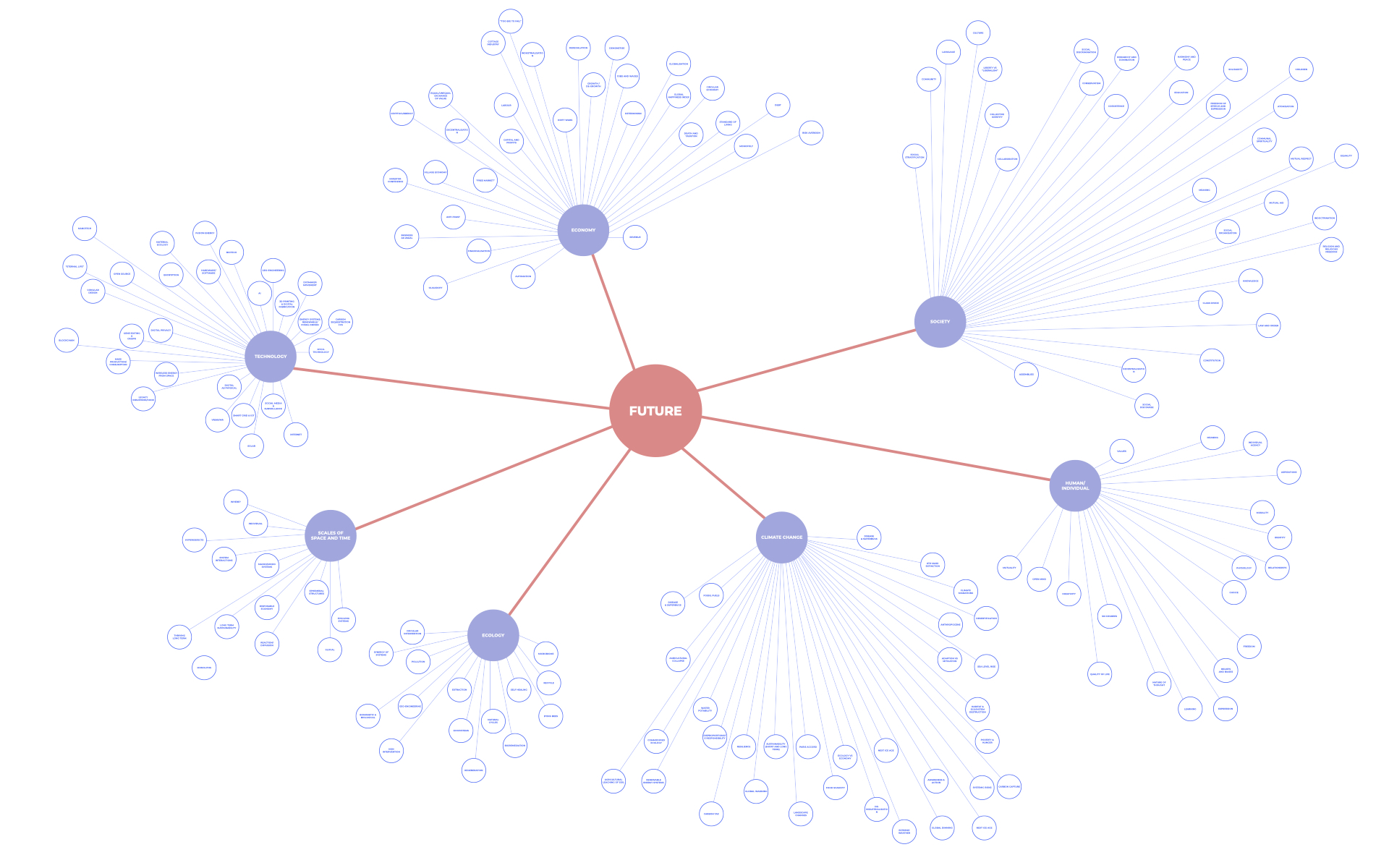
Systems Mapping & 3 Horizons
I mapped out the complex relations of renewables using gigamapping and three horizons framework scouring through WEF reports, climate and policy documents, and academic research papers. I used this gigamapping and horizons framework to map out for myself the complexity of the climate adapation and renewable ecosystem across the world. These were important inputs for developing leverage points for both foresight practises but also for the product strategy.
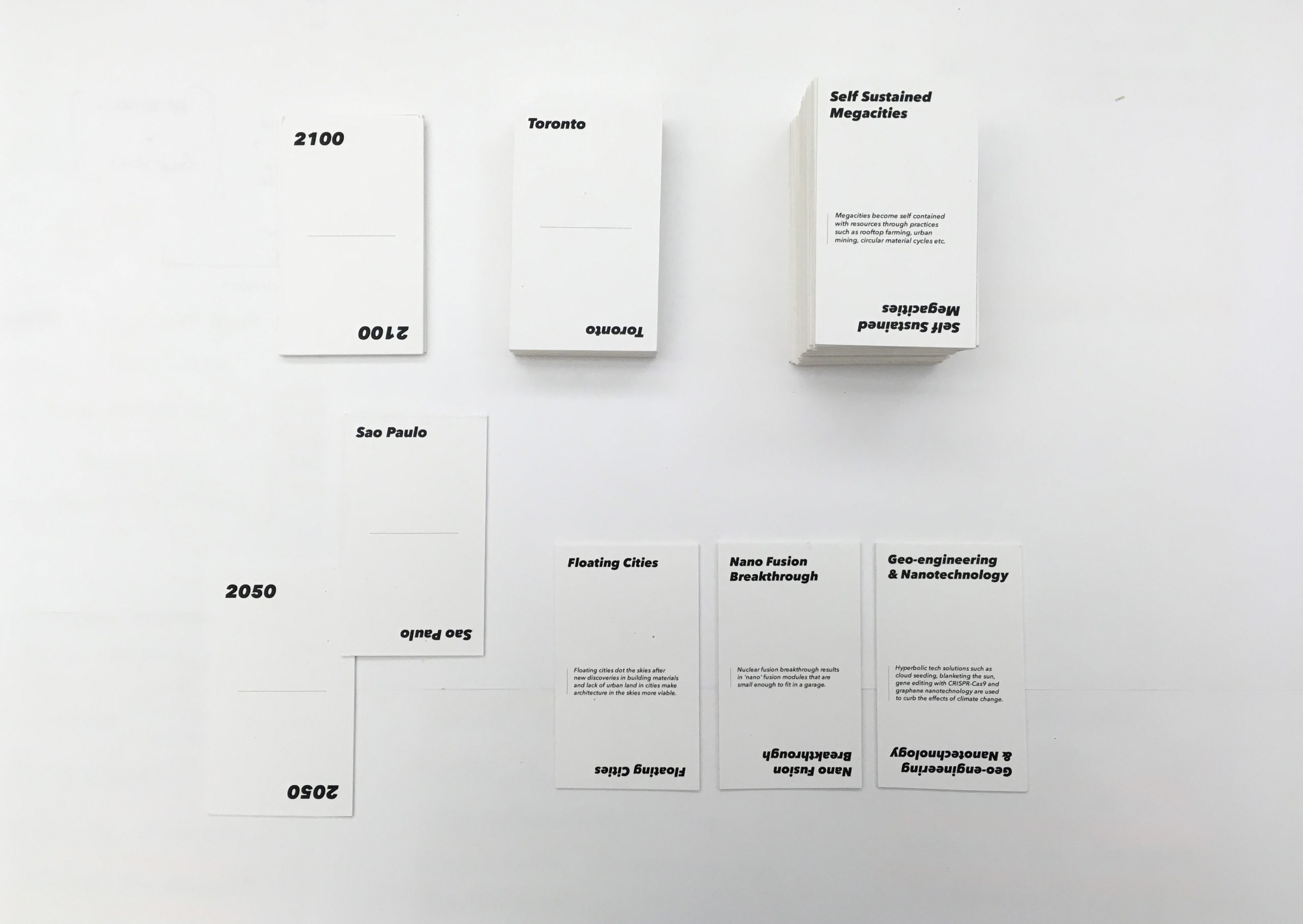
Custom a 'Futures Poker' Game
I was reaching the limits of the mapping and systemic thinking because the future is a complex unknown. We can only know so such much about the complexity of the world that exists let alone plan for it or communicate it effectively to those who are not privy to my internal process. This is where speculative fiction came in. It is in fiction and the narratives of the futures that the complexities of the world I was building for could be understood. It was also in ficiton that I could get out of my own head. So I customised a scenario generating game called Futures Poker (by Strange Telemetry) and redesigned it to make it more suitable for my own project for generating radical solar concept scenarios.
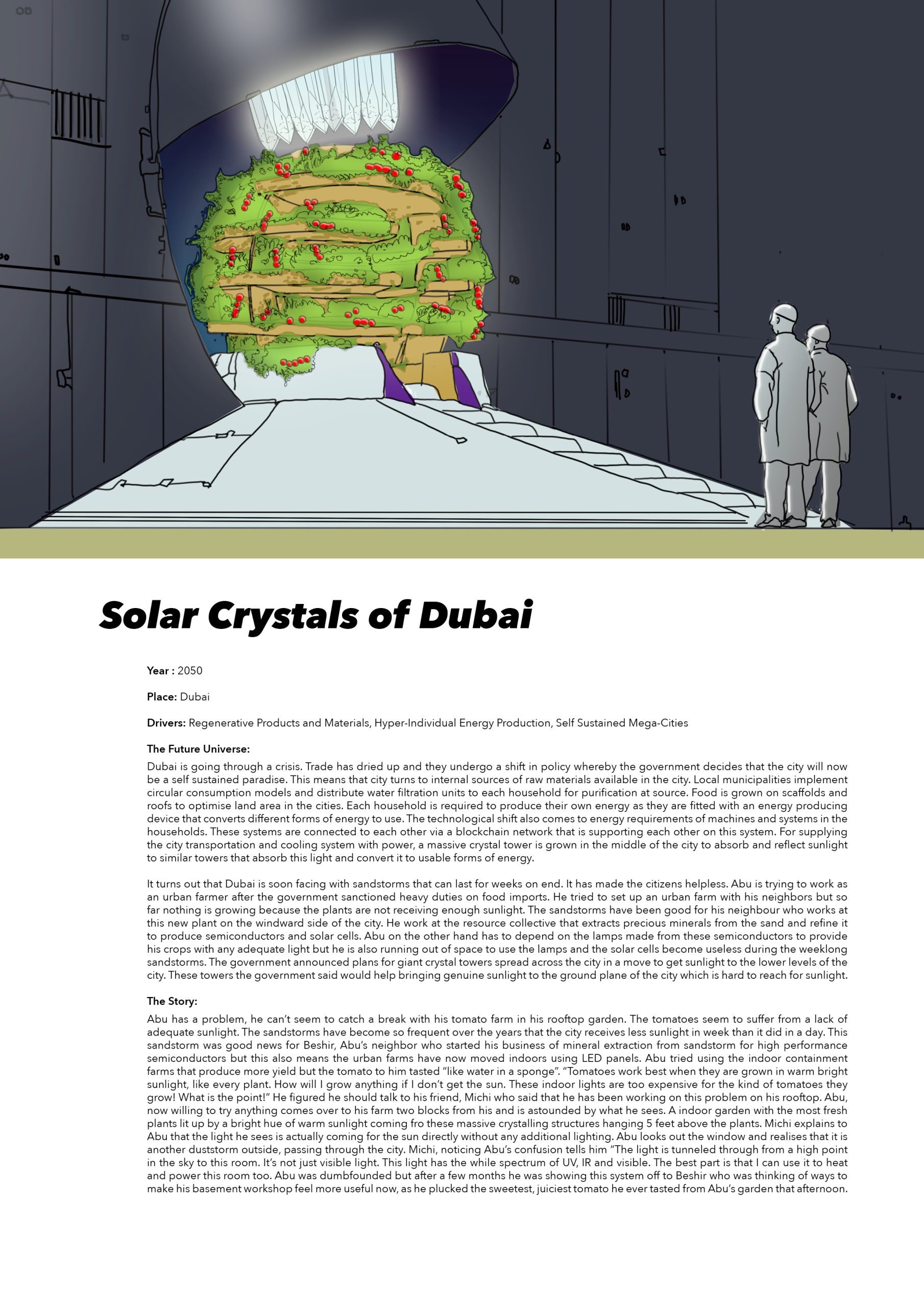
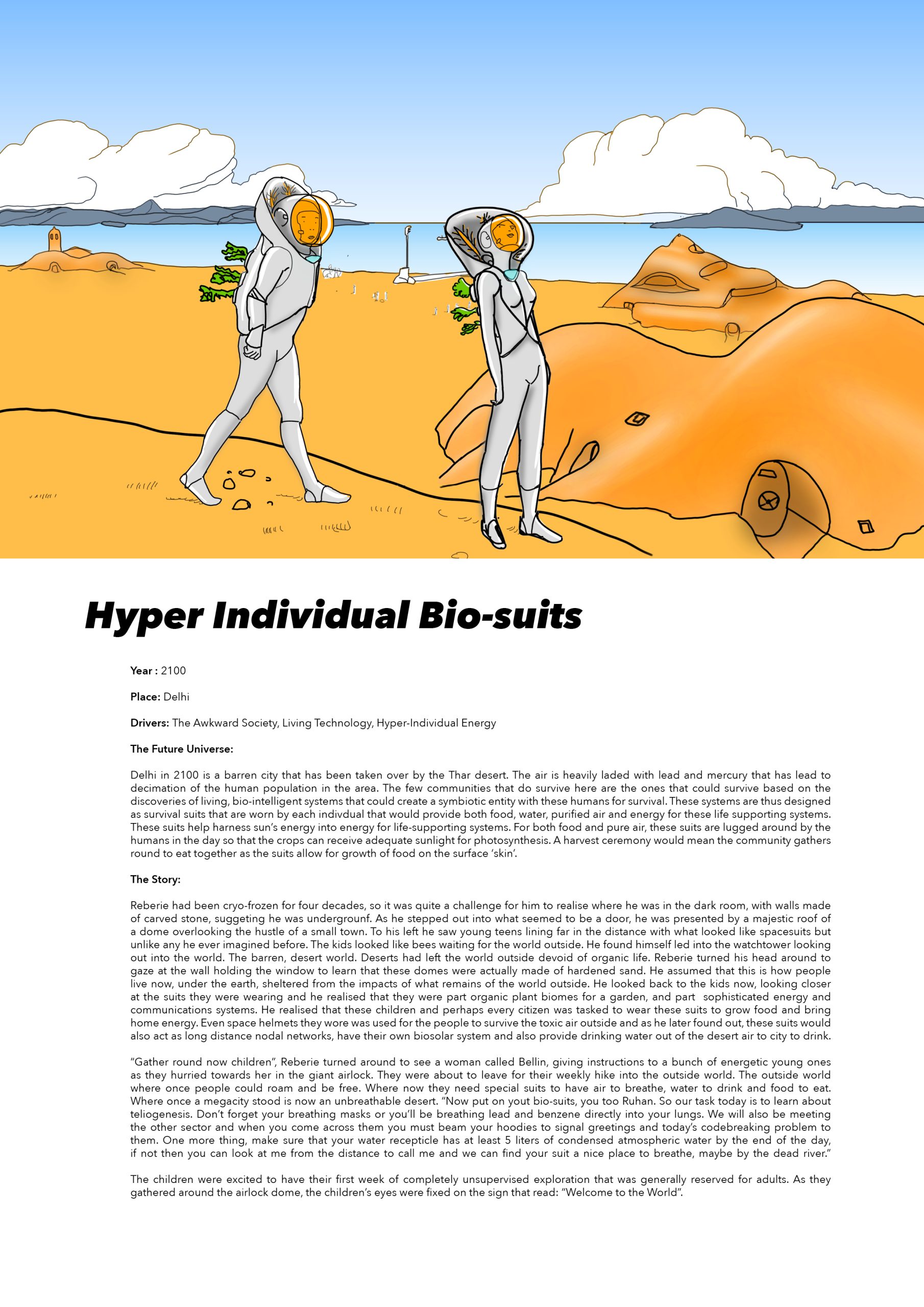
Far Future Solar Scenarios
The cards were useful in developing 12 scenarios quickly, which then narrowed to 3 divergent concept scenarios. I wrote out these into short narratives that gave me a clue about the world I was to use to develop my concepts. Given the concept framework, these concepts were all grounded in research but made them more malleable and ready for speculation in my design process. The project that began with systemic gigamapping had now made its insights from future foresight accessible through 3 narratives that would help me develop the concept design to envision the future of solar energy as you can see below.
Making of: VR Concept Film
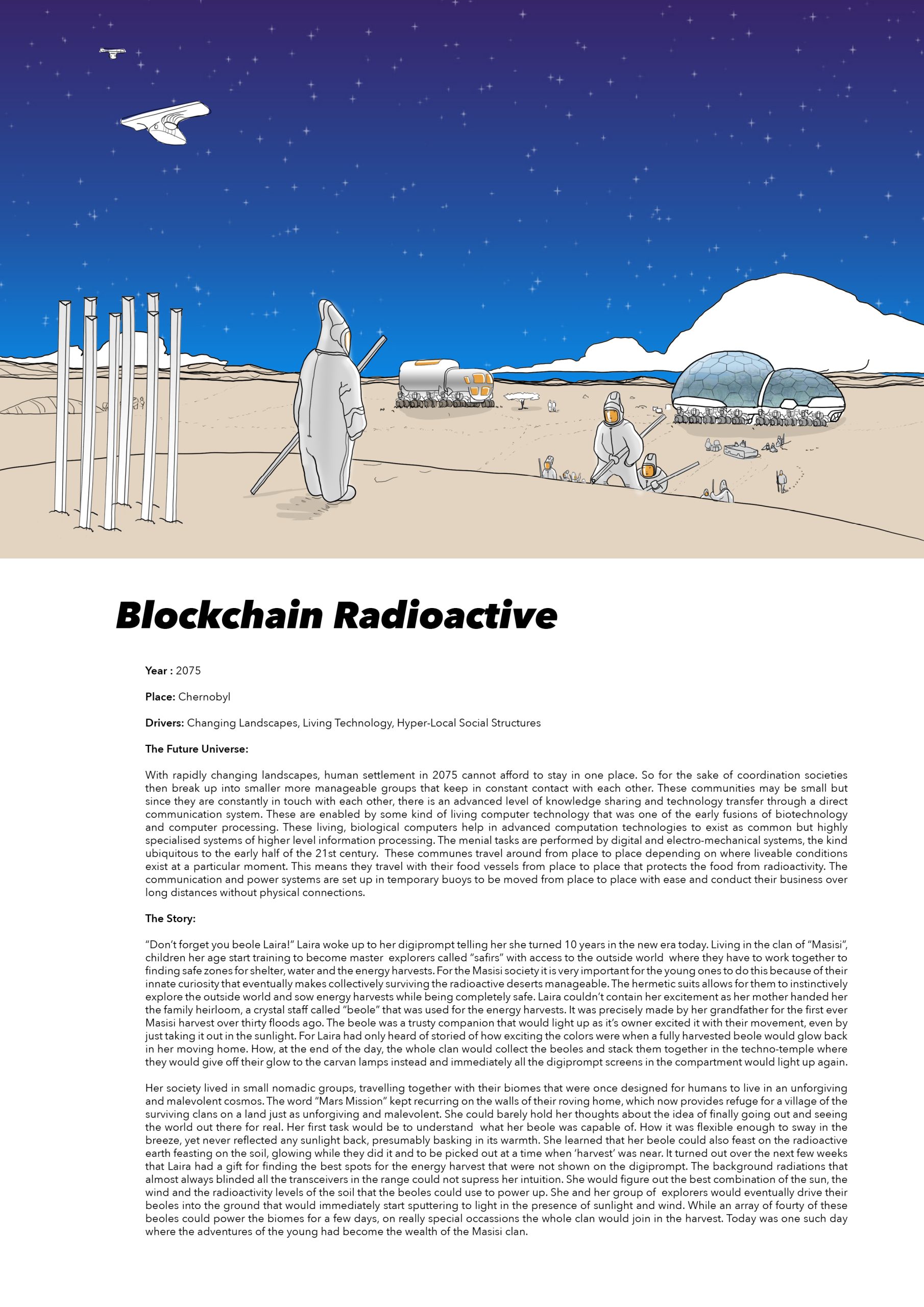
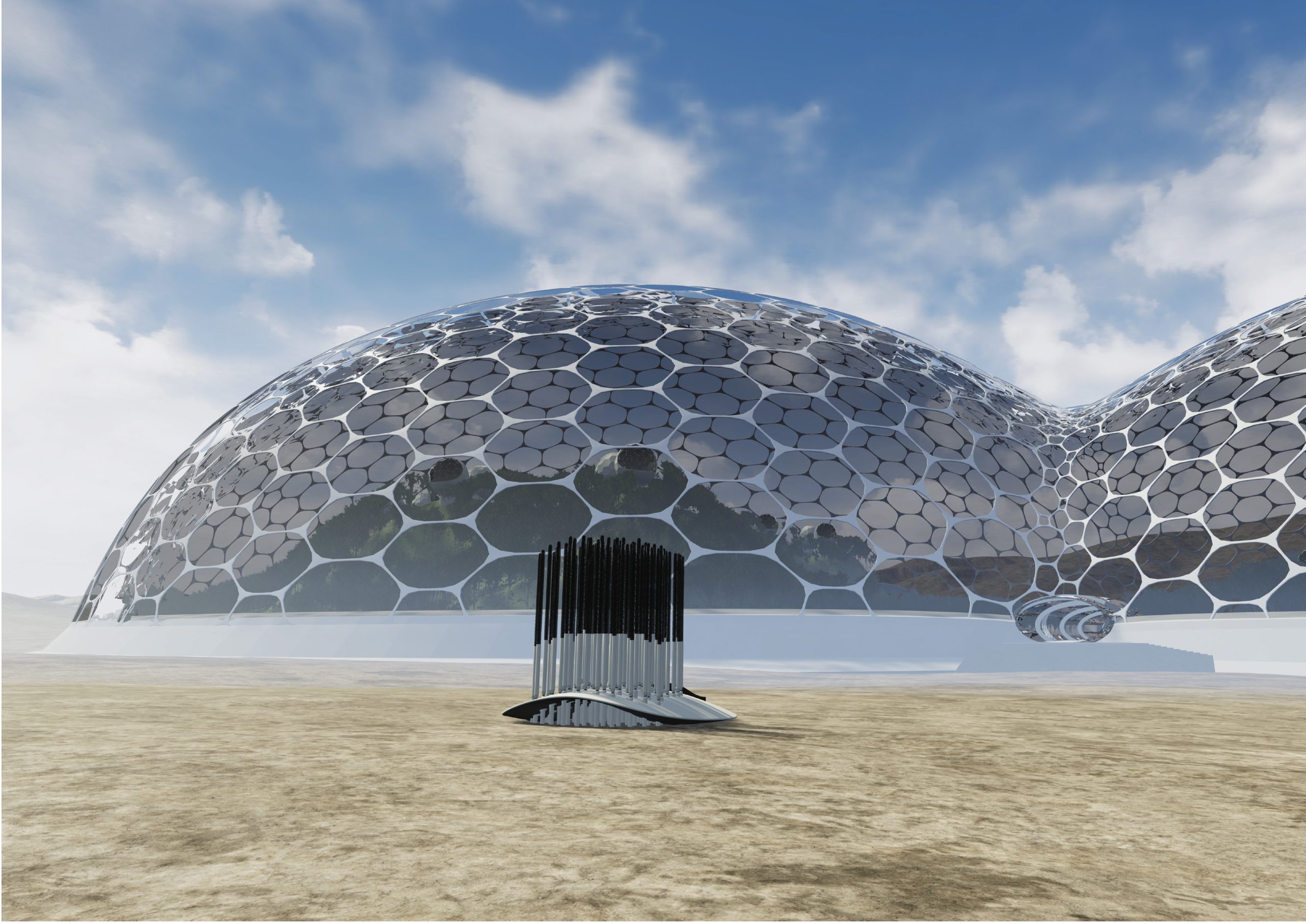
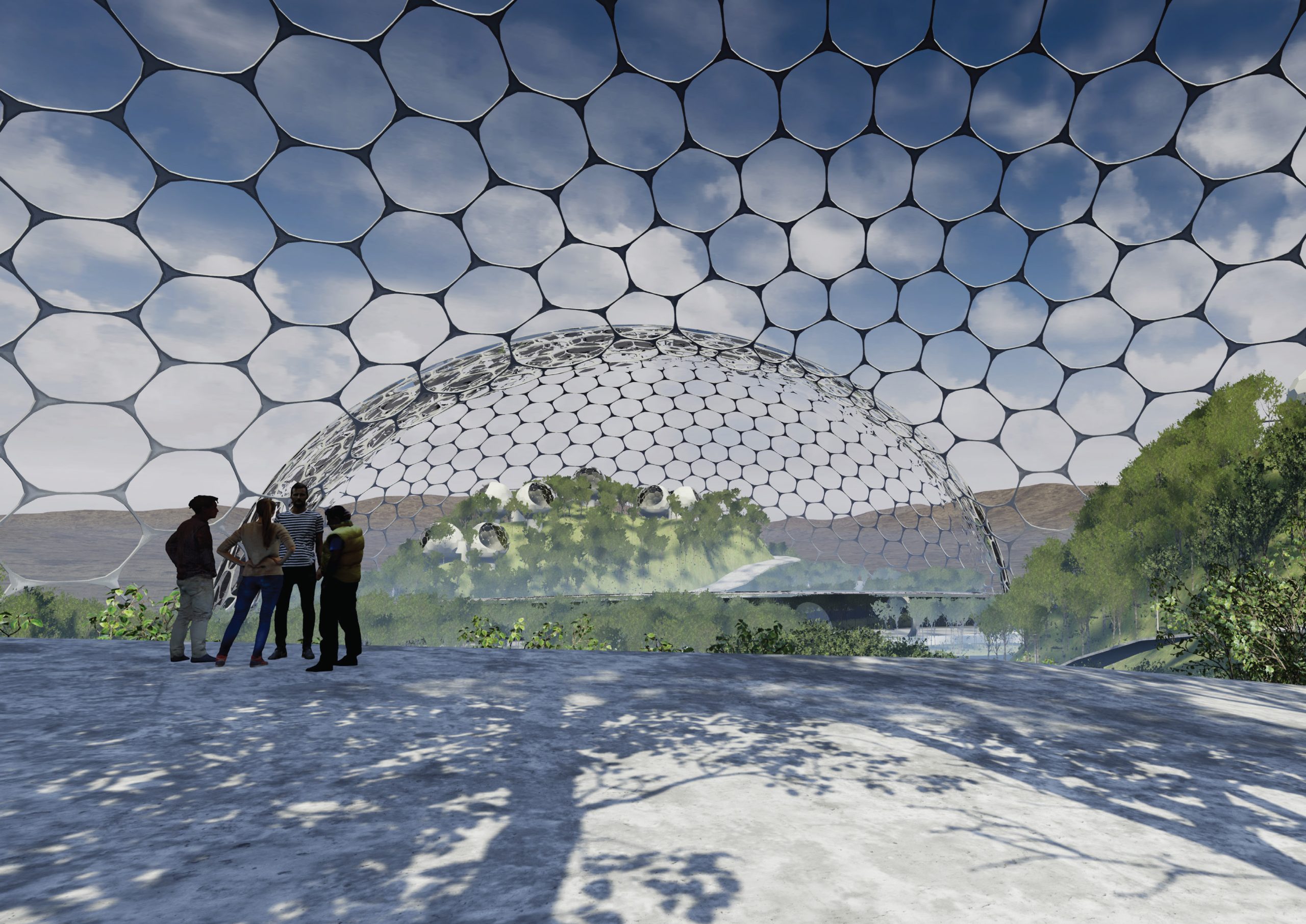
I chose the speculative fiction, Blockchain Radioactive as the base for a world building excercise in VR. The fiction became a world-building guideline, which I could analys to develop the environment of the virtual world to "time-travel" to and get a better sense of the kind of design concept I would need to develop today. The concept film you see earlier was shot in VR and post processed later.
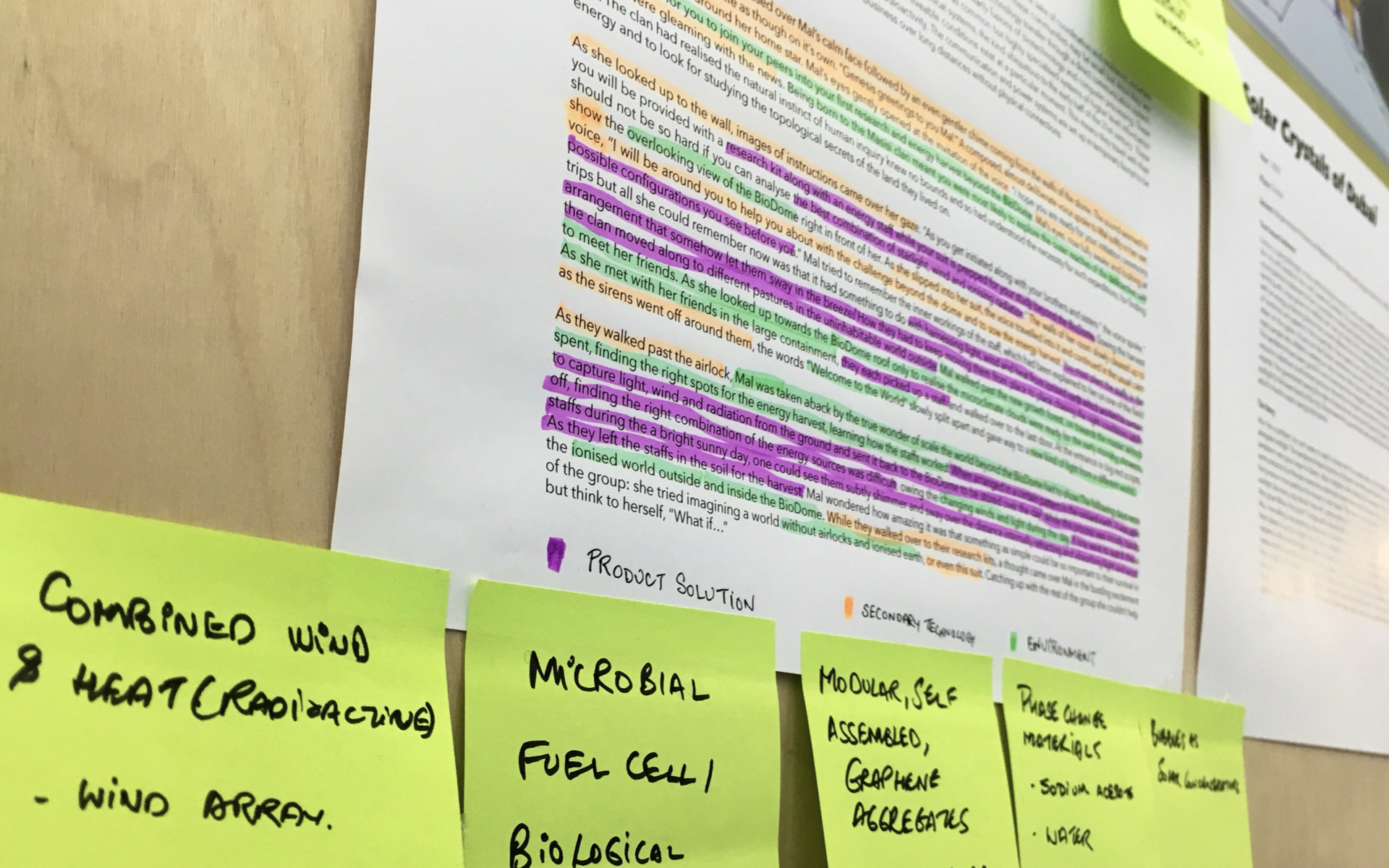
Figure: Analysing the script for cues of environment, design concept and secondary technologies.
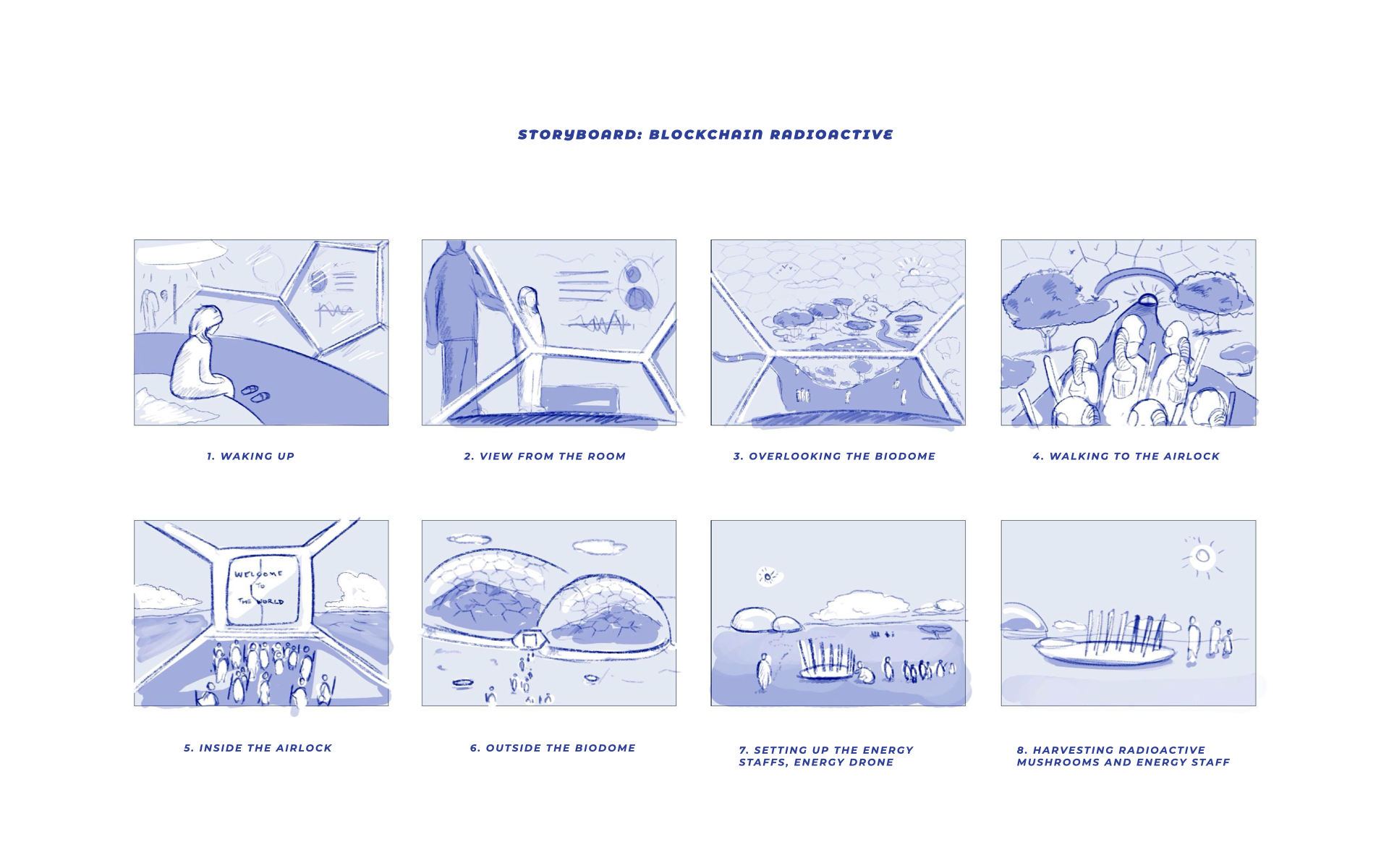
Figure: Storyboarding the Blockchain radioactive concept film, its characters and narrative setting.
Far Future Concept: Energy Ritual Staffs
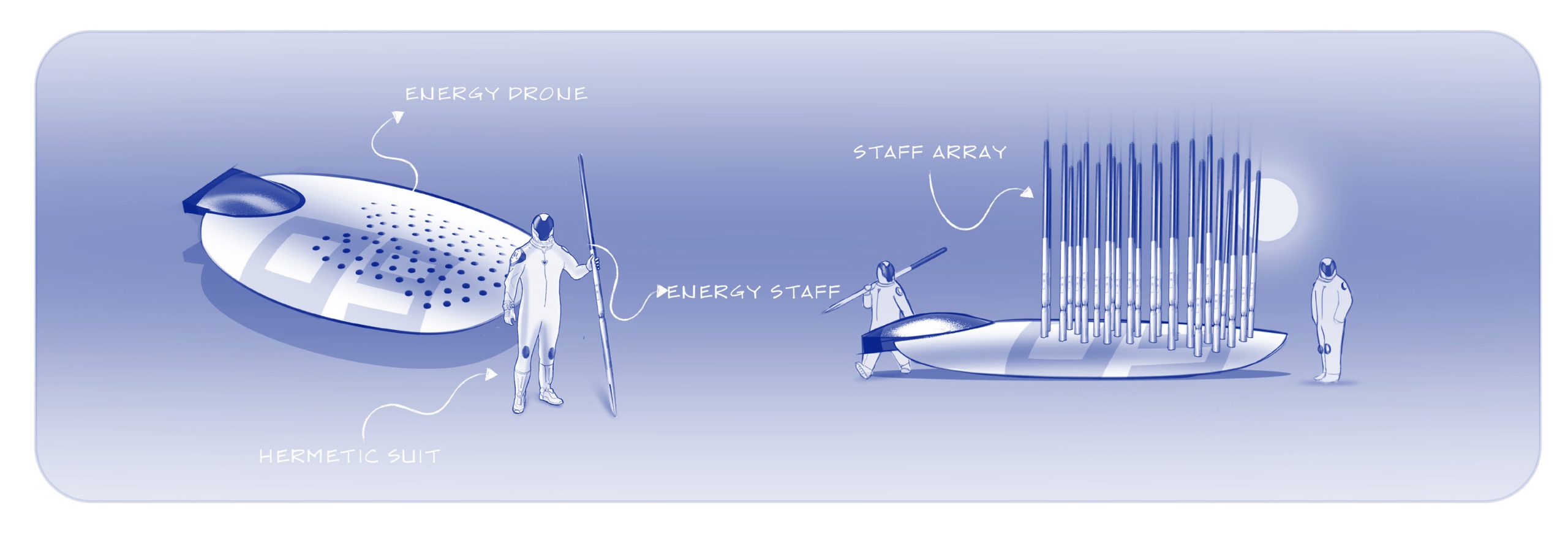
The concept film shows the energy rituals of the Masisi people (no connection to the Maasai people), descendants of a scientific research community who migrated from Svalbard to the radioactive Chernobyl region, are practising seasonal energy harvests integrated with situated multi-generational learning. The Masisi people use hybrid Indigenous Hi-TEK ‘energy staffs’ which integrate fibre optic solar cells, graphene solar inks, torsional wind-hinges, and mycorrhizal allies housed in microbial fuel cells (MFC) to harvest and store energy from solar, wind, and radioactive sources, using autonomous drones with on board storage for energy. They live in a world where energy is a scarce commodity but yet is celebrated through energy cultivation practises. These staffs also use fungal microbial fuel cells (MFC) to remediate radioactive soils in the region using specialised fungal spores that feed on radioactivity. The mycelial hyphae are also woven into their radiation shielding suits.

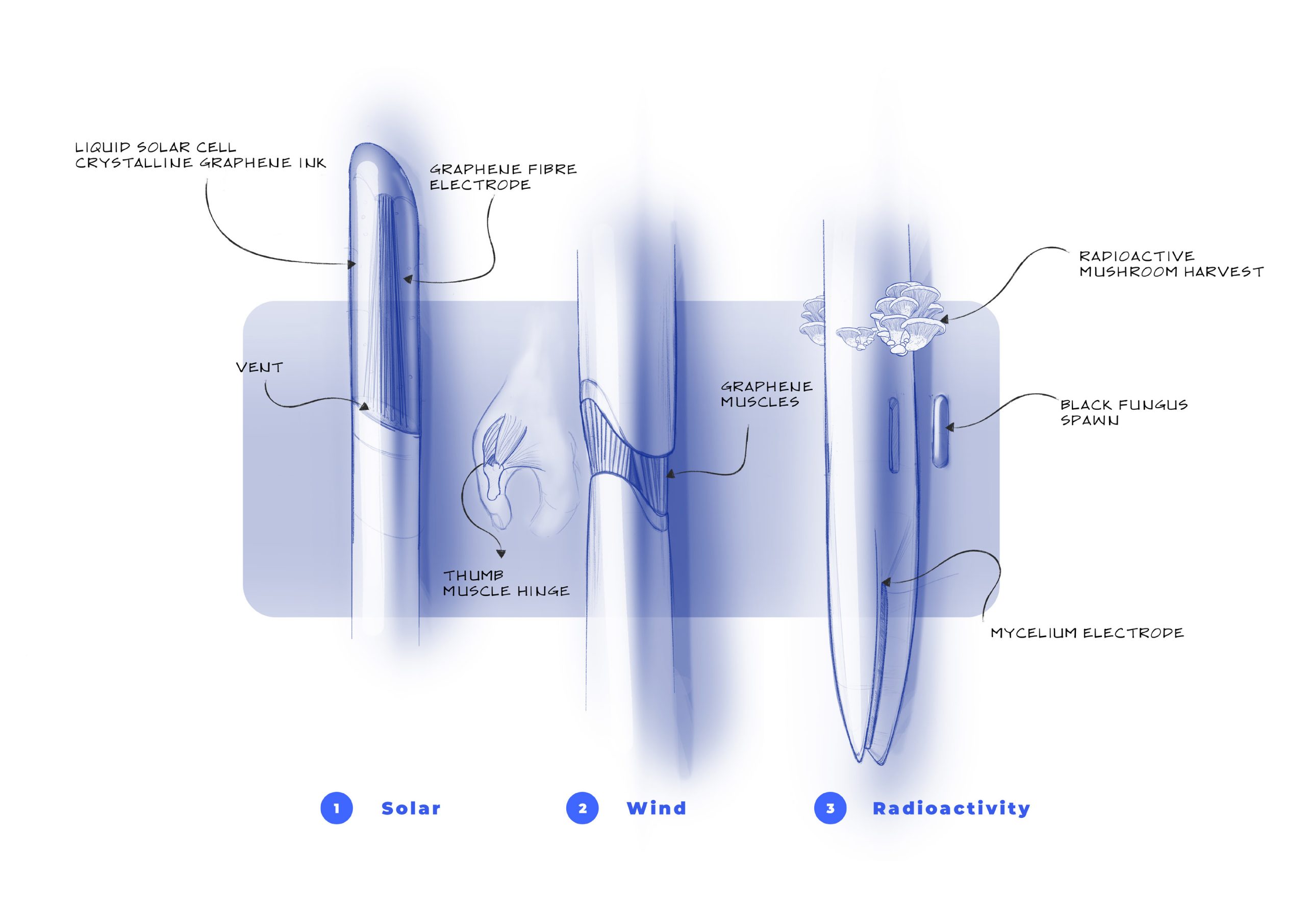
VR Prototyping
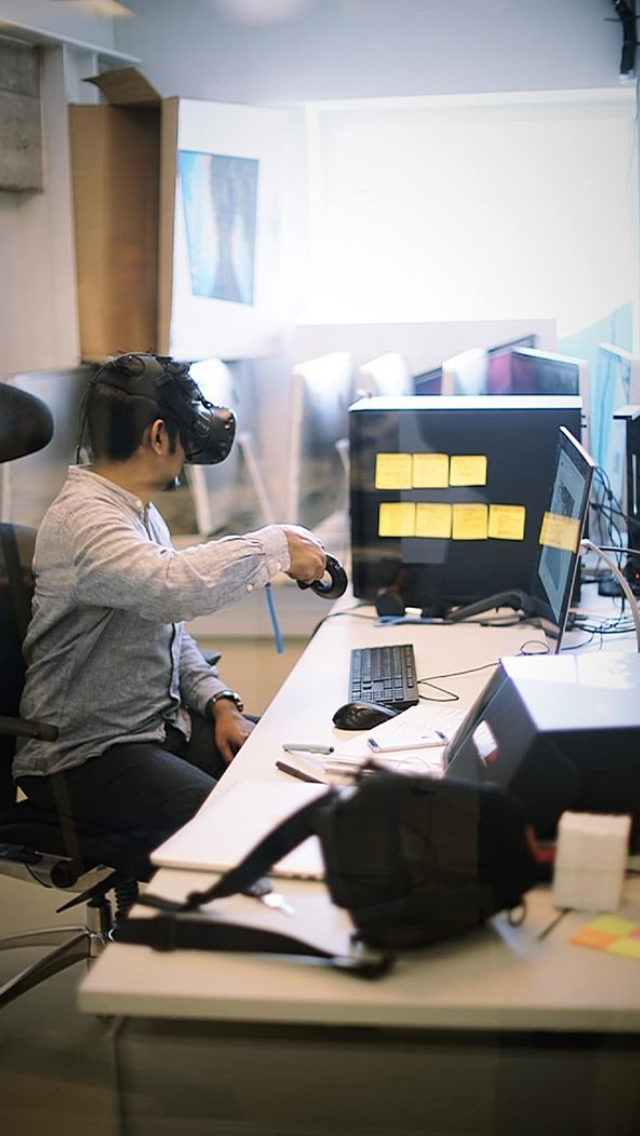
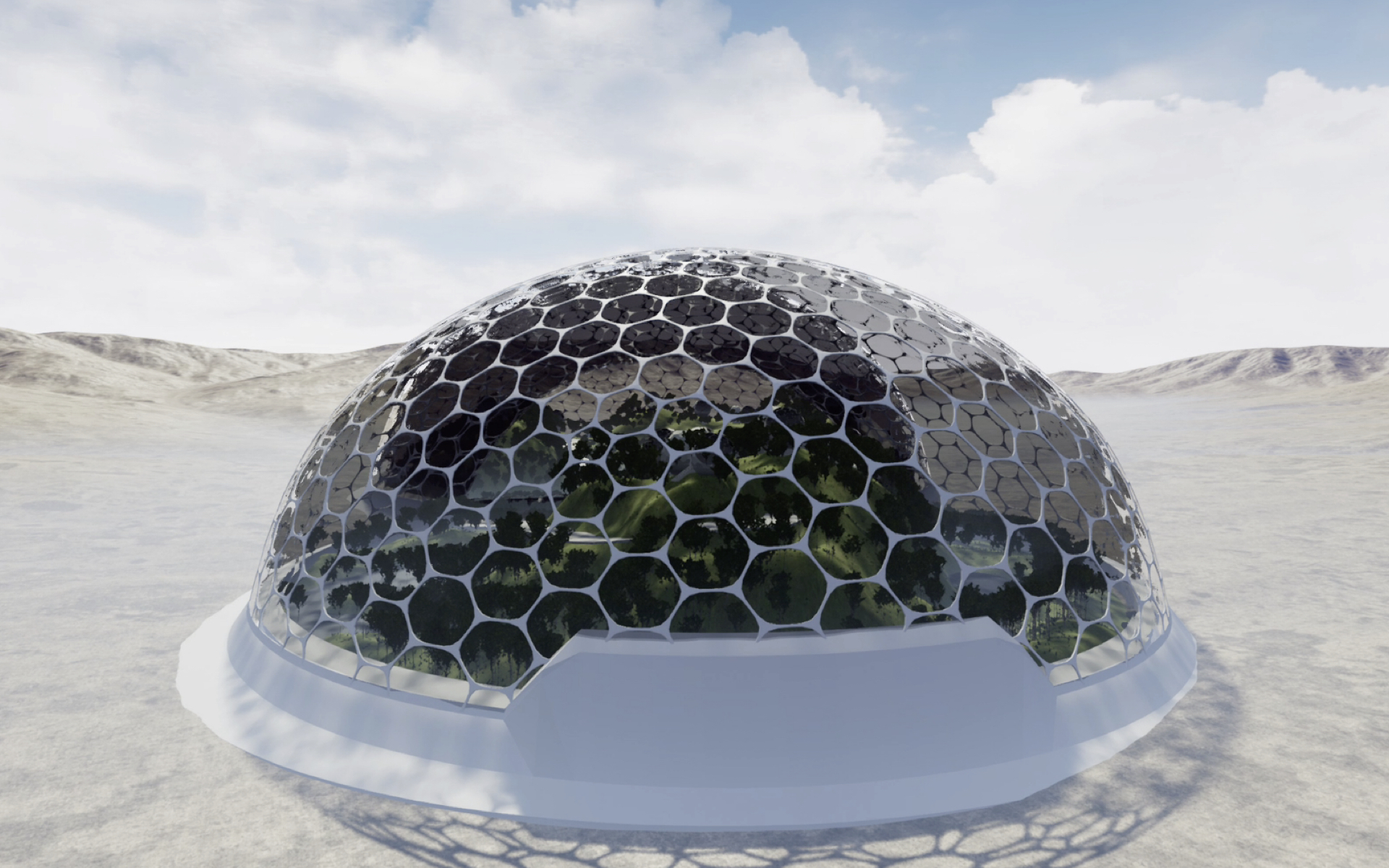
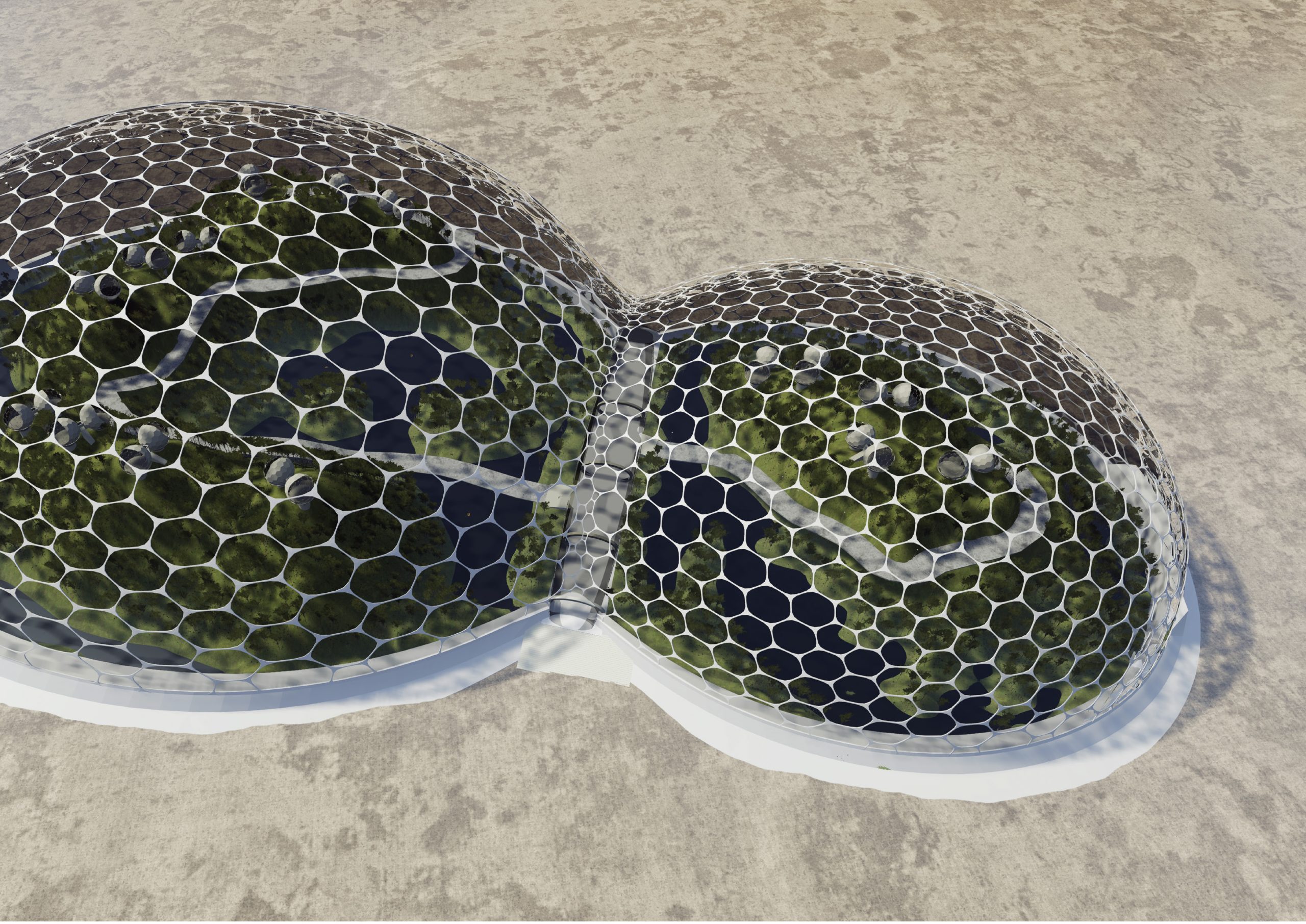
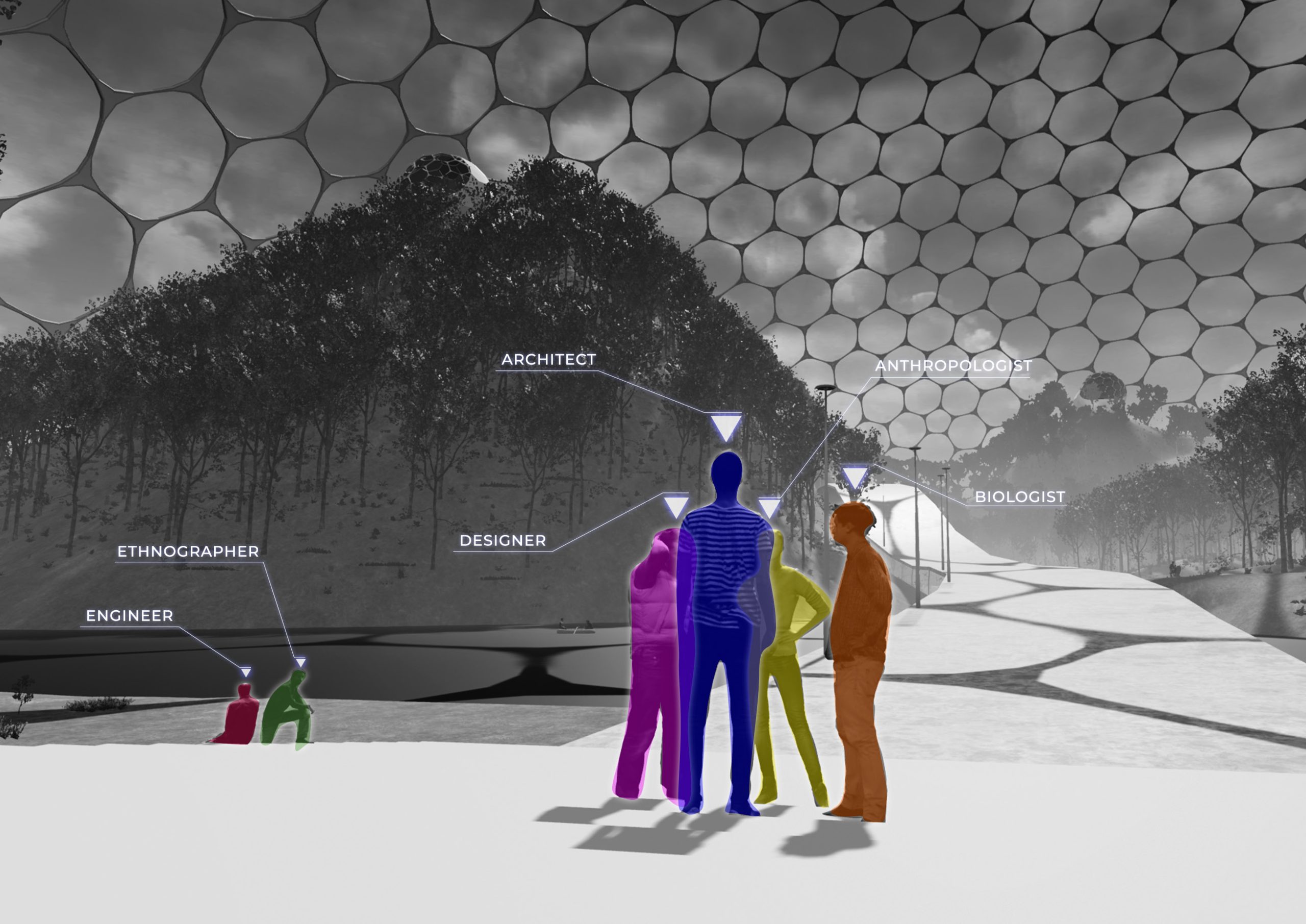
The concept was bidirectionally developed in VR using Unreal Engine and the world became the site for shooting the film so to speak. This process really got me immersed in the world and created an opportunity to think of this as a possible simulation environment for virtual co-design and testing.
Backcasting to Today
What can we do today? Usually, at this stage, most Speculative Design projects would be happy by having explored the future, to hover about the novel speculation and build it up further in detail and create a stunningly immersive picture of that future. For this project however was intended to be think of speculation as a strategic framework and then backcast the concept today to systematically change the present such that future is completely different when it arrives (or what I would go on to theorise this interdisciplinary approach to industrial design practise as ReFuturing Studies).
3-D Solar
How would we gain insight from the future that could lead to action today? What kind of insight does this future provide? The solar staffs for instance need complex arrangements to have the complex internal reflection of solar light to absorb all the light necessary to make it a reasonably usable energy system. I wondered then what was stopping present day solar cells from being three dimensional? We have them flat for material and photon gathering efficiency, but what if we could fold them into 3D channels printed for both light and thermal efficiency. In that sense one reduces their footprint and expands the range of energy spectrum the cells could capture. This line of thinking was worth pursuing for me. So I went back to the drawing board.
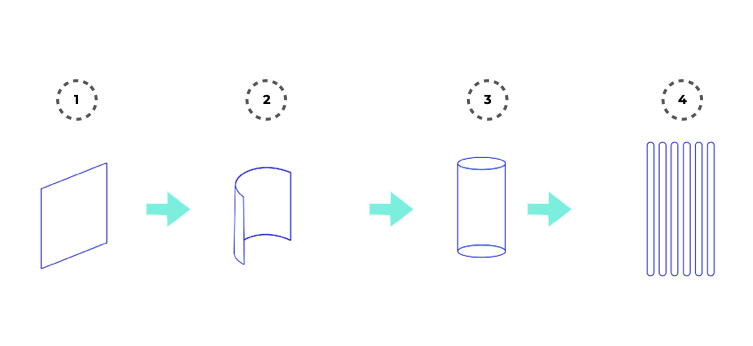
Figure: Why do solar panels have to be flat sheets? What if we could think of Silcon sheet solar as three dimensional?
The Final Concept: Solar Energy Nodes (S-Nodes)
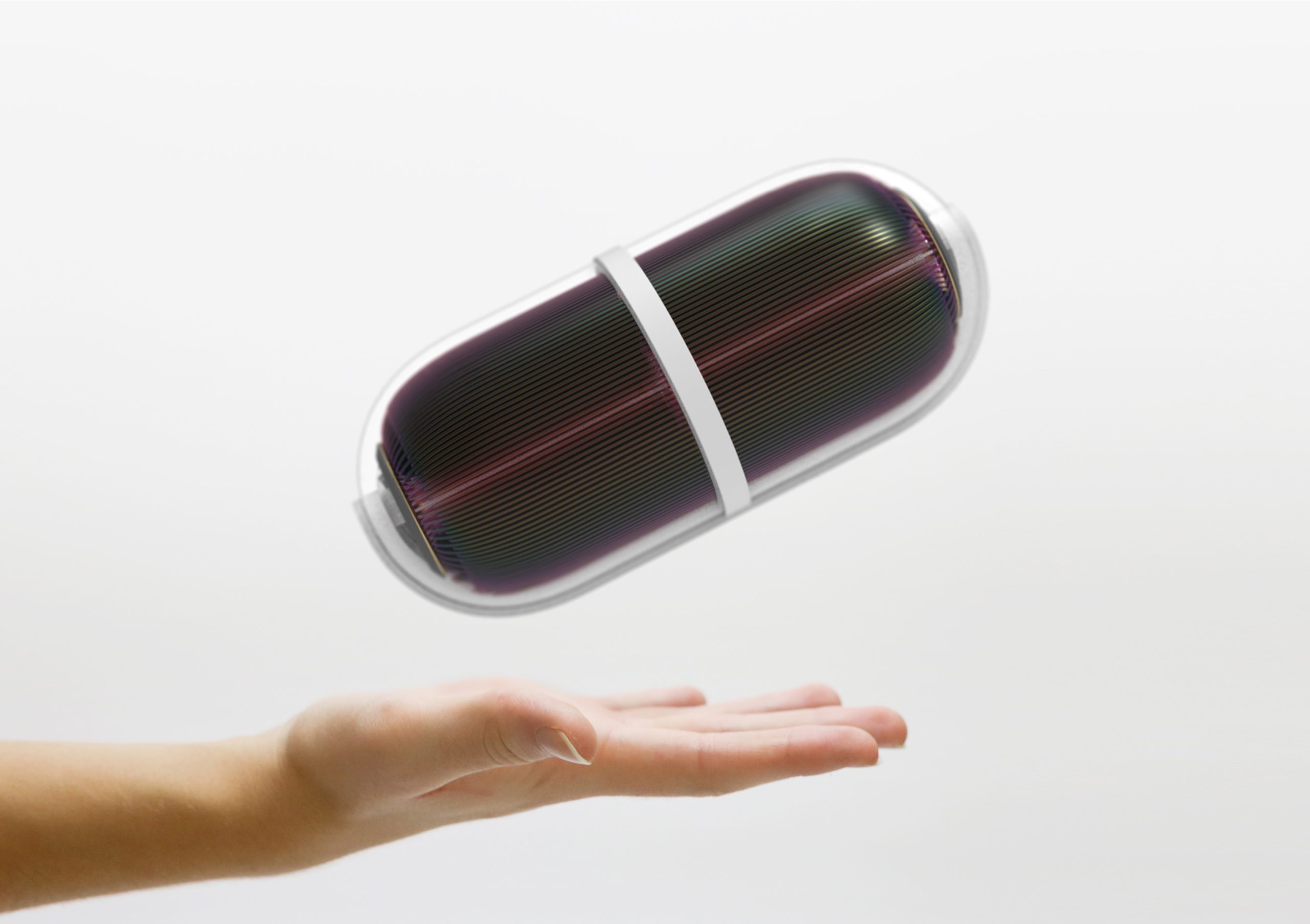
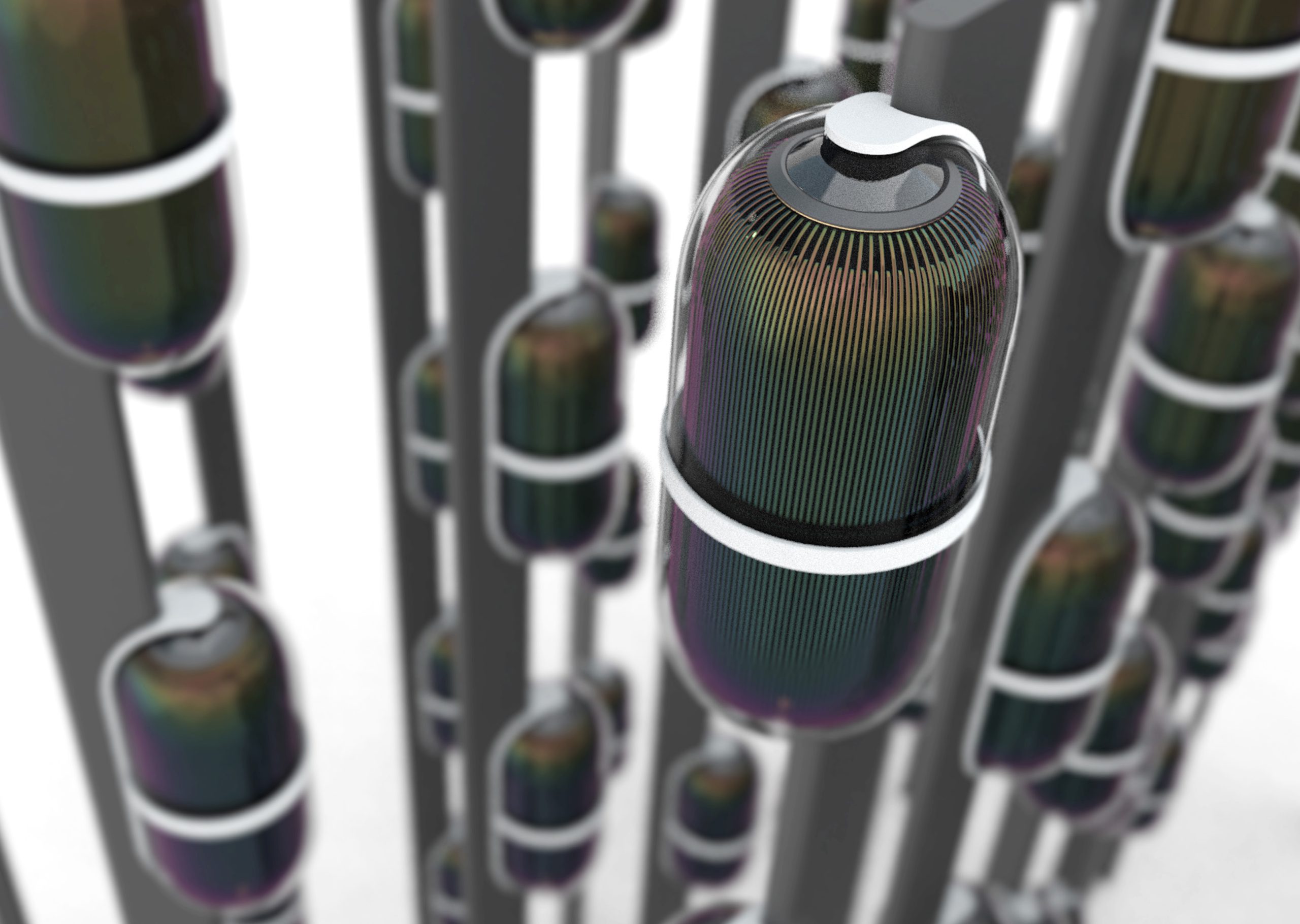
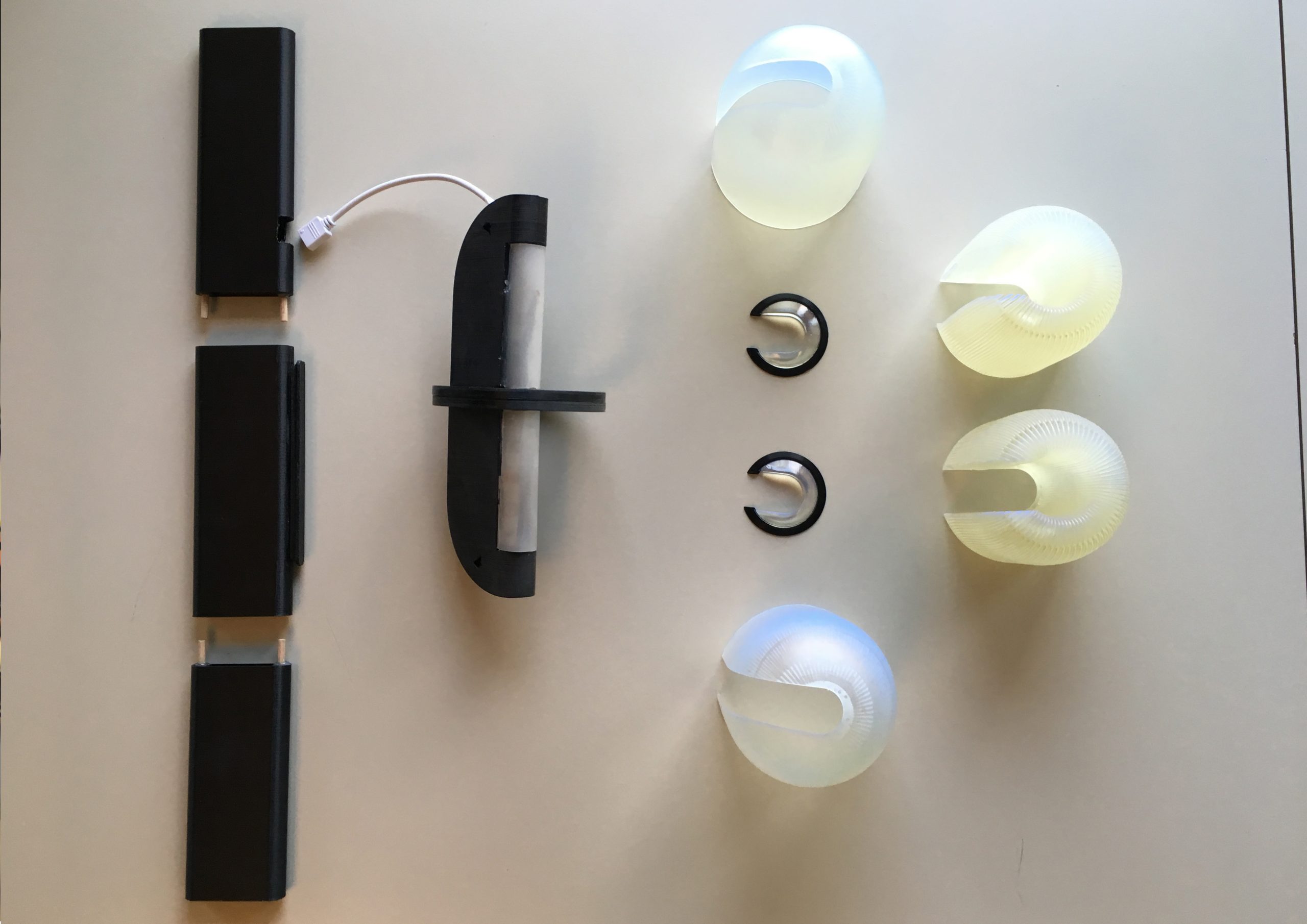
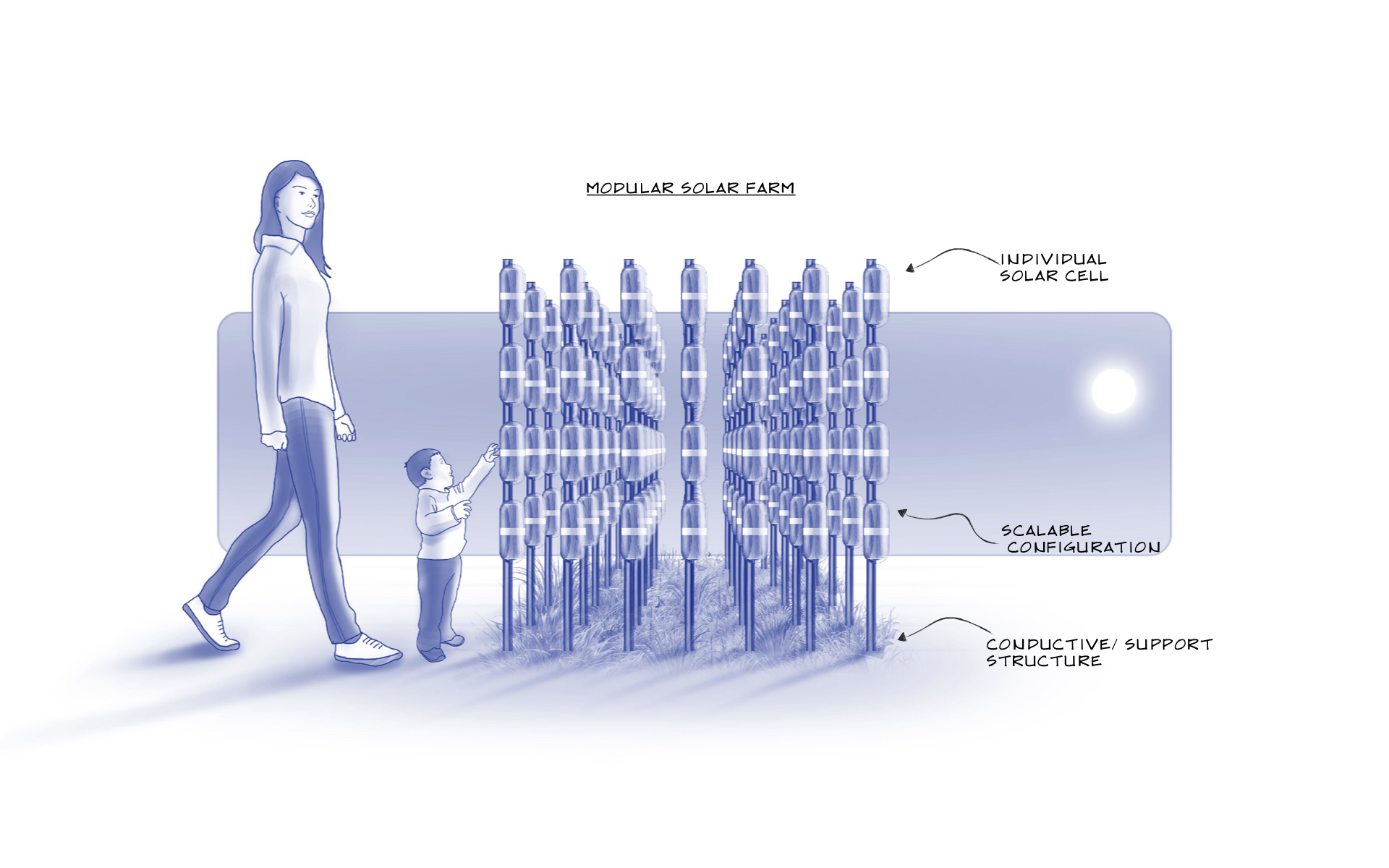
A modular, self contained solar cell that is independent of line of sight with the sun and can be readily manufactured using additive manufacturing methods on demand. Each individual cell produces some energy but also just as the energy staffs of the future, the key is to work together to use them as a group, hopefully leading to collaborative potential. It follows a structural arrangement of the cells to be able to harvest reflected solar radiation which in turn alludes to the concept of hierarchical biomimetics in the glass sponge in the sea (see figure).

Broad Spectrum Solar
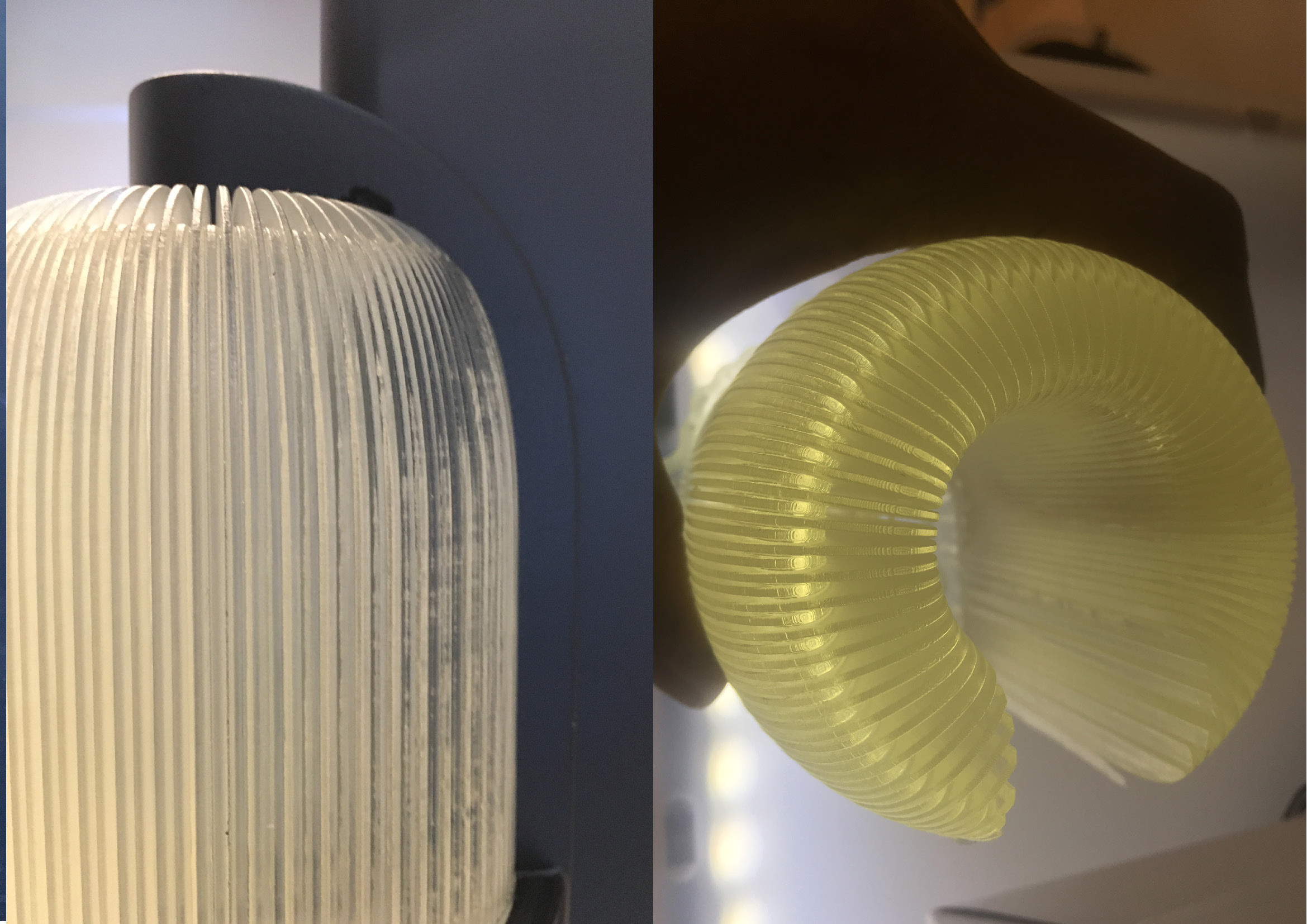
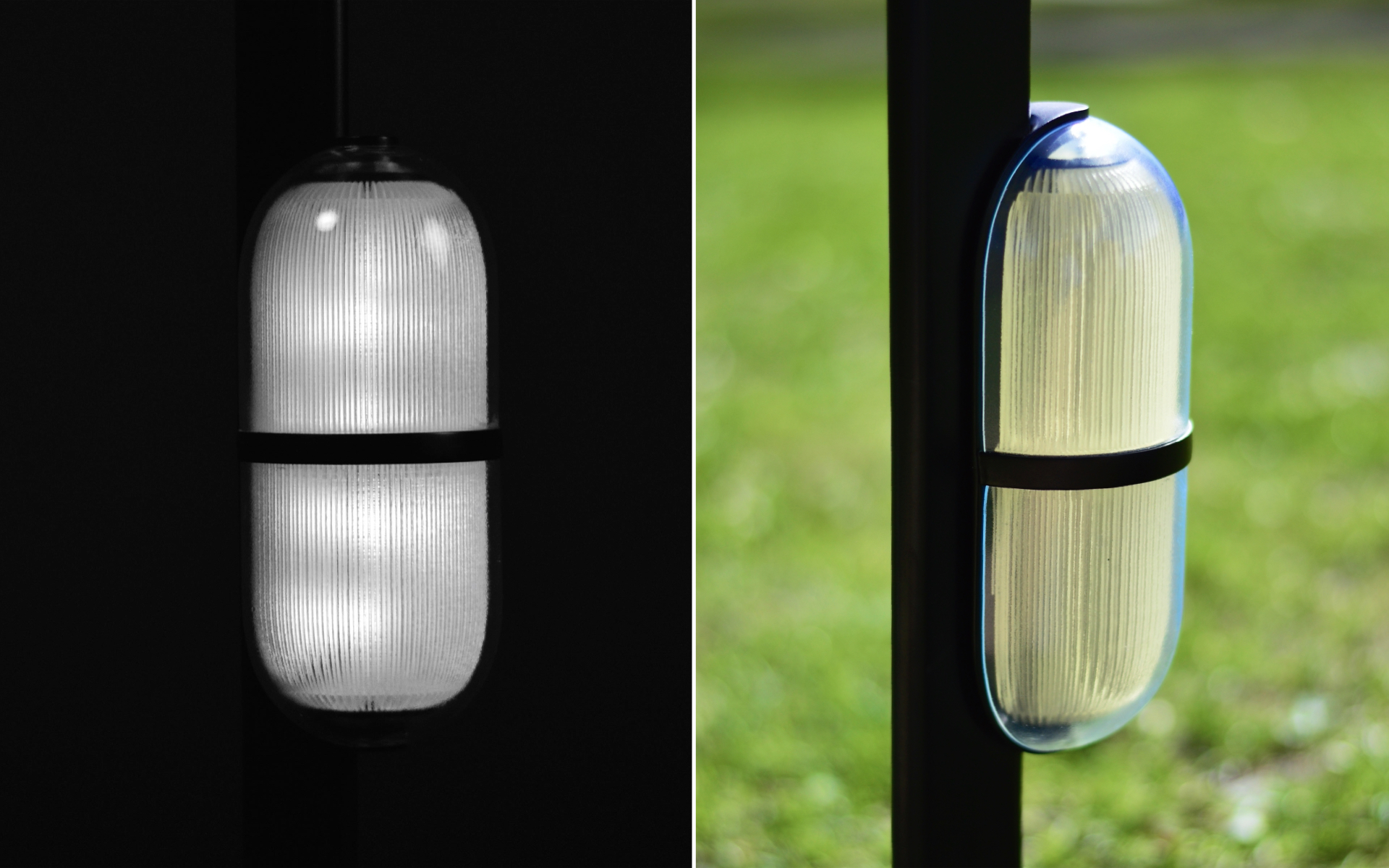
The concept was simple. The cells would be 3D printed optical solar structures coated with photovoltaic perovskite aerosol inks that could directly convert the broad thermal and visible spectrum of solar radiation. These cells are immersed within a volume of thermal phase-change material which can be charged in the day and used at night. This complementary thermo-electric backup for energy storage and use stores thermal solar radiation from the solar excess and redistributes in the night.
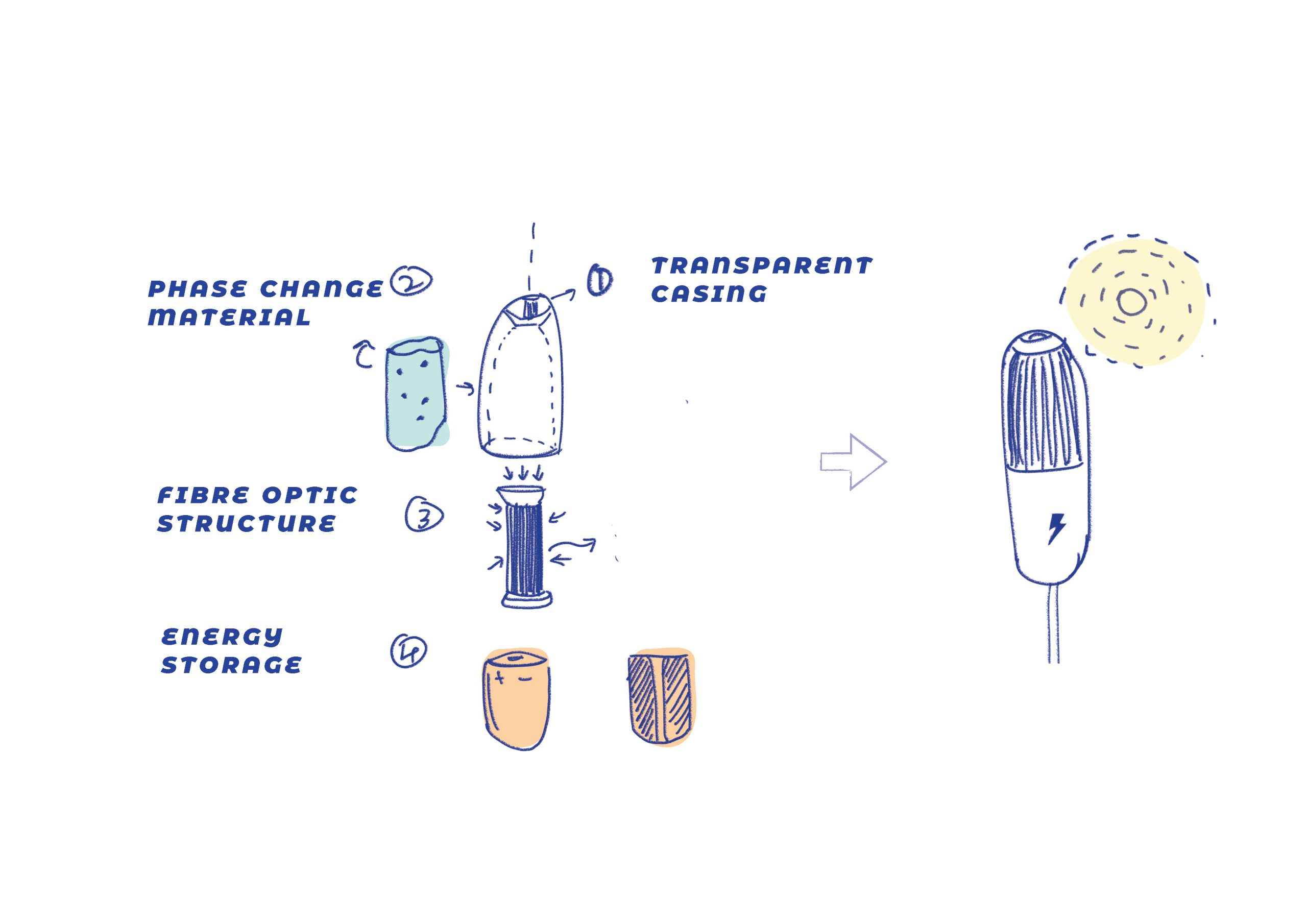
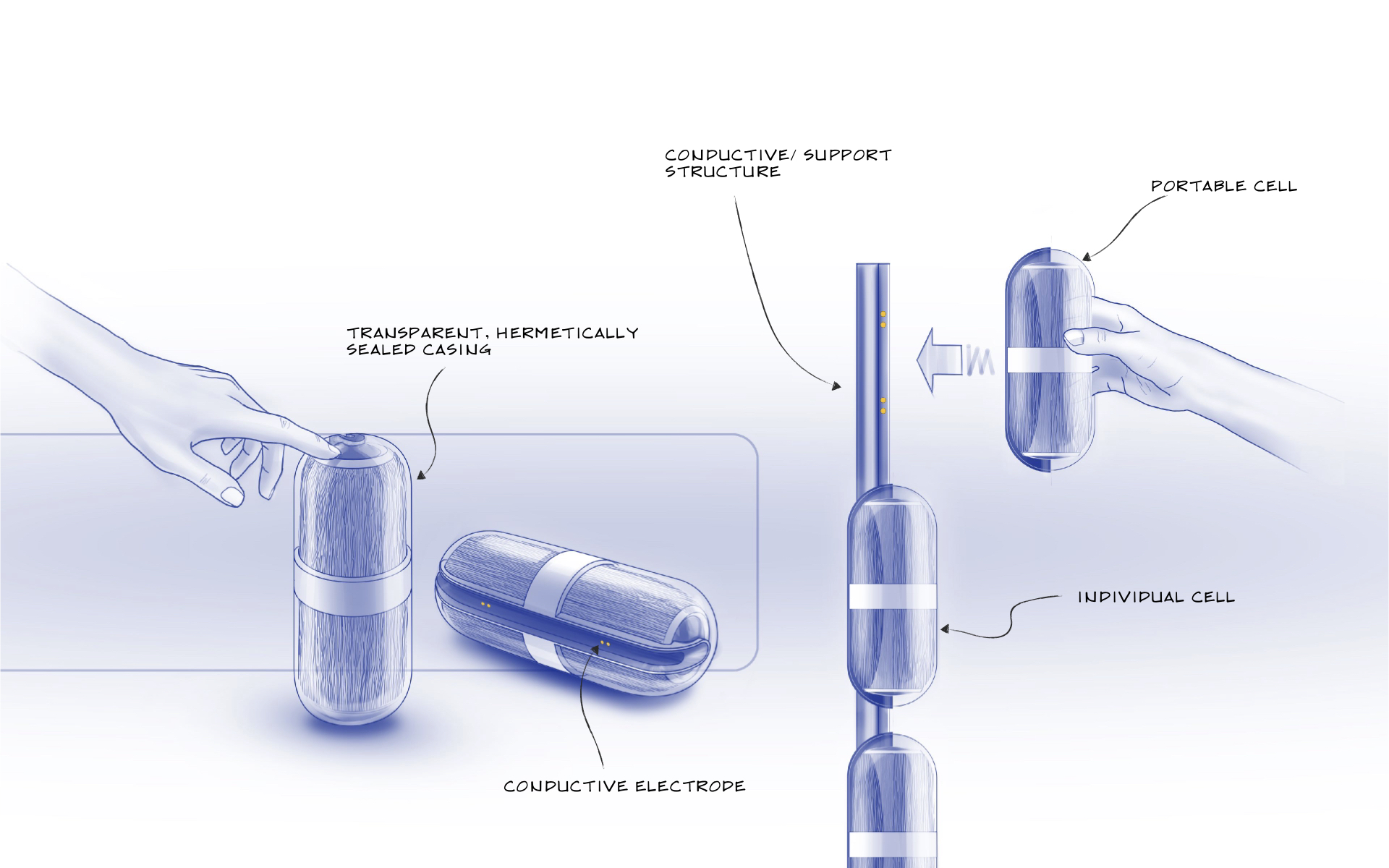
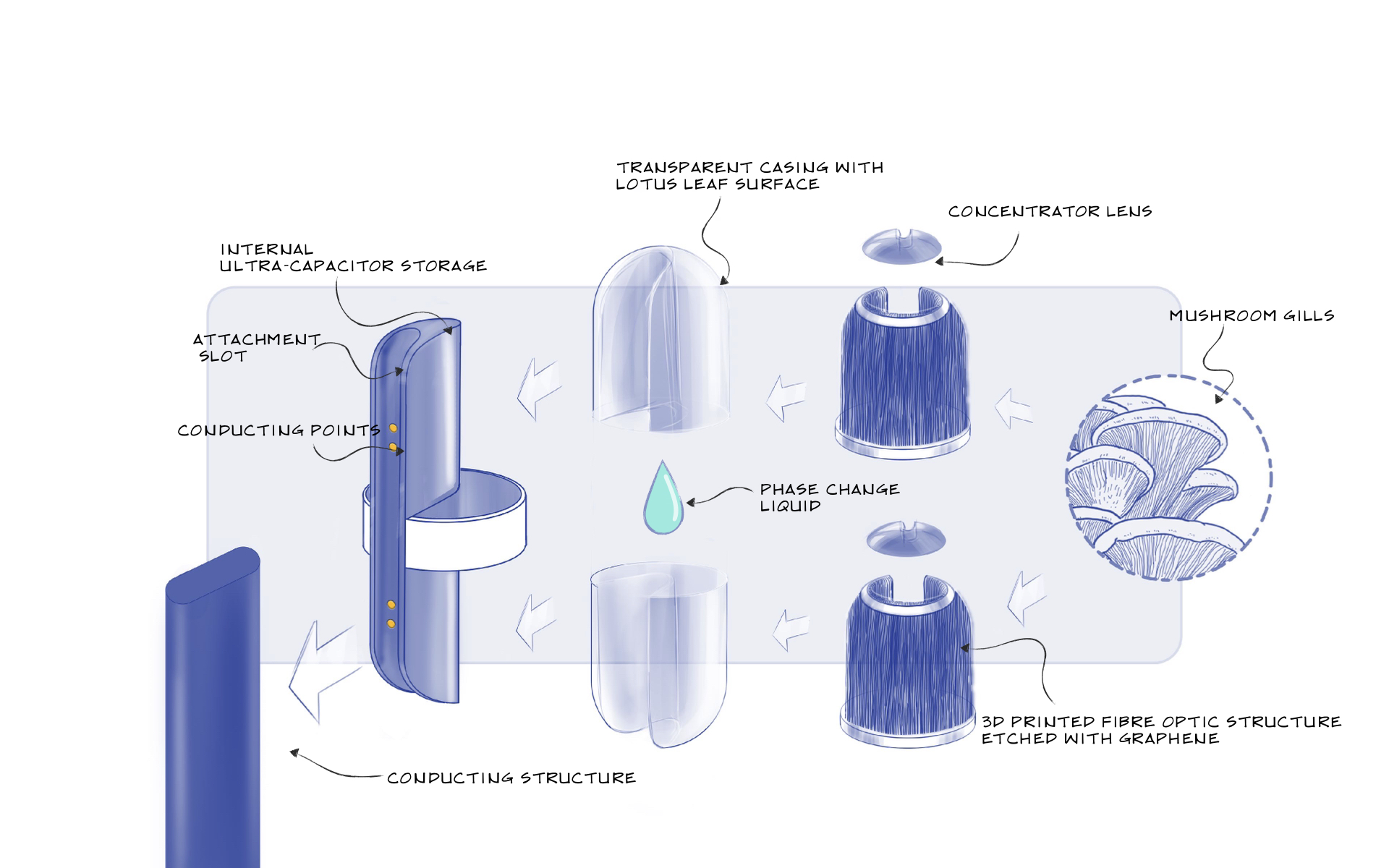
Concept Prototyping
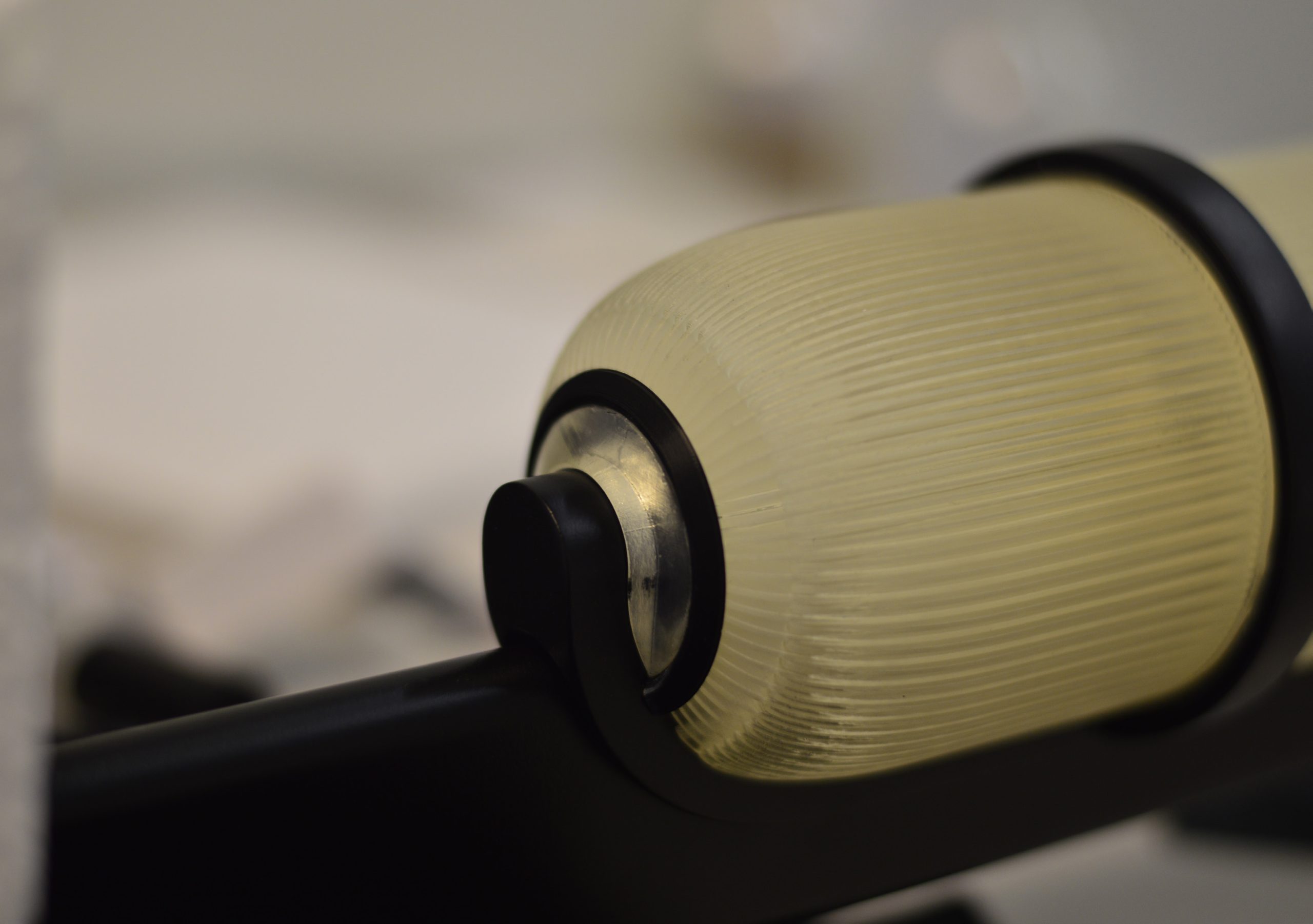
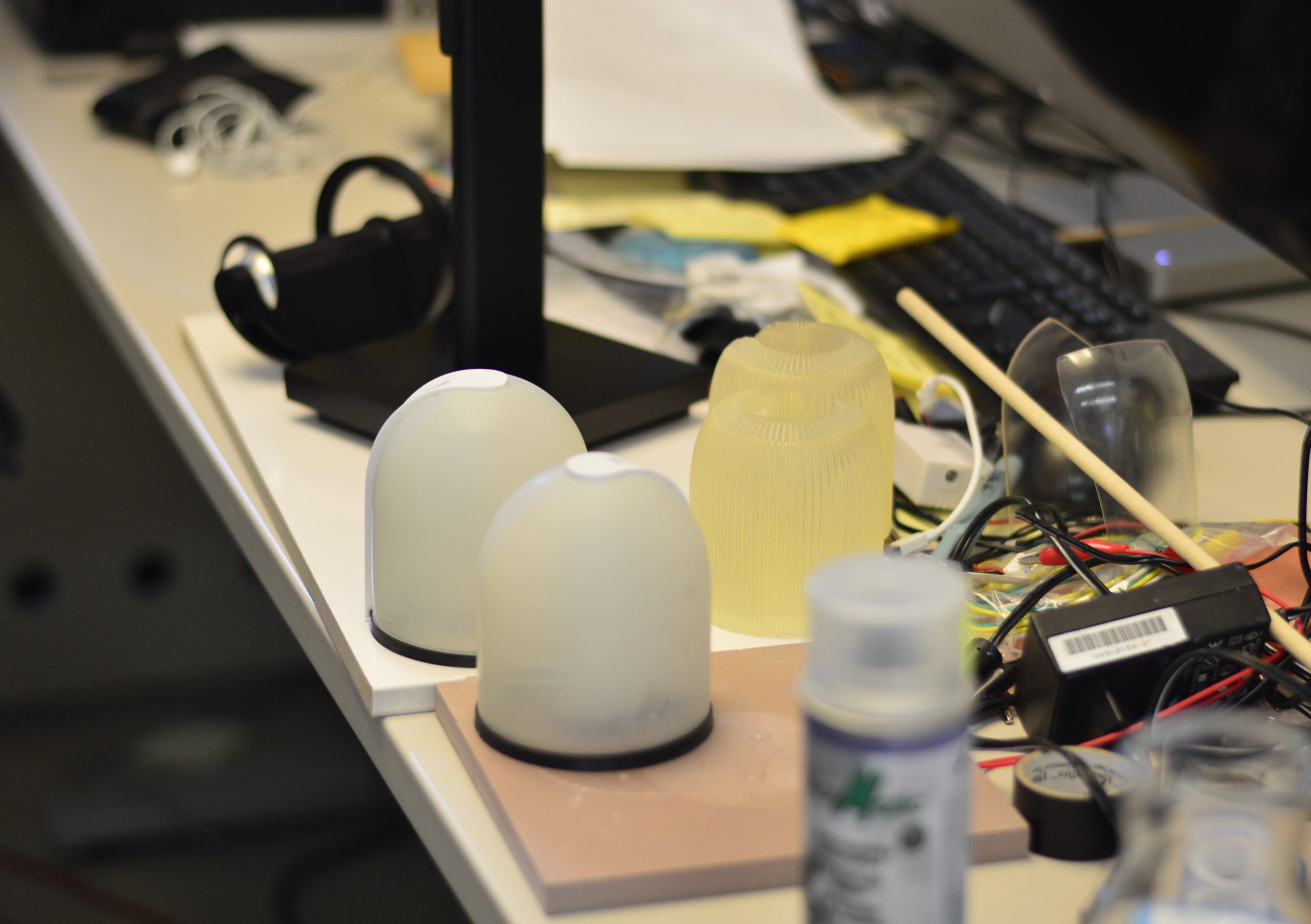
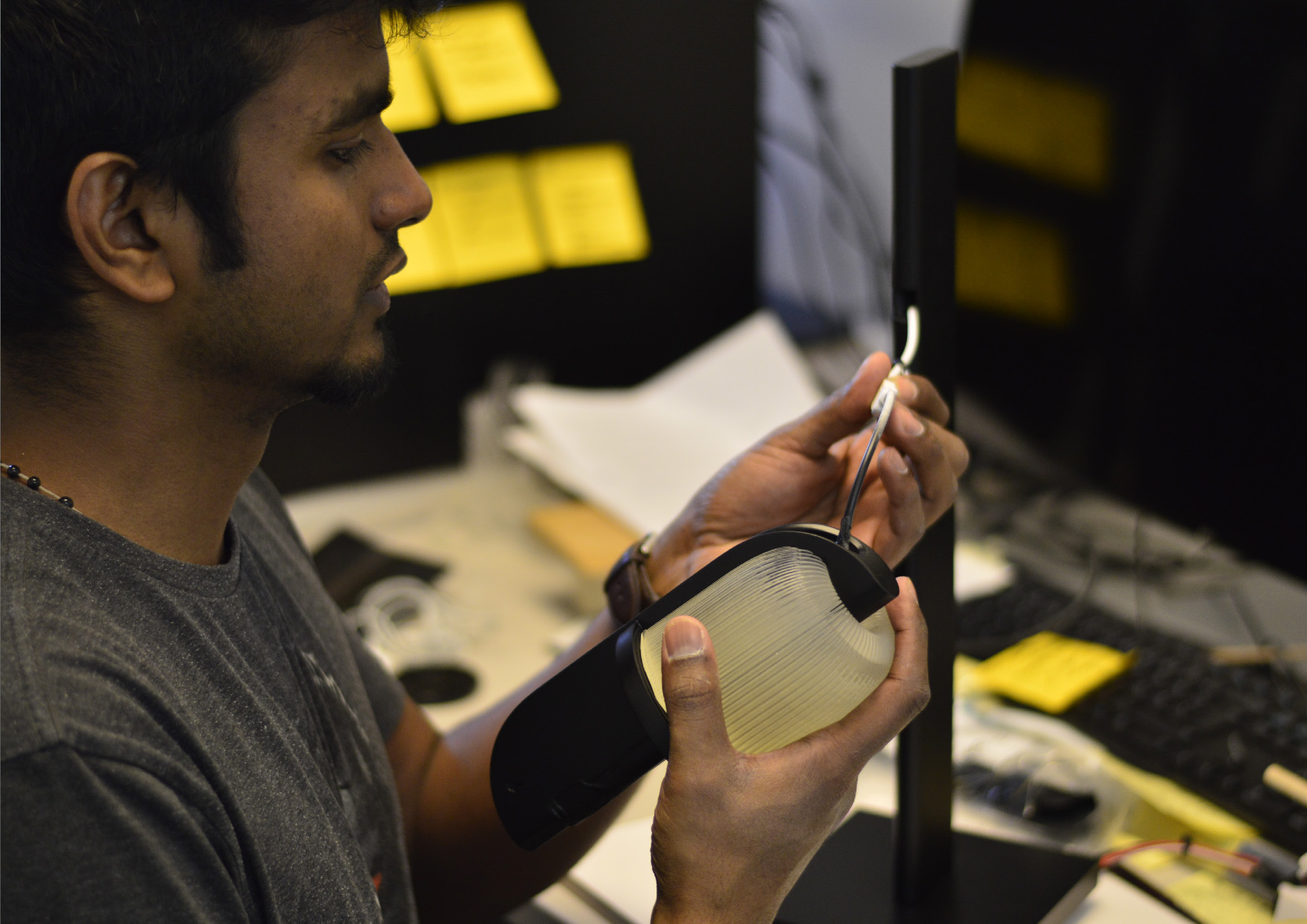
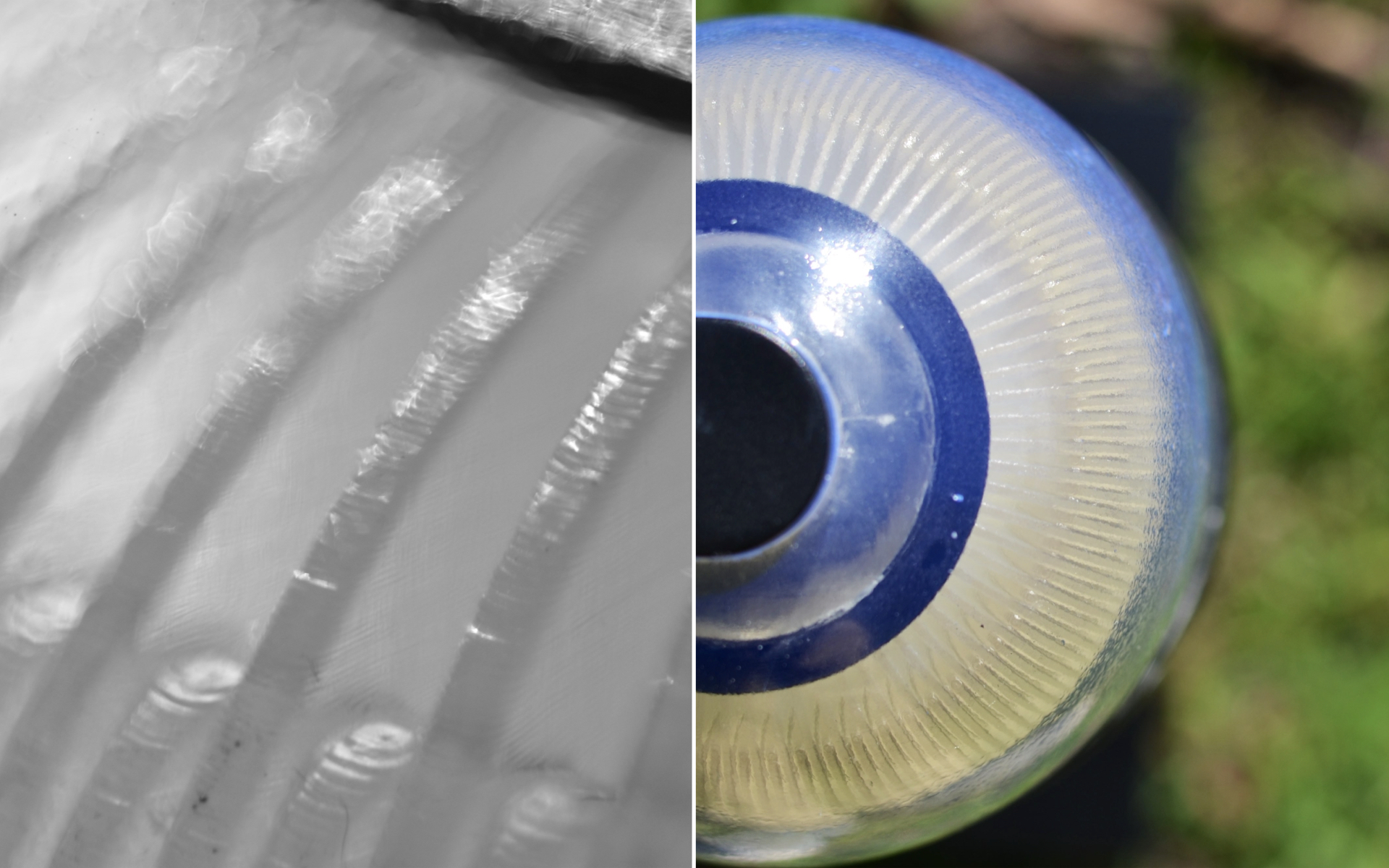
I tested the concept with hand warmer based phase change solutions and the famously inefficient thermo electric diode generators and found sort of some confirmation. Next, the optical structures were printed with clear resin to test the optical properties of the concept. I unfortunately couldn't make graphene or perovskite liquid to test the energy harvesting properties of these structures.
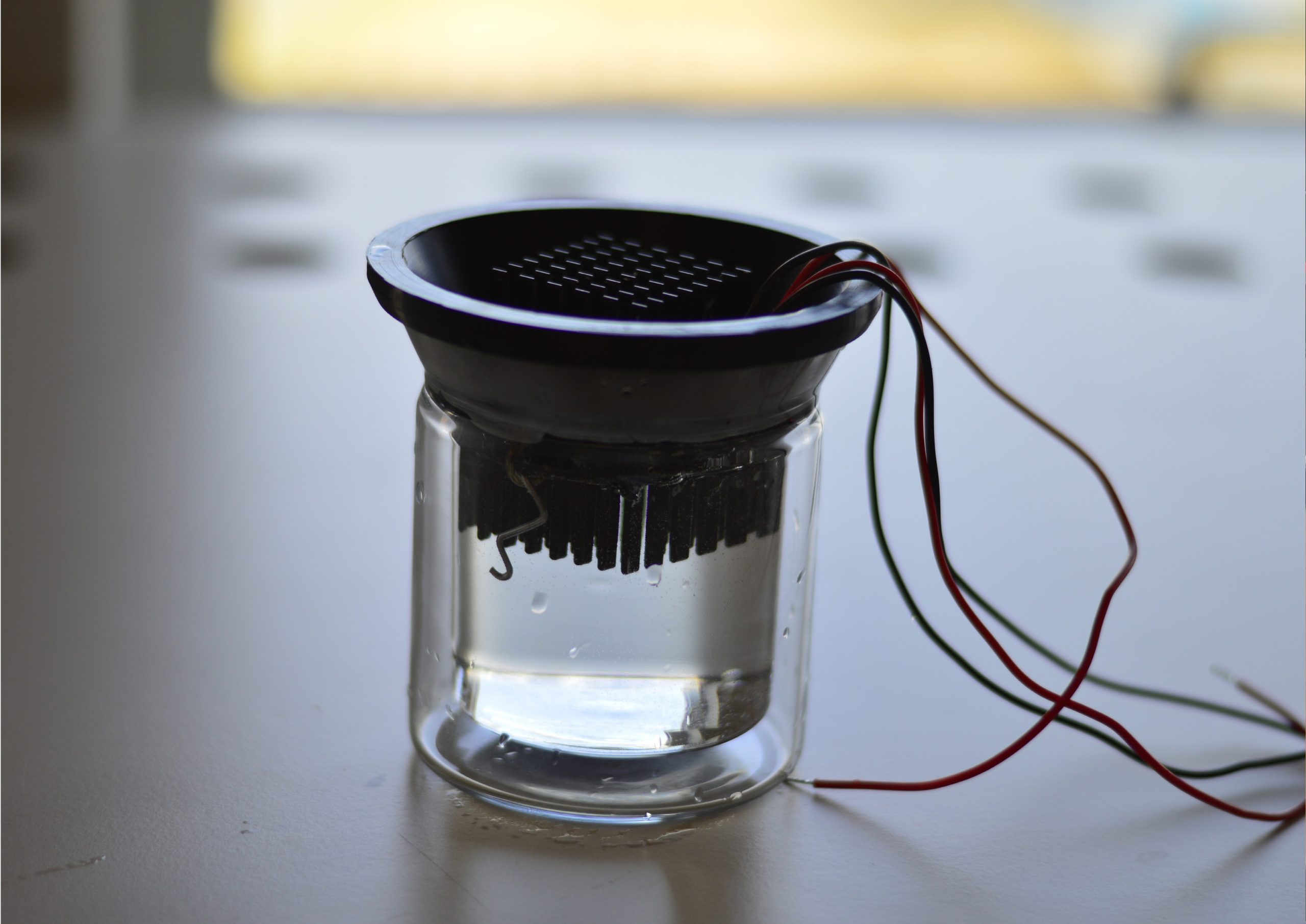
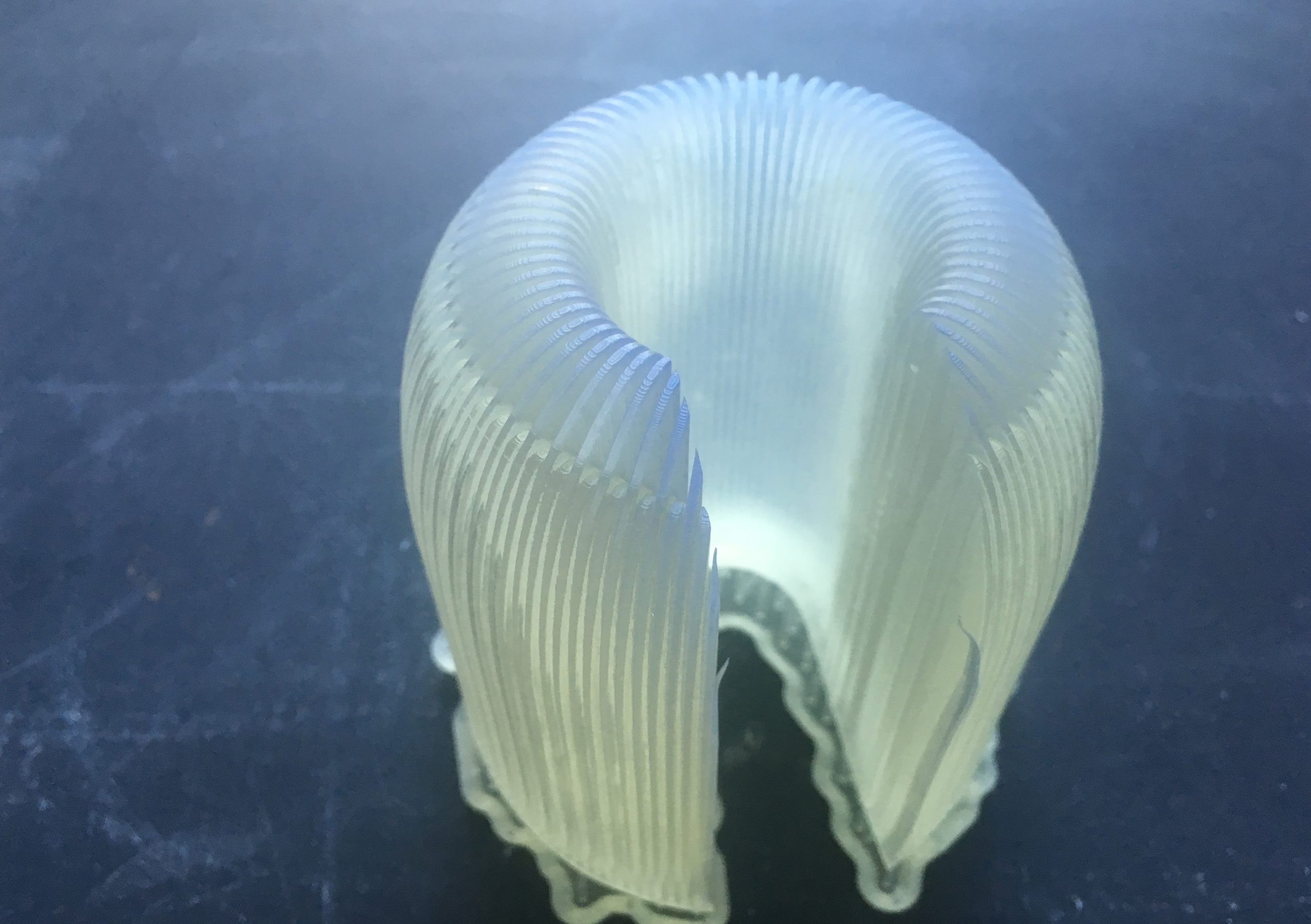
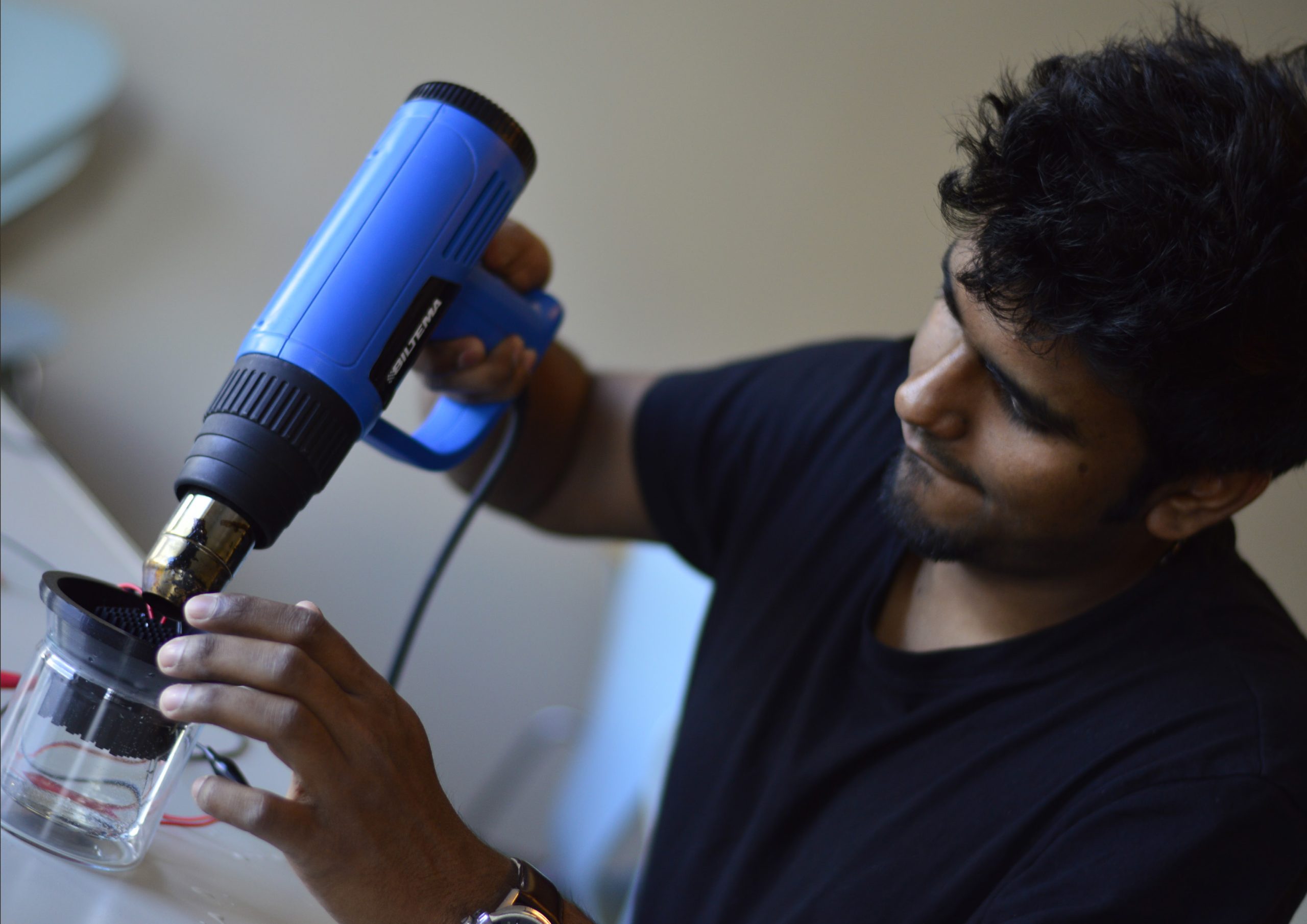
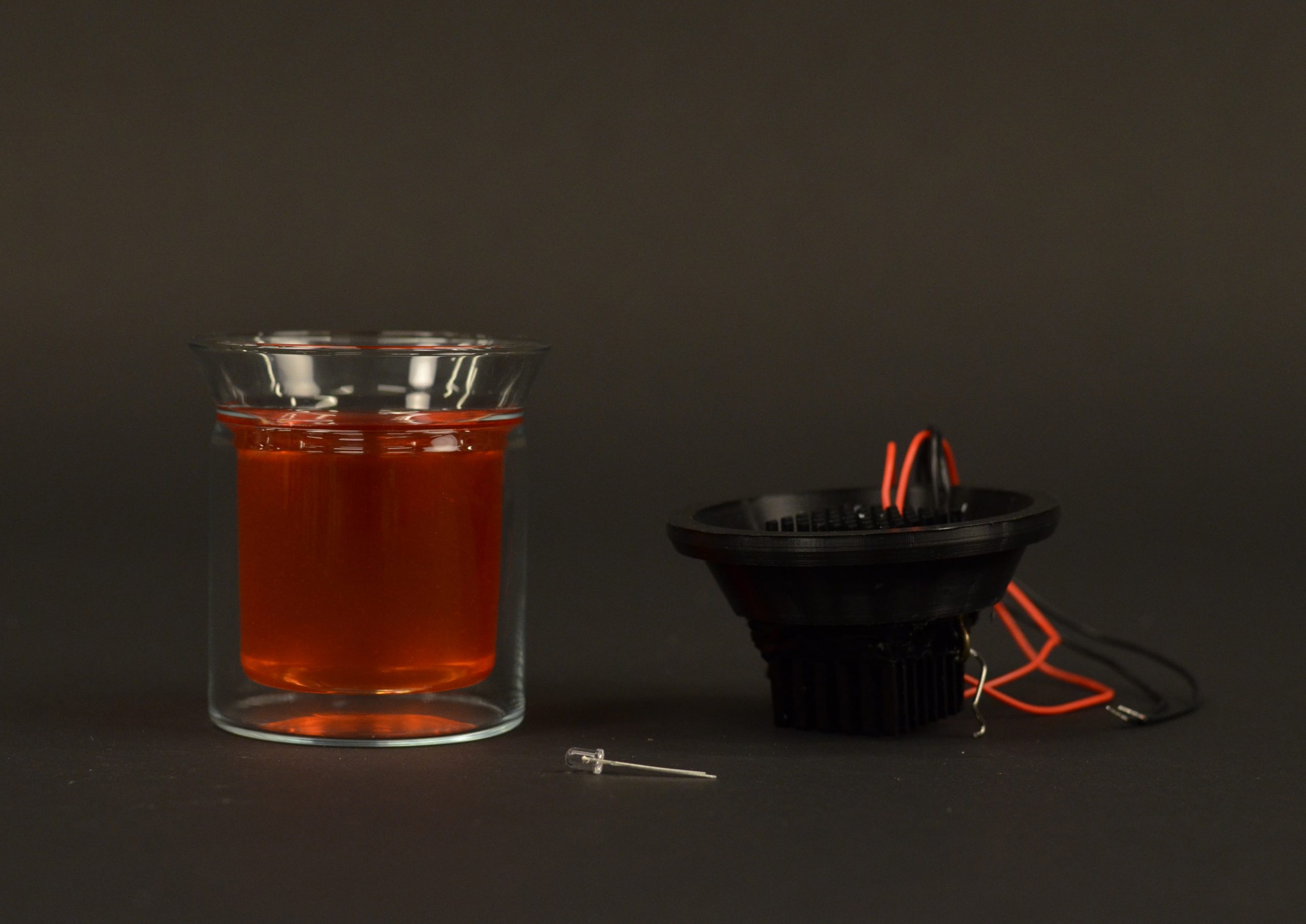
The Concept Prototype
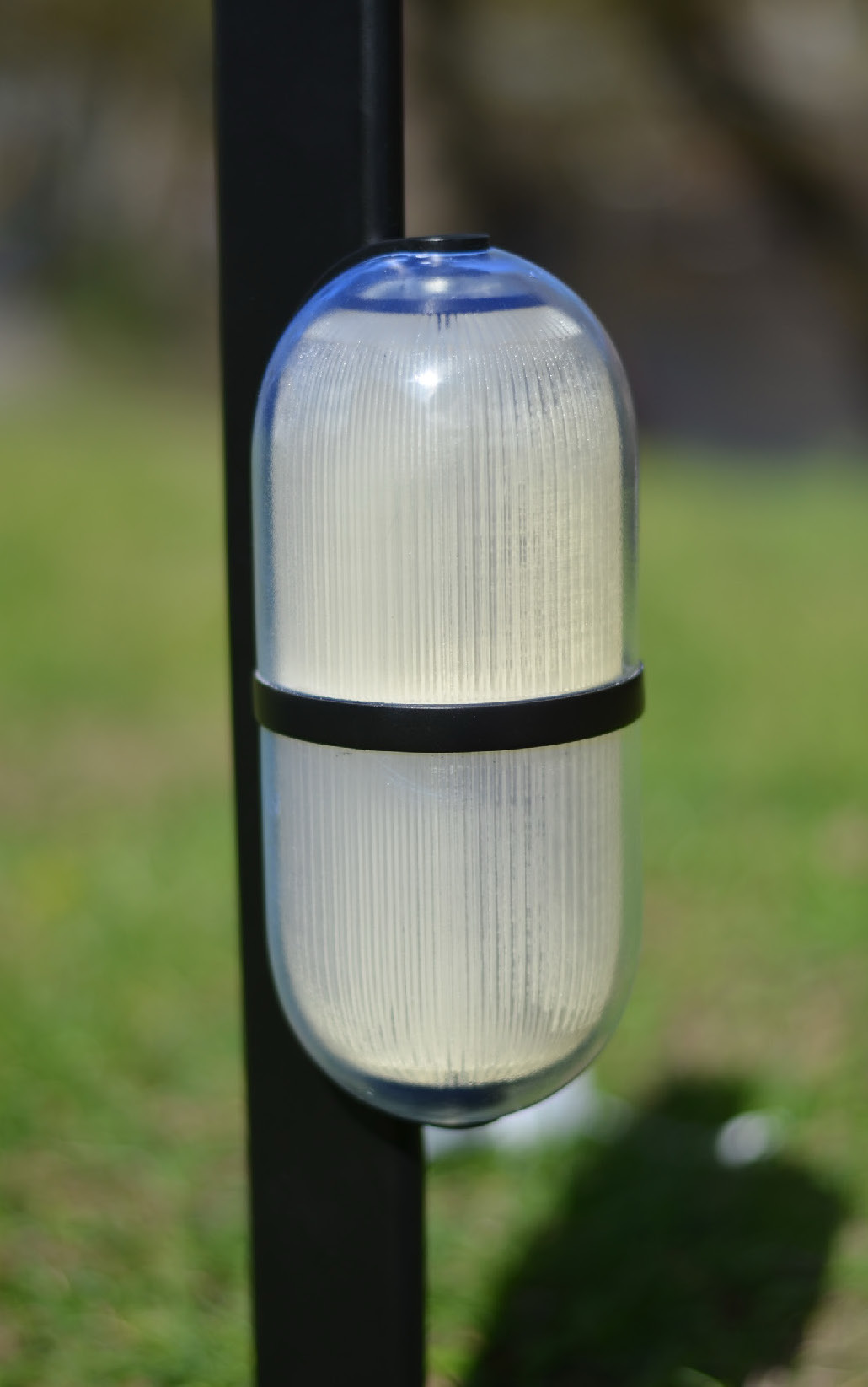
The concept was printed in resin and tested for optical transmission. For the most part the concept seemed to hold well.
Scalar Energy Transformations
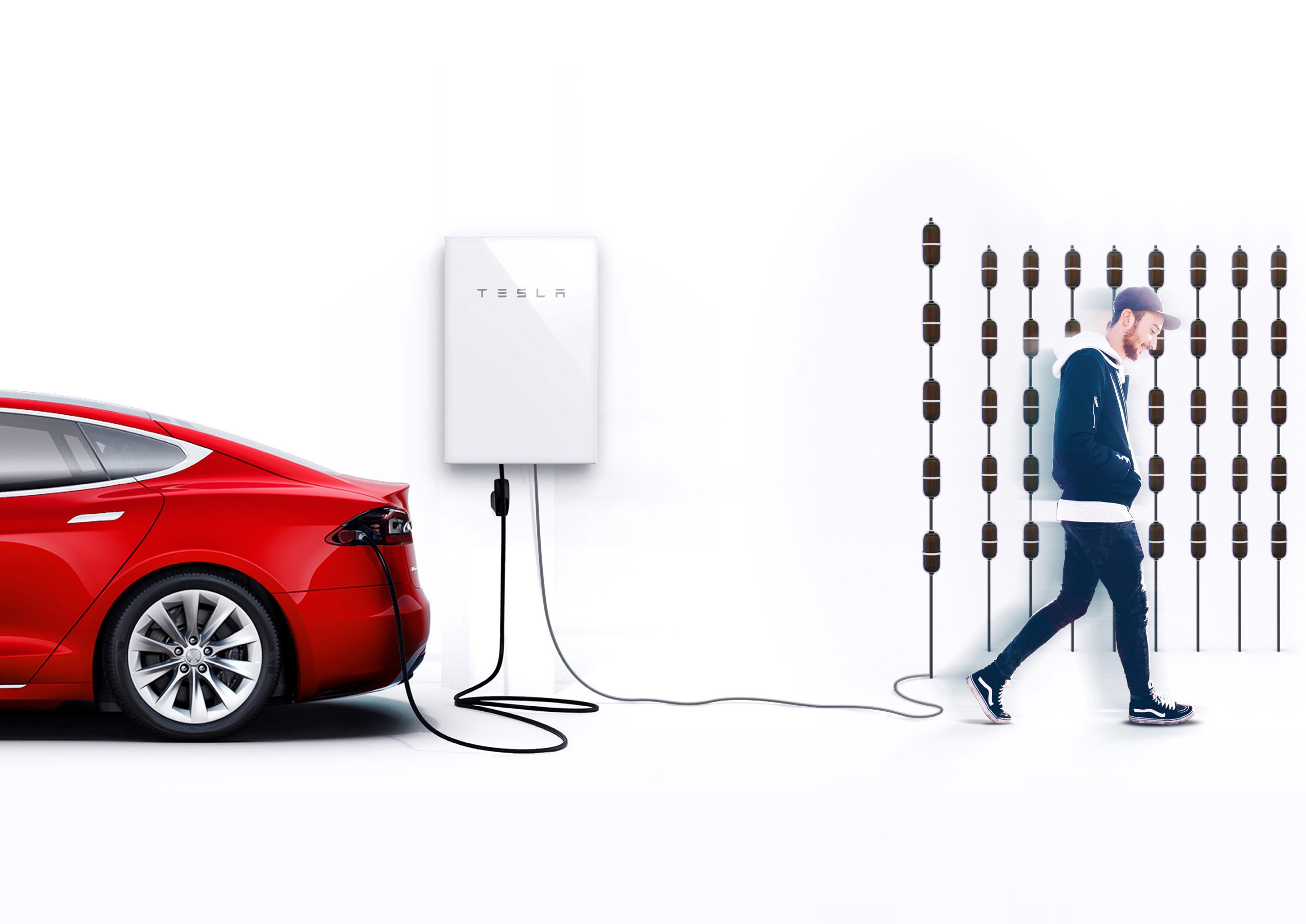
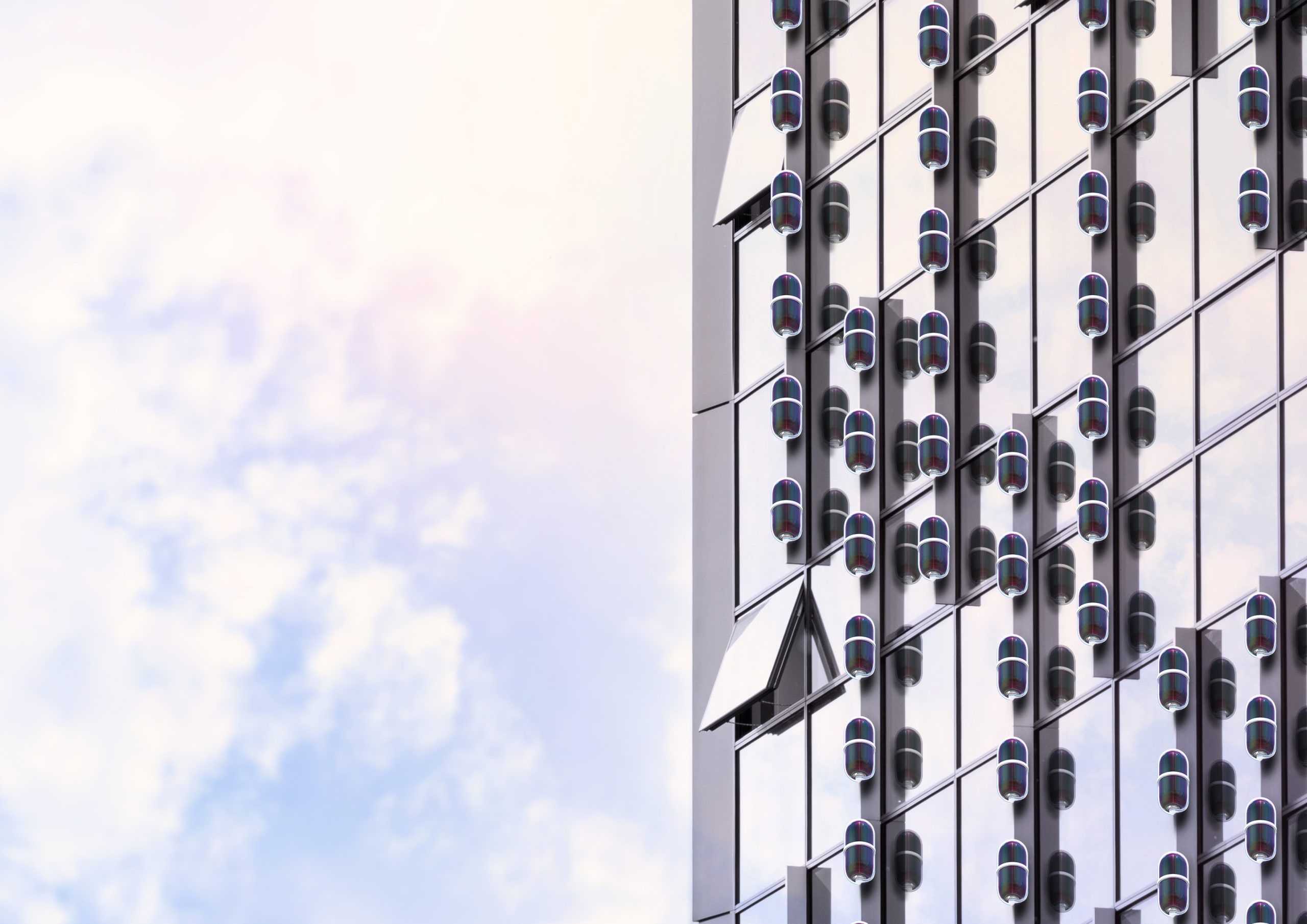
What S-NODES brings to the solar infrastructure challenge: the possibilty to turn vertical surfaces and architectural facades of the city into solar surfaces. This makes the urban envelop becomes a net generator of solar energy when coupled with drastic declines in overall energy consumption. Not too shabby for a tiny pill of energy.
Note: As of spring 2026, I am actively developing this concept further. Feel free to reach out in case you would like to collaborate and develop this concept further.
Read More: Joseph, J. (2019). Critical Futures Today: Back-casting Speculative Product Design towards Long Term Sustainability. In M. Ambrosio & C. Vezzol (Eds.), Designing Sustainability for All (Vol. 3, pp. 904–909). Edizioni POLI.design. http://www.lensconference3.org/images/program/VOLUME3.pdf
Other Projects
biomAresearch product
Walezi Wa Msitudesign research
Kalo Probalresearch product
Biomineralzerresearch product

iPod ProSpeculative Industrial Design
E-scooter DashboardProject type
Fluxfurniture design
nuoMobility
ketoIndustrial Design
Firefly Seeders (螢火蟲)research product
SymFabsresearch product
OrjaSpeculative Industrial Design
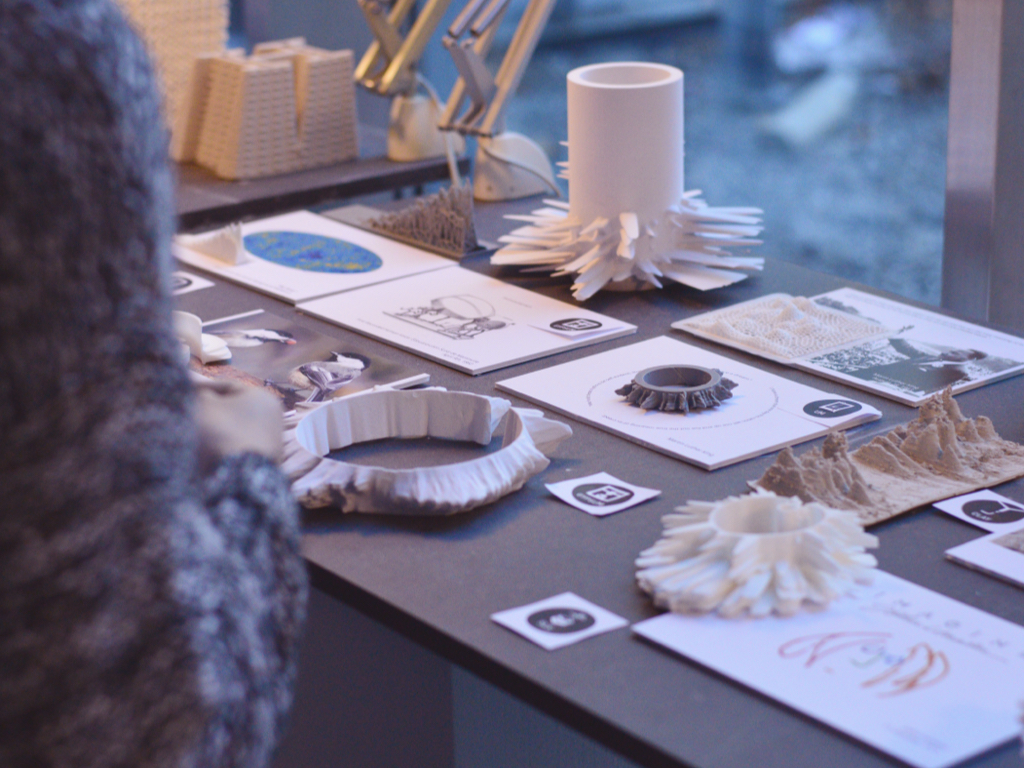
SynesthesiaAdditive Manufacturing