Smart e-scooter dashboard
"What if the instrument cluster on Smart's e-scooters was as smart as our digital selves?"
About a decade ago, e-scooters were a niche product category in the world. For the most part, the instrument clusters were only just beginning to get into screen based controls for scooters and motorcycles. The dashboards seemed a bit lacking with respect to our tech savvy lives, at least that's what I thought at the time. Recent research suggests that physical buttons and redundant inputs for critical vehicular control systems lead to safer outcomes. Regardless, here you'll see an exploration into an instrument cluster concept for electric scooters.
The Why
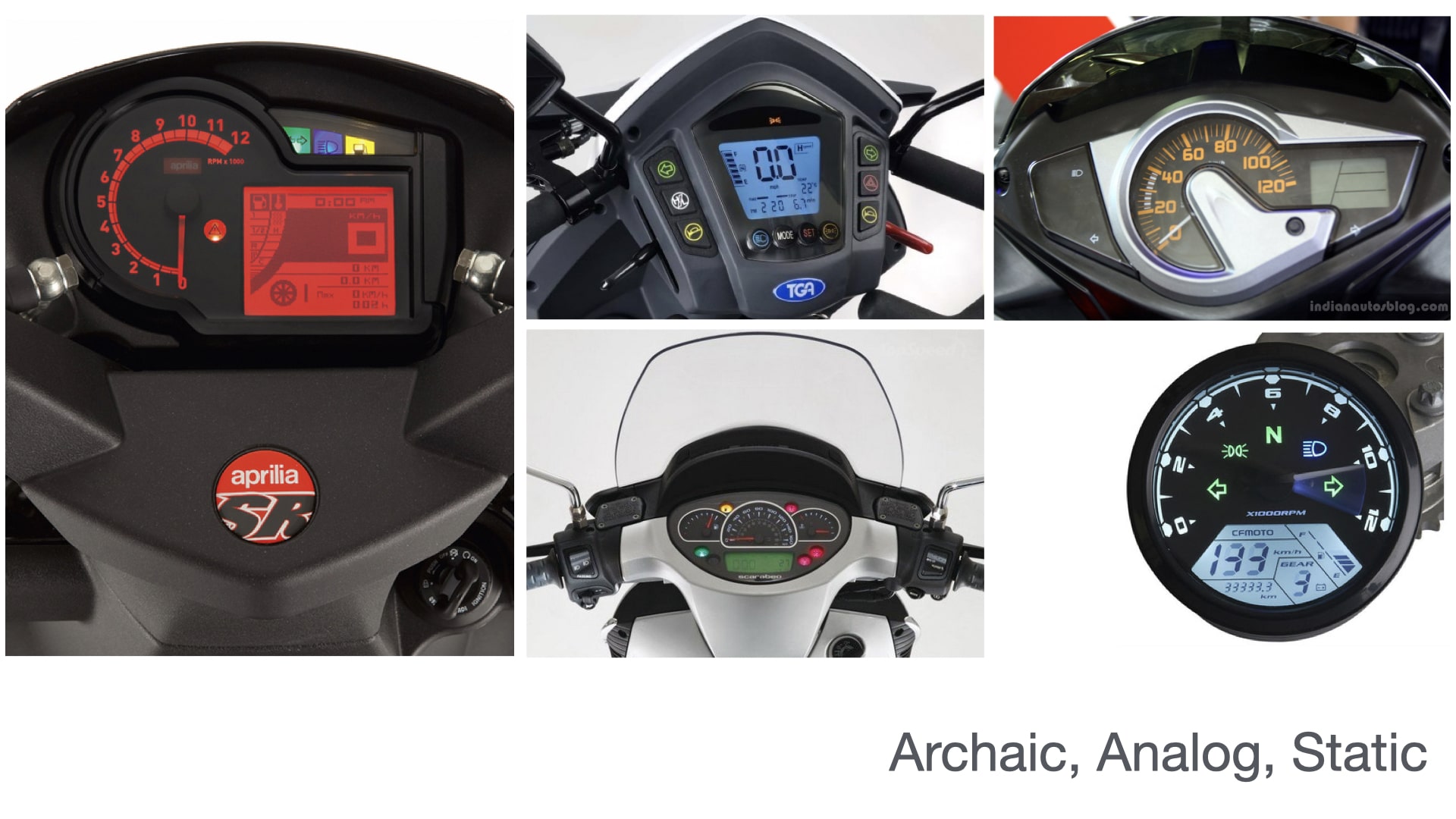
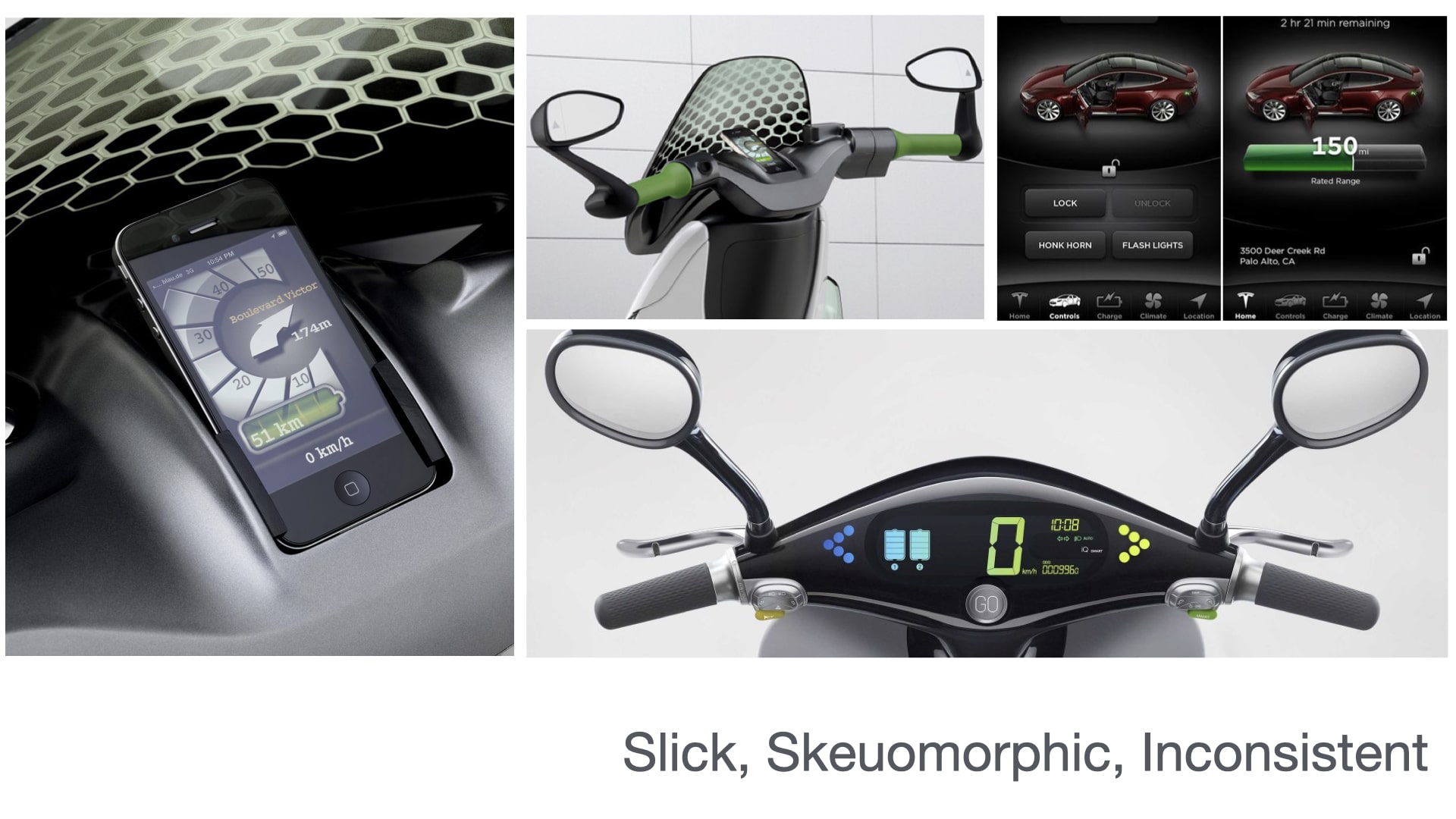
Scooter Dashboards of the day were following two trends, one an offshoot of the futuristic aesthetics of the 80's techno-pop culture which were archaic but reliable, while the other was the slick digital skeumorphism spilling over from the mobile app designs which were slick minimal but also aesthetically all over the place. On one hand you had the usual outlook of scooter dashboards where only the essential info you had was the amount of dials and gauges that the manufacturer could accomodate, limited but redundant enough. On the other you suffered from information overload: all the data, all the time and screens that distracted.
The Design Challenge
Instead of following either trajectory, I set off to find a balance on the agenda based on three key principles:
• Less is More: For a task with high cognitive load, simplified user experience is needed to avoid errors that could be fatal in case of an automobile.
• A minimal yet highly relevant interface provides high utility and keeps the user more focussed on the task of riding.
• Respect the User enough to make the changes flow into their usage and lifestyle habits and avoid higher cognitive load which might increase human error.
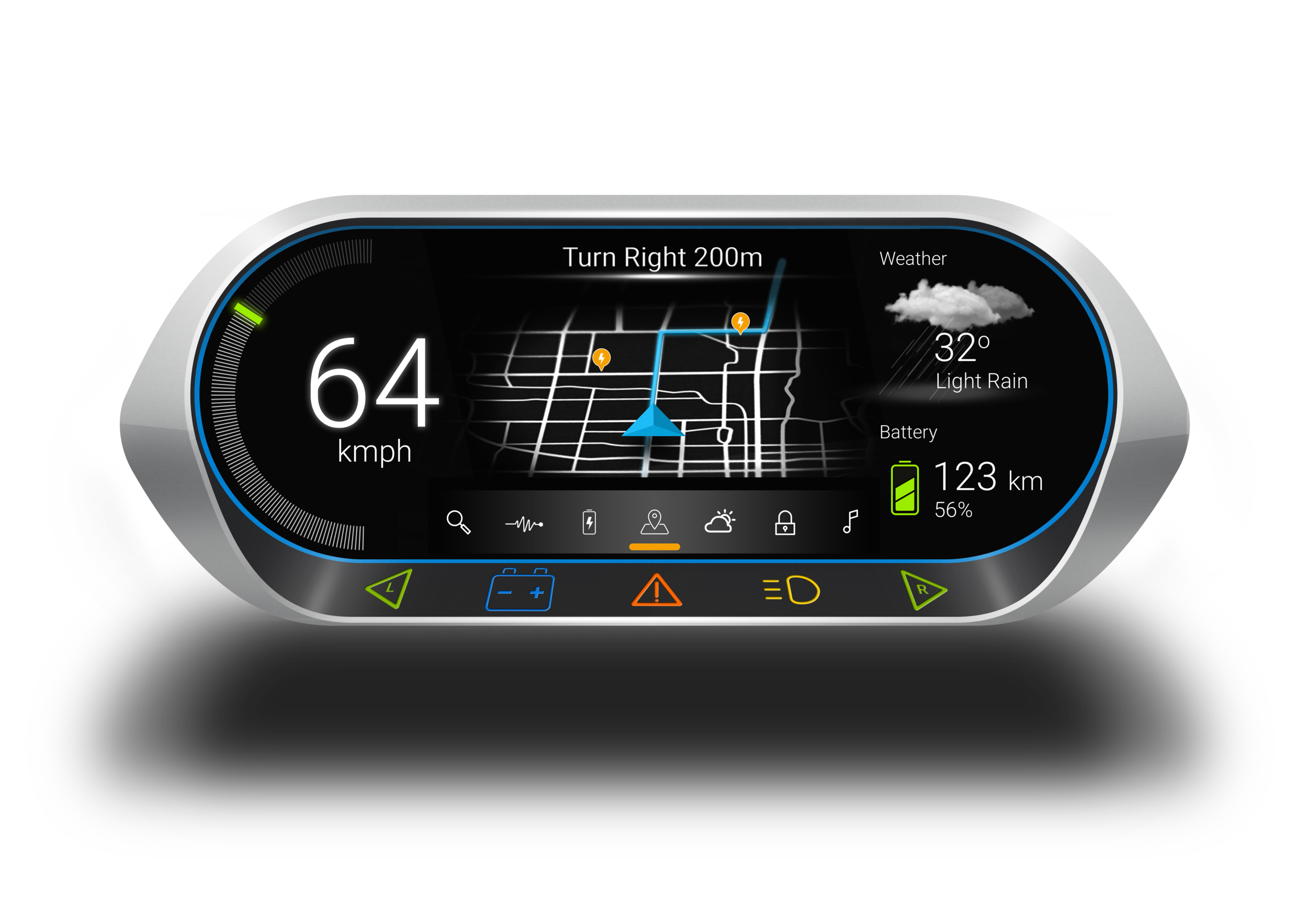
The cluster itself is meant to be a compact yet fully integrated system which covers most of the essential information. Consider then what kind of data would be contextually relevant, it was clear that the following data points would be needed to be centered as crucial for the rider to know:
1. Vehicle Interface: Instrument Cluster
- Real time contextual data
- Simple Interface
- Ride Information
- Vehicle Analytics
- Navigation
2. Personal Interface: Mobile App
- Trip Data/Analytics
- Navigation data, (plan rides, analyse trip data, etc.)
- Vehicle diagnostics
- Vehicle Security
Hardware Design
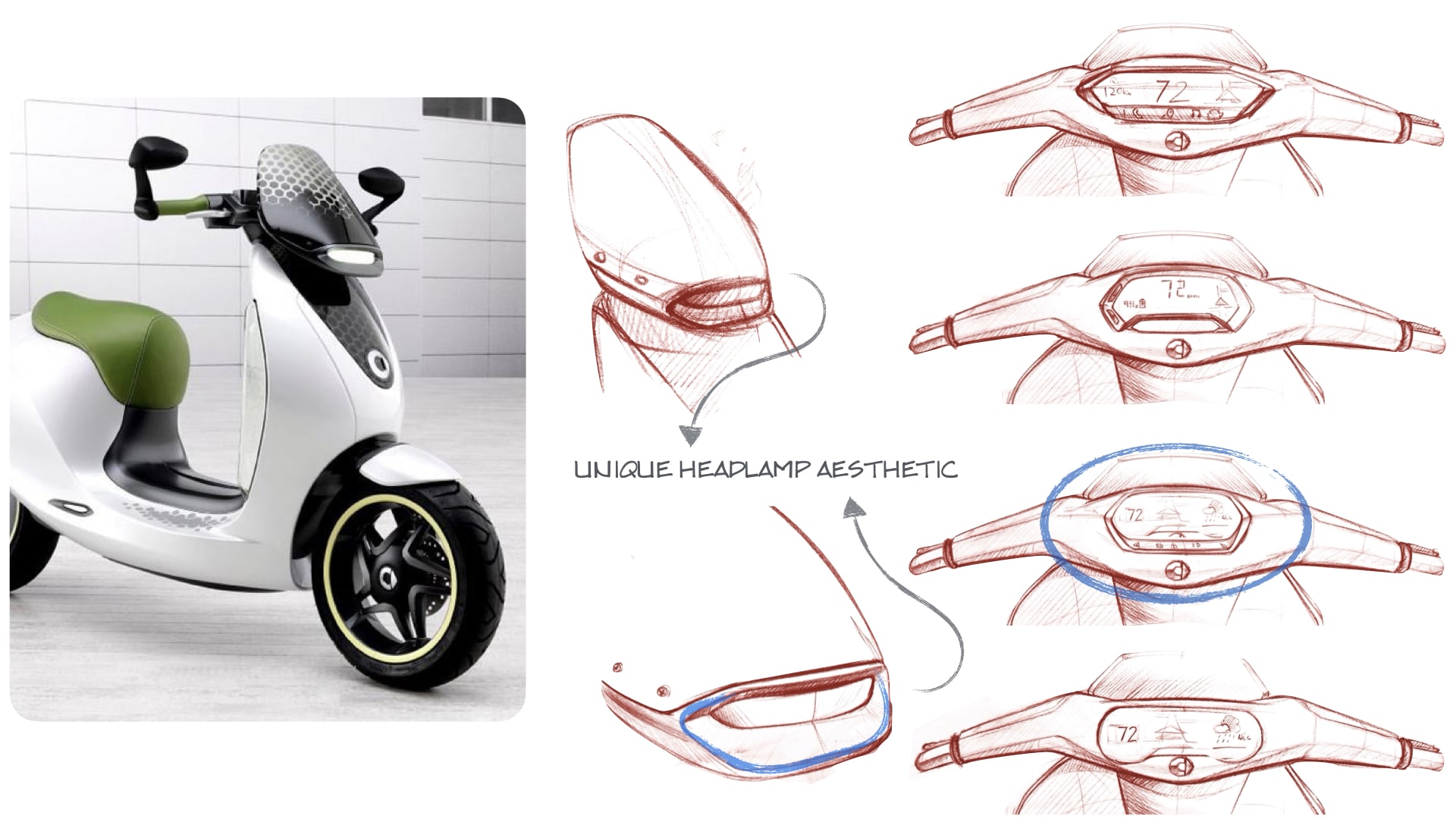
The instrument cluster itself was to flow from the lines and exterior aesthetics of Smart e-scooter concept. This would be the foundation for the concept and frame the instrument cluster.
Interface Design
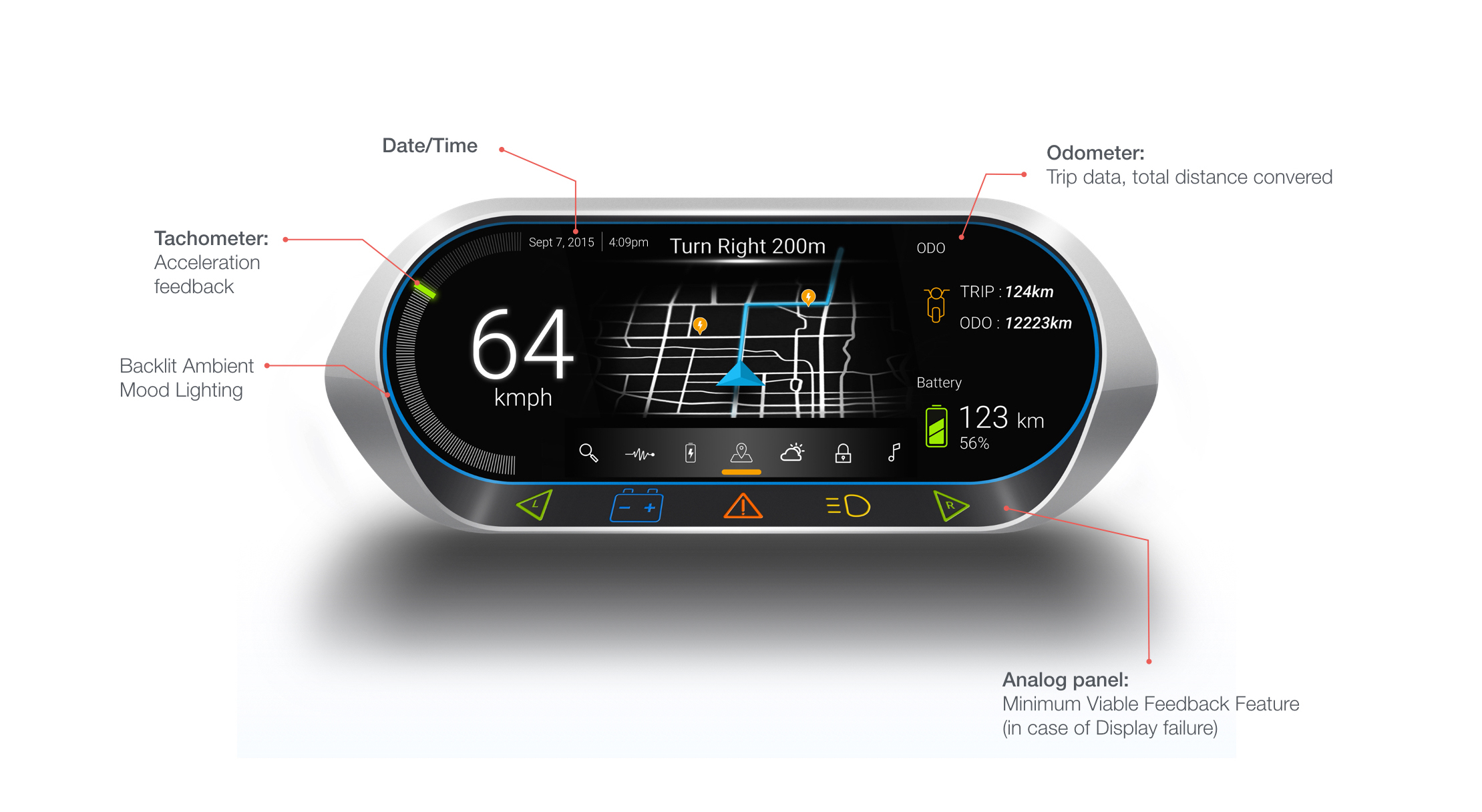
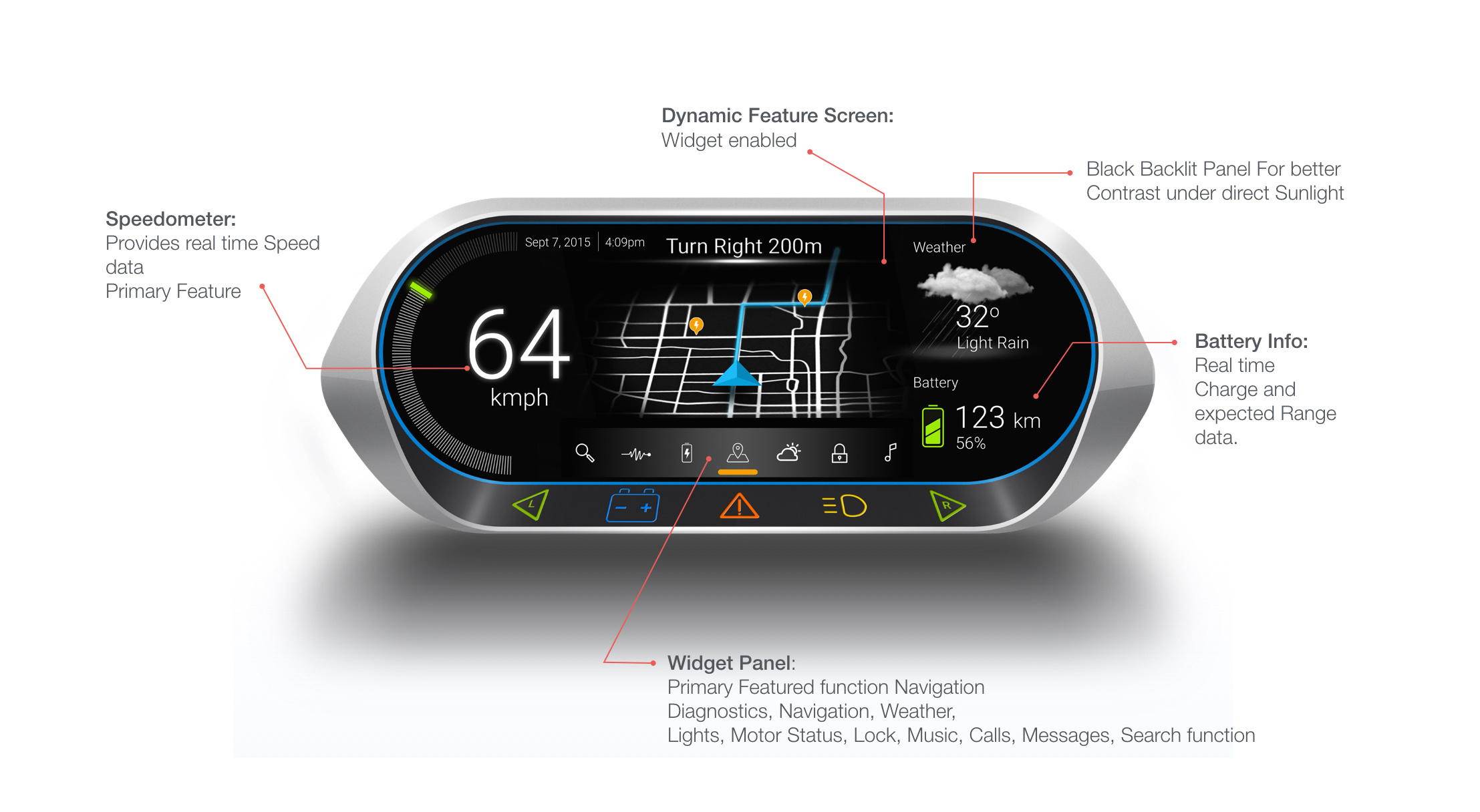
The cluster is meant to be a compact yet fully integrated system which covers most of the essential information. Consider then what kind of data would be contextually relevant, it was clear that the following data points would be needed to be centered as crucial for the rider to know:
1. Instrument cluster:
- Speed
- Navigation
- Battery Info
- Weather information
- Tripmeter/Odometer
- Date/Time data
2. Mobile App cluster:
- Power and Efficiency Stats
- Vehicle Status (passive/inactive state)
- Battery Charge Cycles
- Vehicle Diagnostics
- Trip History
Dashboard Wireframing
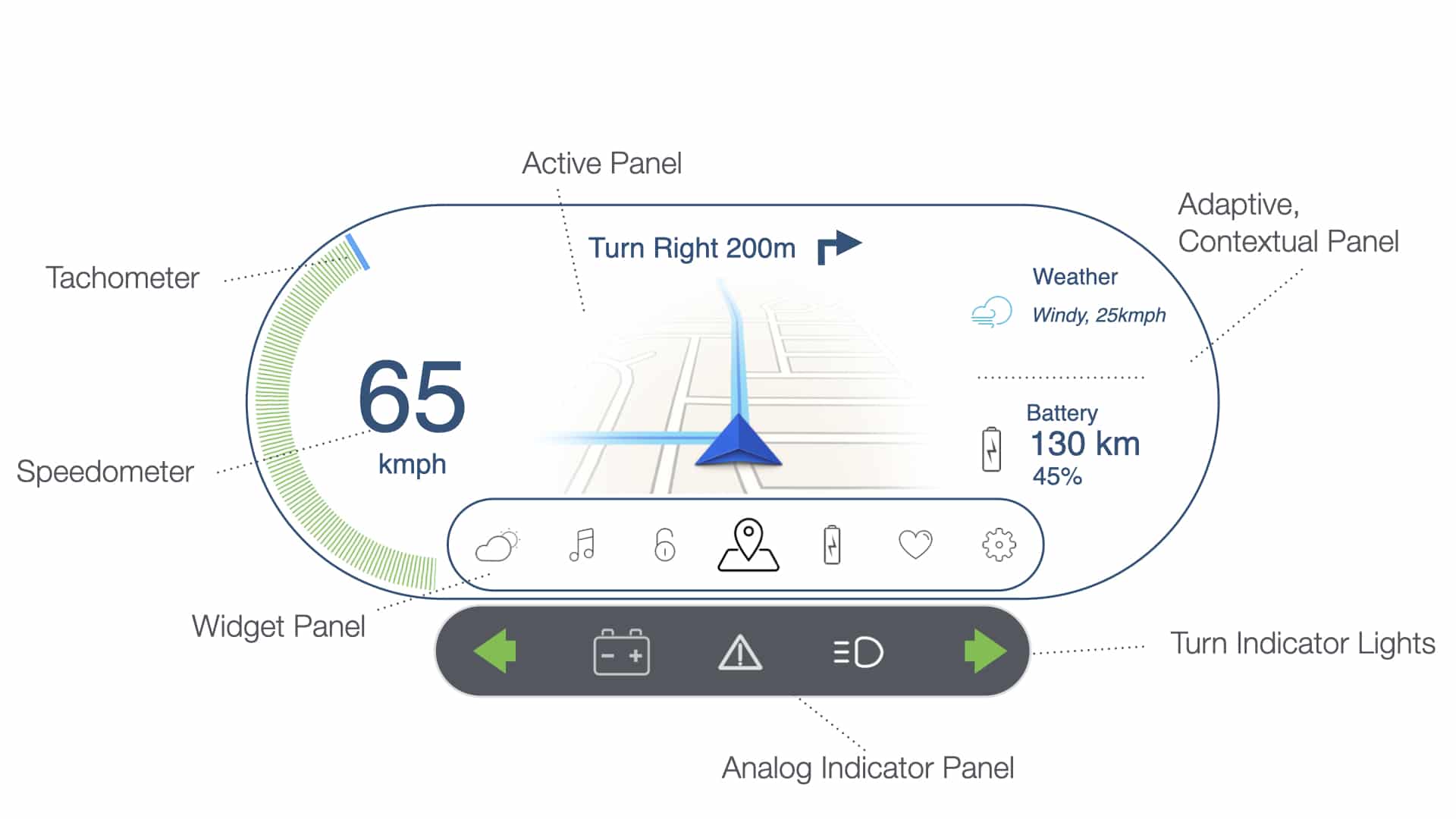
Once the outline was ready, the hierarchies were easier to lay down. A hybrid digital+analog interface with redundant indicator cluster.
The e-Dashboard Concept
The cluster is a subtle meeting of both hardware design and digital interface meant to harmonise information without overwhelming the rider. The rich interactions are meant to be just enough to give information without overwhelming the rider. The screens and features shown here are not meant to be always on, but pop up as and when needed.
Dynamic Homepage
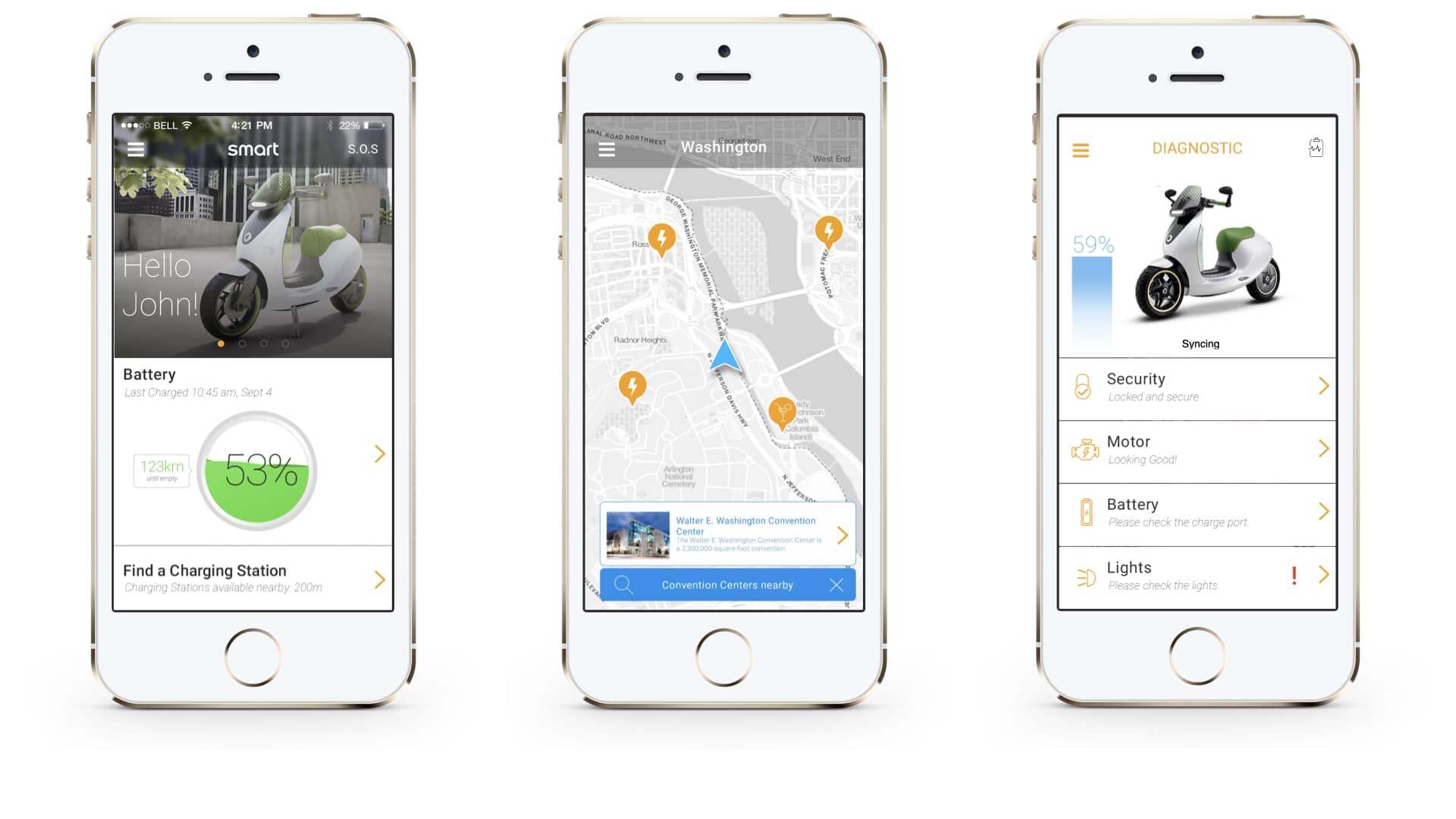
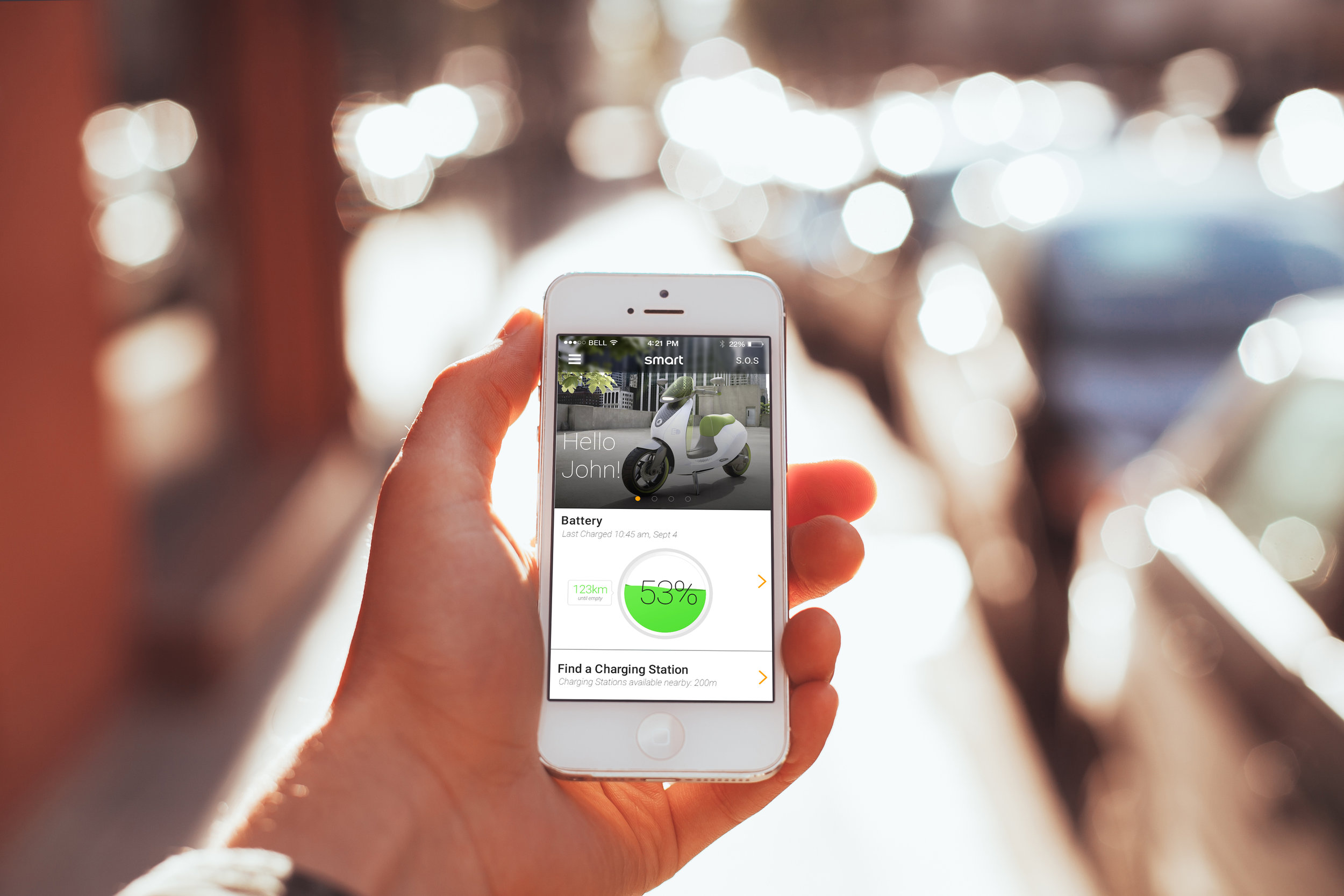
The mobile app home page gives the rider a dynamic update and overview of the scooter's essential info including:
- Battery Status
- Ride history and analytics
- Nearby charging stations
- Detailed analysis of efficiency and performance stats
- Quick access to emergency services
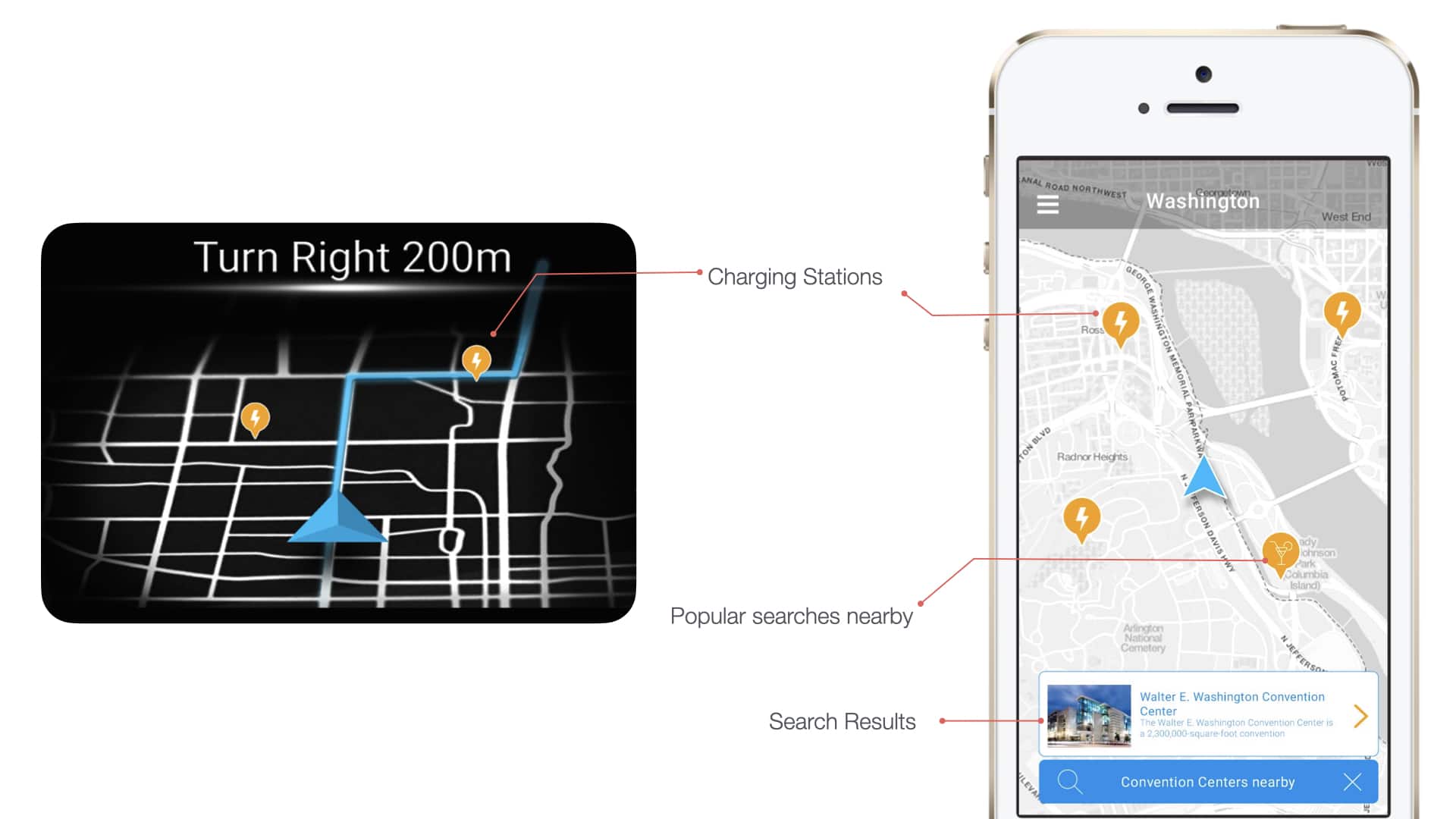
Navigation
It's pretty much obvious in hindsight now but getting navigation integration with GMaps was still not as clean of an integration at the time. The Map complements the on board real time contextual data for turn by turn navigation. It shows relevant data like favorite places and personalised recommendations for services.
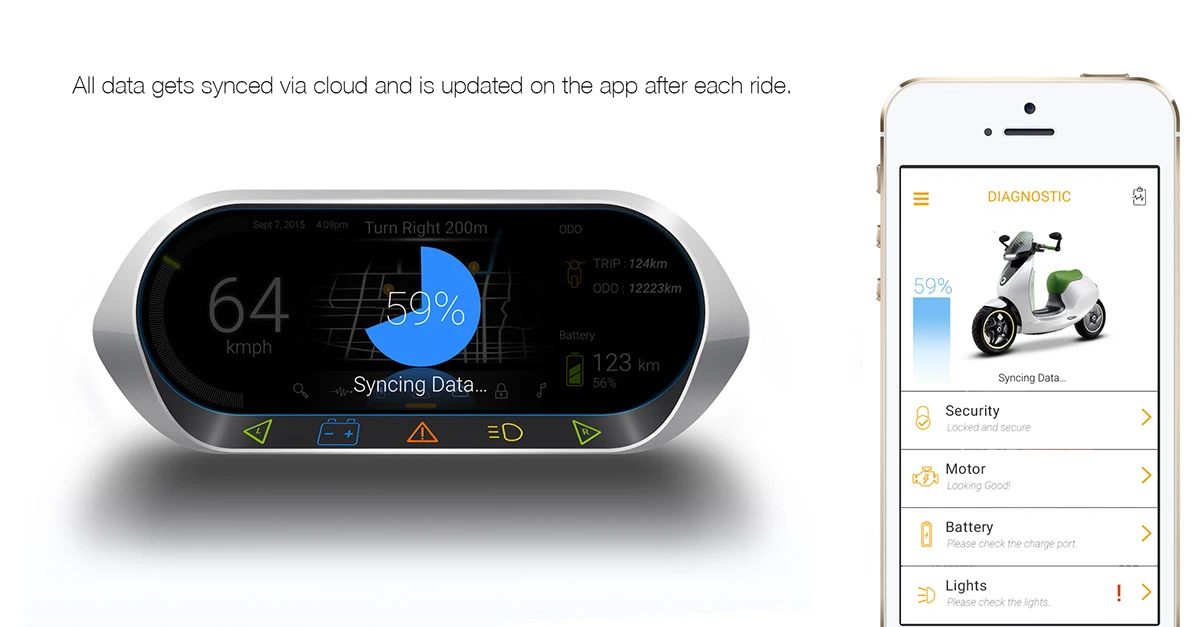
Diagnostics and Cloud Syncing
All the data is meant to sync with background diagnostics running to ensure that all the operational systems are running optimally.
In the past decade e-scooters have taken off in a big way, many of these principles are ubiquitous and I am glad to see better standards being developed to make electrified commuting a more reasonable and hassle free experience.
Other Projects
biomAresearch product
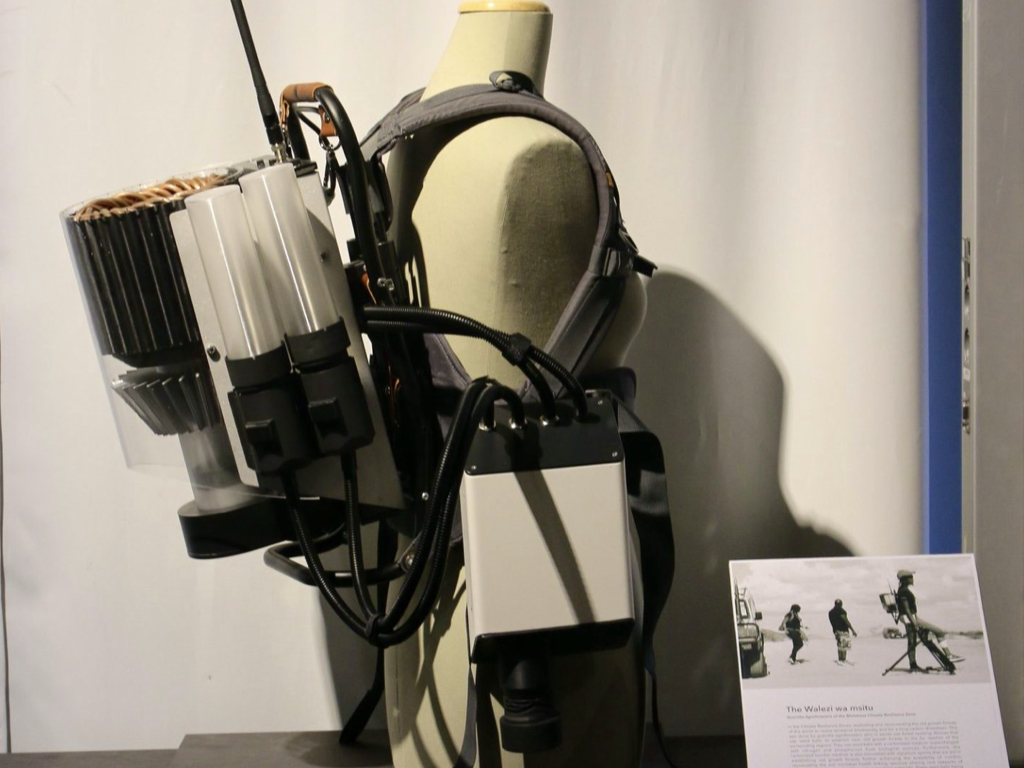
Walezi Wa Msitudesign research
S-NodesSpeculative Industrial Design

Kalo Probalresearch product
Biomineralzerresearch product
iPod ProSpeculative Industrial Design

Fluxfurniture design
nuoMobility
ketoIndustrial Design
Firefly Seeders (螢火蟲)research product
SymFabsresearch product
OrjaSpeculative Industrial Design
SynesthesiaAdditive Manufacturing