biomA
Volumetric Fabrication Device for growing Organic Batteries
Note: This project has led two lives. It was conceived of as a student project in Fall 2017 called 'Future Seeds' where the early concept and prototype was developed. Then in 2021 the project matured into its context and became a part of my larger Research through/by Design PhD project on imagining the next 100 years of post-fossil product innovation. The project is also being actively developed further.
biomA is a vision for a volumetric 3D printer that 'grows' organic batteries for renewable energy futures from algae and chitosan biopolymer. Paving the way for a more responsible, regenerative shift to alternative fabrication methods for renewable energy futures. In the age of climate crisis, perhaps what we really need is less extractive ways of thing-ing and better ways to 'sustain' new paradigms. biomA is an attempt to nurture instead of making products and growing instead of manufacturing them in the digital age.
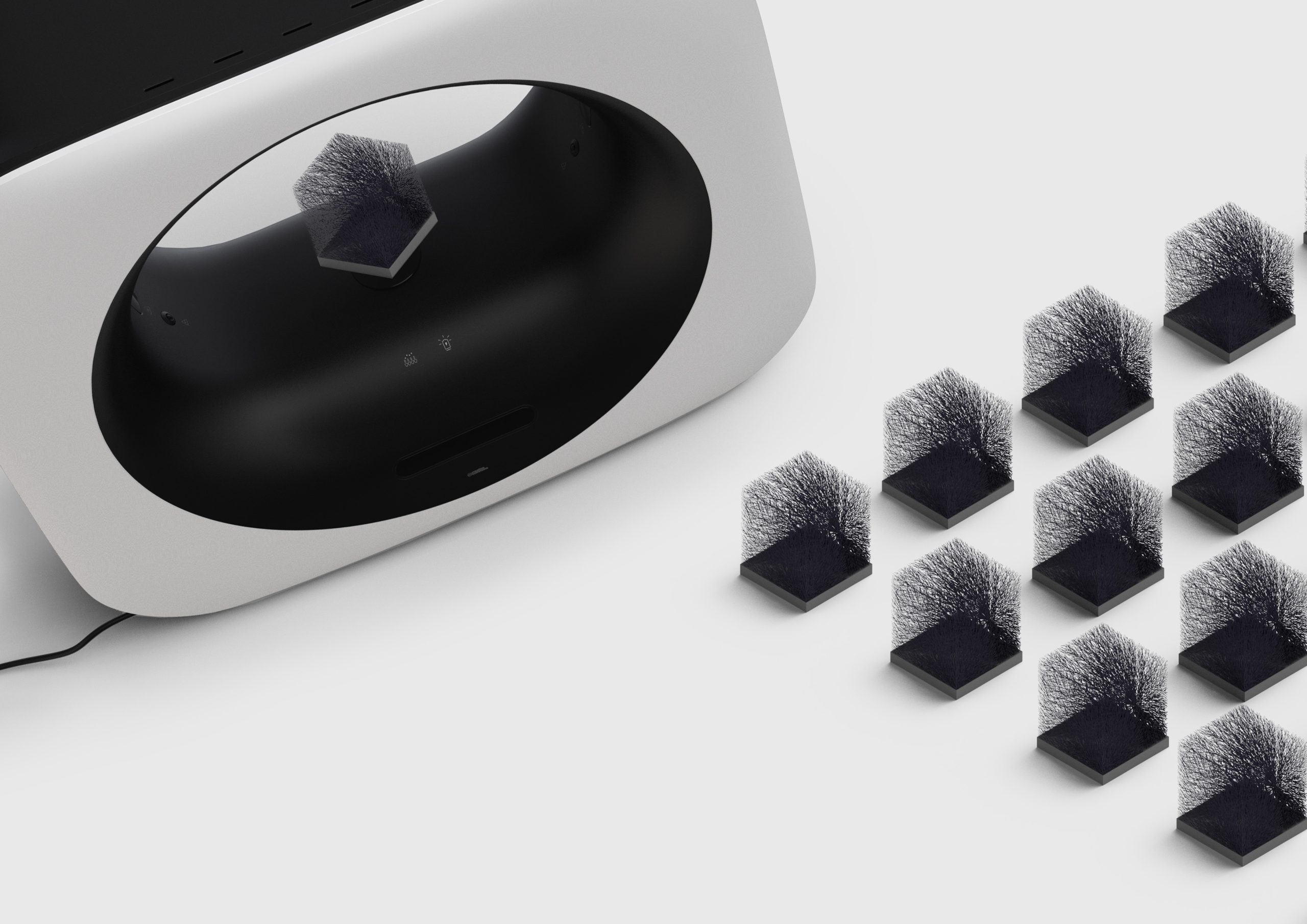
Figure: Concept render showing the biomA device and the protoypical battery anodes being produced.
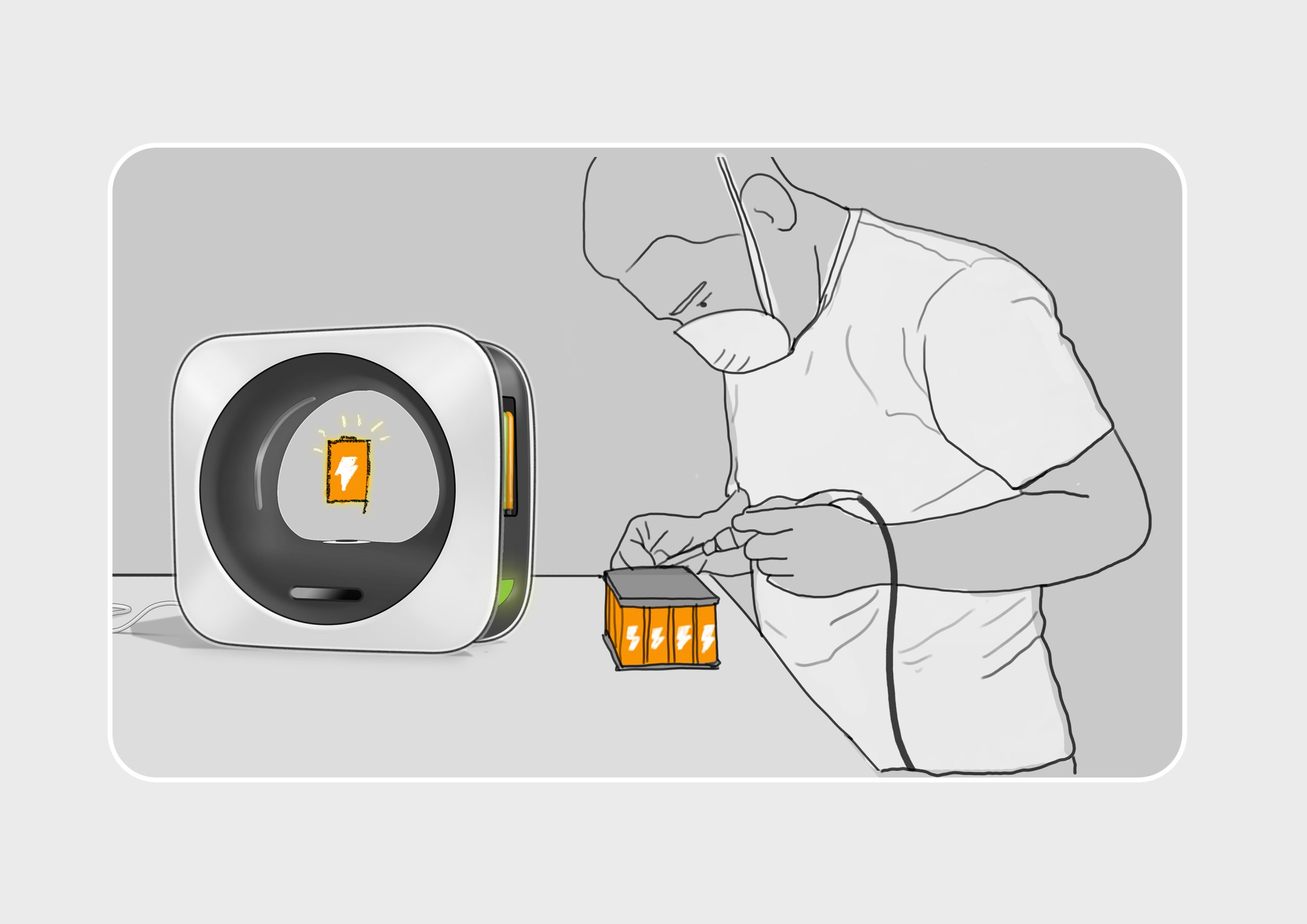
Figure: Concept sketch showing a makerspace workshop where the device is producing
The following is a limited preview of the concept description from a larger design fiction.
Socially Useful Production Technologies
One summer in 2042 in Sao Paulo, a citizen science festival brought designers and technologists to work with open patent archives. In the municipal fabrication shops, the technology developed quickly and refined within the open-science community within a short time. The project, “biomA” was devised to grow organic batteries from carbon-negative processes and benign chemistry and biological feedstocks such as pond algae and chitosan biopolymers derived from mycelium extracts. By 2052, the Open Tech society and Citizen Science movements in Sao Paulo, further refine biomA into a volumetric fabrication protocol for producing organic batteries and supercapacitors using organic feeds like algae and chitosan biopolymers. This system aims to replace mineral mining in the renewable energy supply chain infrastructure to support the distributed and federated Socially Useful Production fabrication networks. The system nurtures Cladophora algae to sequester carbon dioxide and uses the end-of-life algae by-product as a fibrous substrate for battery electrode production.
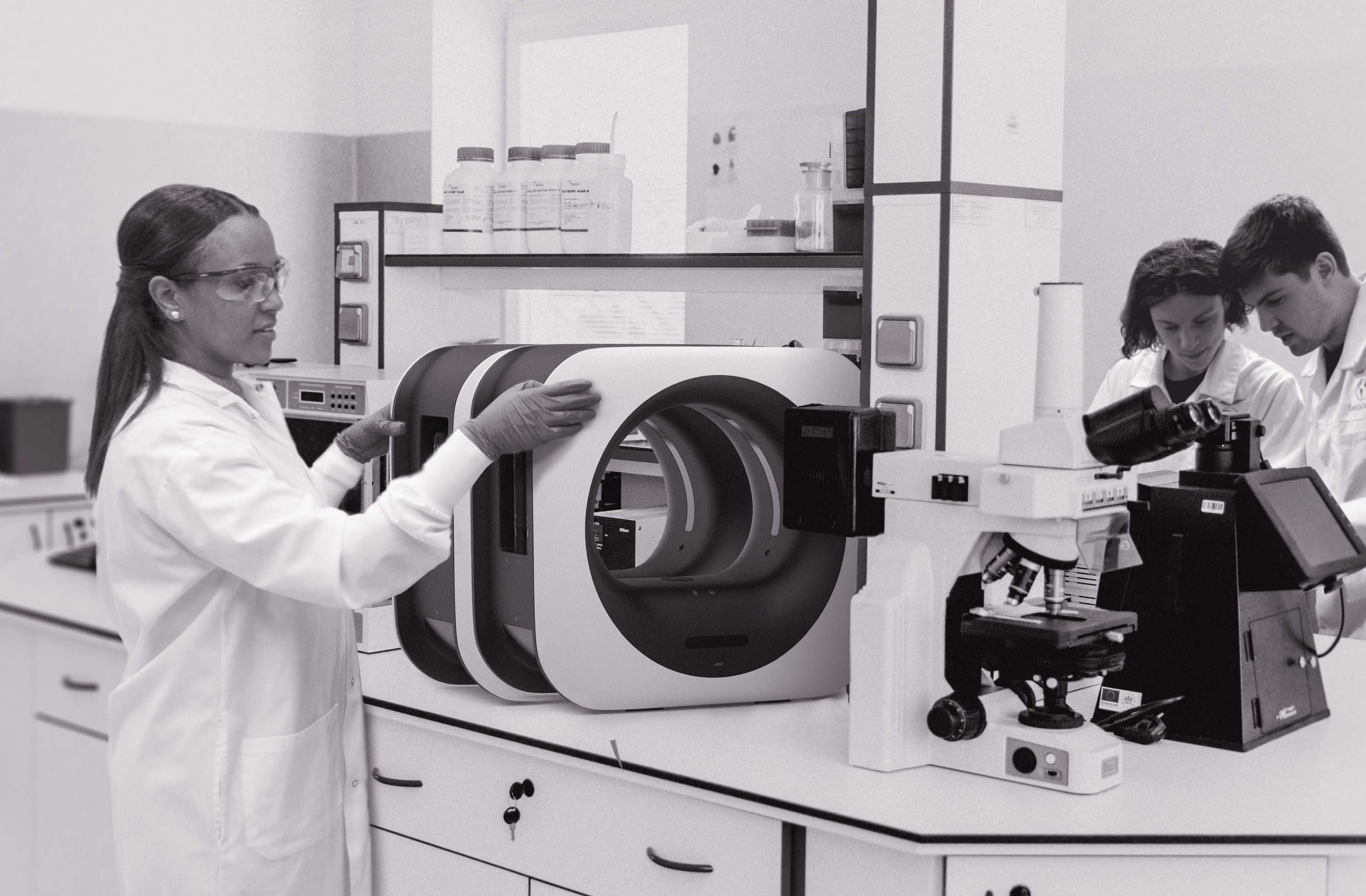
Figure: Concept Render showing participants in a municipal Citizen Science workshop in a future São Paolo. The community workshop has developed the biomA system under the Socially Useful Production protocols established to create ecological social technologies and development in science and technologies for people and planet.
How to Grow Organic Organic Batteries
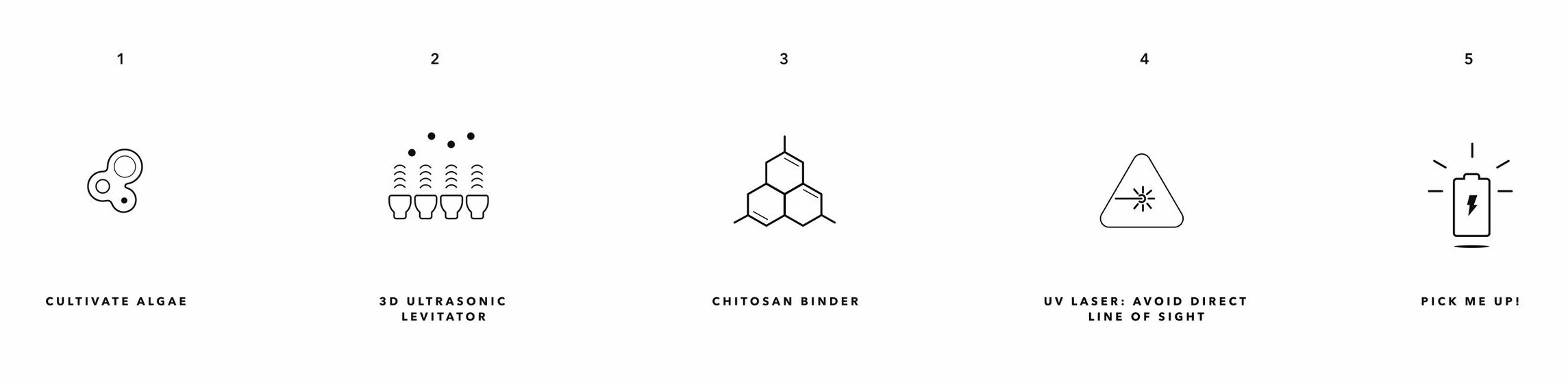
Using biomA's ultrasonic transducers, the algal 'seed' substrate is levitated and positioned precisely in a 3D point cloud of any computationally designed shape. A chitosan spray binds the algae to each other and across multiple layers, while a precision guided ultraviolet laser cures the biopolymer composite. This levitating object after little to no processing results in carbon-negative, regenerative batteries ready for deployment in the microgrids. This volumetric fabrication method would go on to create many opportunities for scaling out renewable energy infrastructure such as optical solar structures.
Given the open knowledge and the municipal workshop infrastructure already in place around this period, the devices spread far and wide as the improvements in the design were vastly refined. Thus, these organic batteries quickly integrated within the municipal microgrids updating the bio-battery infrastructure of the microgrids. The microgrid algae bioreactors tuned the nutrient conditions for growing specific genotypes of algae local to the region and processed them in the fabrication syndicates. In practically all cases, their embedded energy to produce these happened in the low energy demand seasonal cycles. The pyrolysis processes for high-quality biocarbon electrodes used organic waste upcycled in positive so-called “carbon cascades”. The resulting residual syngas and bio-oils found new applications in soil amendments, batteries, and biopolymer applications in mutually reinforcing material cultures within these carbon-sequestering communities.
Technological Feasibility Today
The technology powering biomA concept is based on existing technical papers on the potential of using algae and chitosan as battery materials to develop organic batteries. Moreover, the concept builds upong existing research on acoustic levitation and additive manufacturing technologies that have taken new life in recent years. The narrative premise of 'growing' our high-tech products has also been a favorite among wetware computing spaces and the bio-design community. So technically these are not so out there. However, as an alternative I wanted to bridge all these varied interest groups and see what an everyday organic production process would look like, one step removed from asking why we need so much stuff and energy in the first place.
Acoustic Levitation
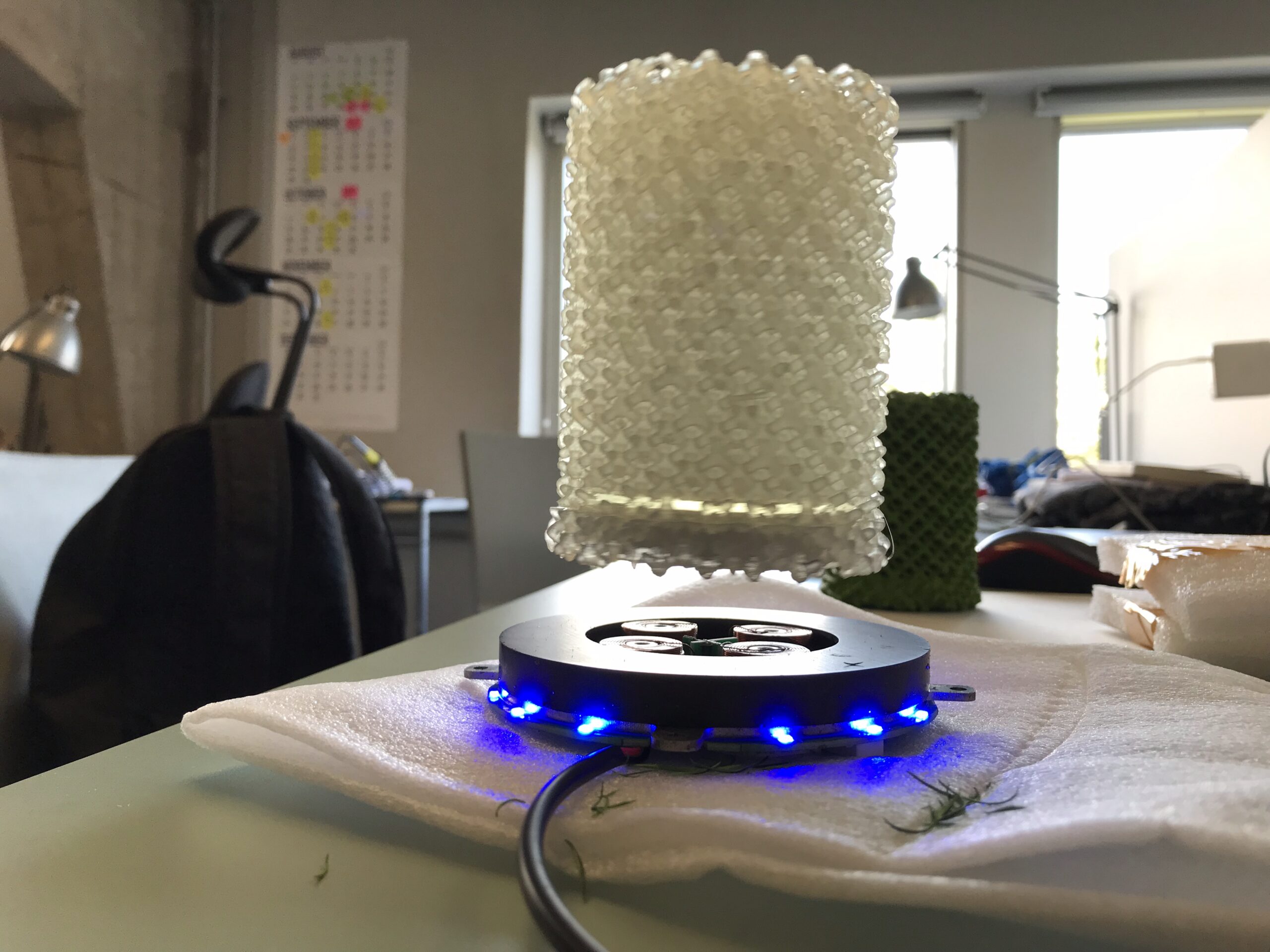
The printer uses a micro array of ultrasonic transducers tuned to create a focal point matrix within a print volume of 20x20x20cm. The printer uses acoustic levitation to position these algal seeds in a high resolution 3D point cloud from a CAD software with a high degree of control.
Chitosan Binder
The chitosan binder, doped with atmospheric carbon is sprayed as a fine mist over the levitating point cloud. Then, much like in stereolithography, a uv laser is fired on the surface to set the polymer in the 3D form. Layer over layer ,the combination of the chitosan coated algae in a morphogenetic structure makes for a highly versatile and environmentally progressive battery.
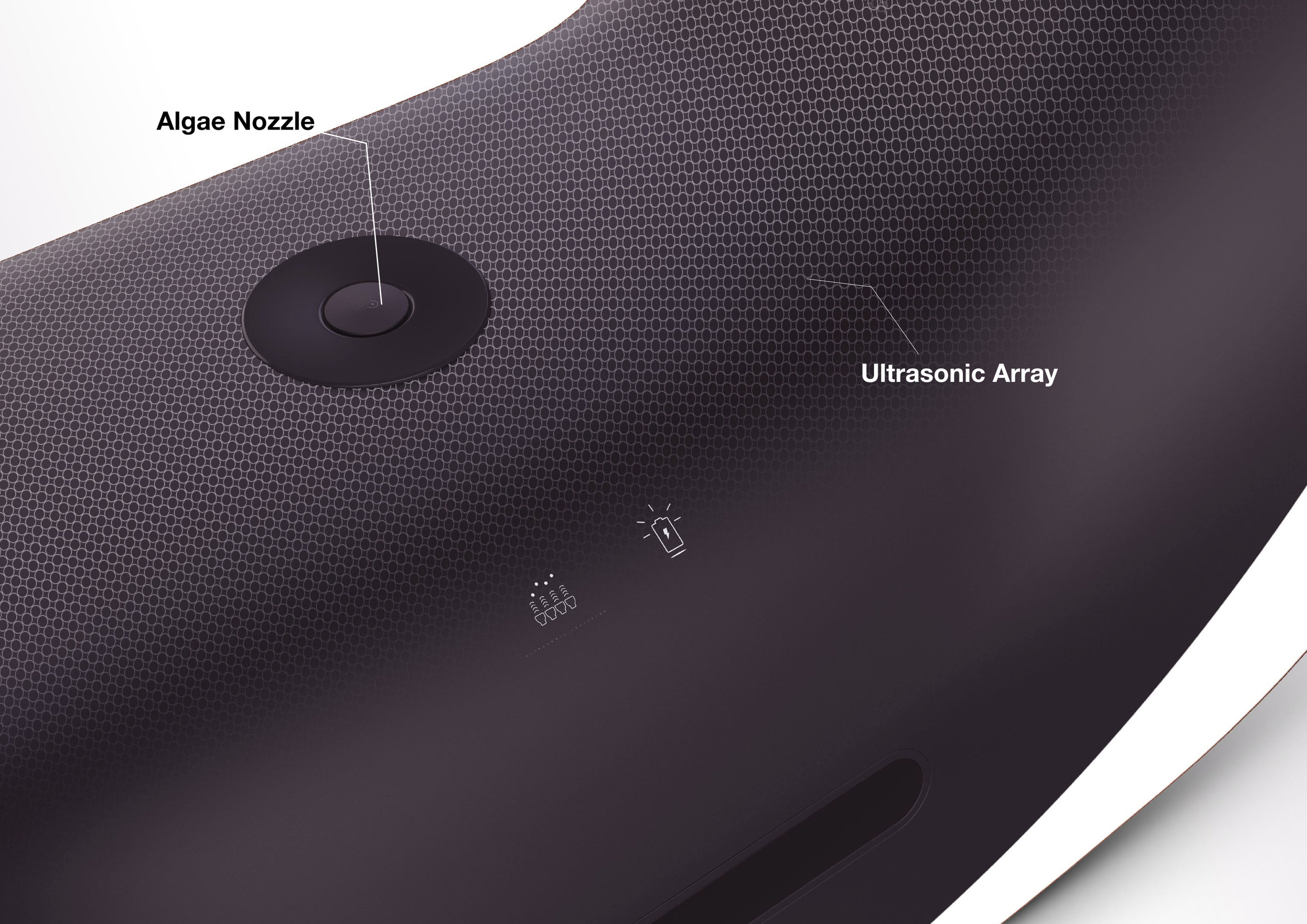
Figure: Close up digital render showing showing the algae nozzle and the embedded micro-ultrasonic array system for acoustic levitation.
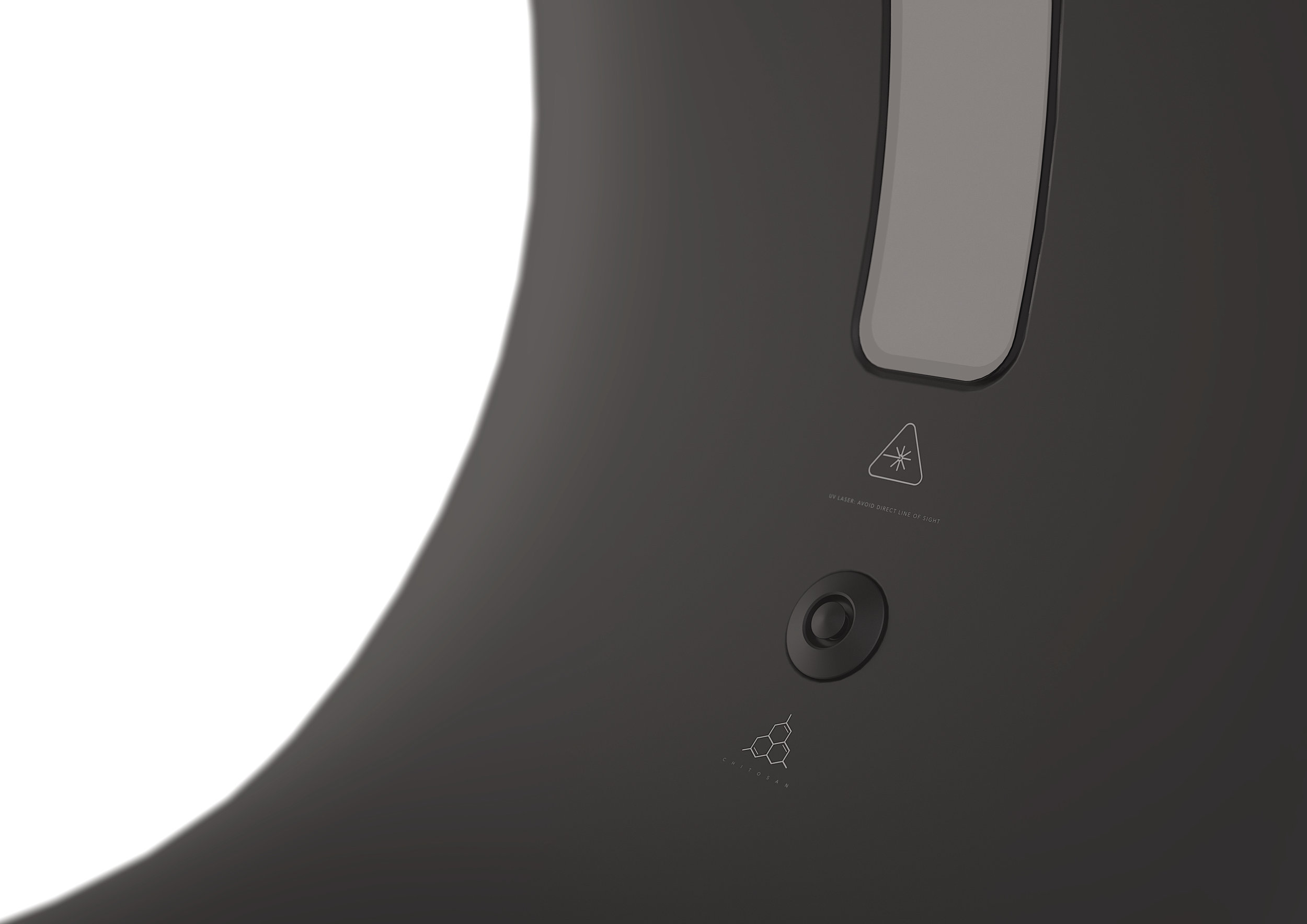
Figure: Close up concept render showing the detials of the chitosna spray nozzle and UV laser system.
The Modular Fab Ecosystem
The feeding system depends on refillable catridges that can be formulated locally or sourced by third party suppliers, much like the filament ecosystem of FDM printers. The chitosan binder and the algae both doped with atmospheric carbon with varying concentrations depending on the need. Some combinations could be for batteries, some others for semiconducting bio-polymers. The tuning depends on the use case with formulations open-sourced and shared as recipes across the open-source communities.
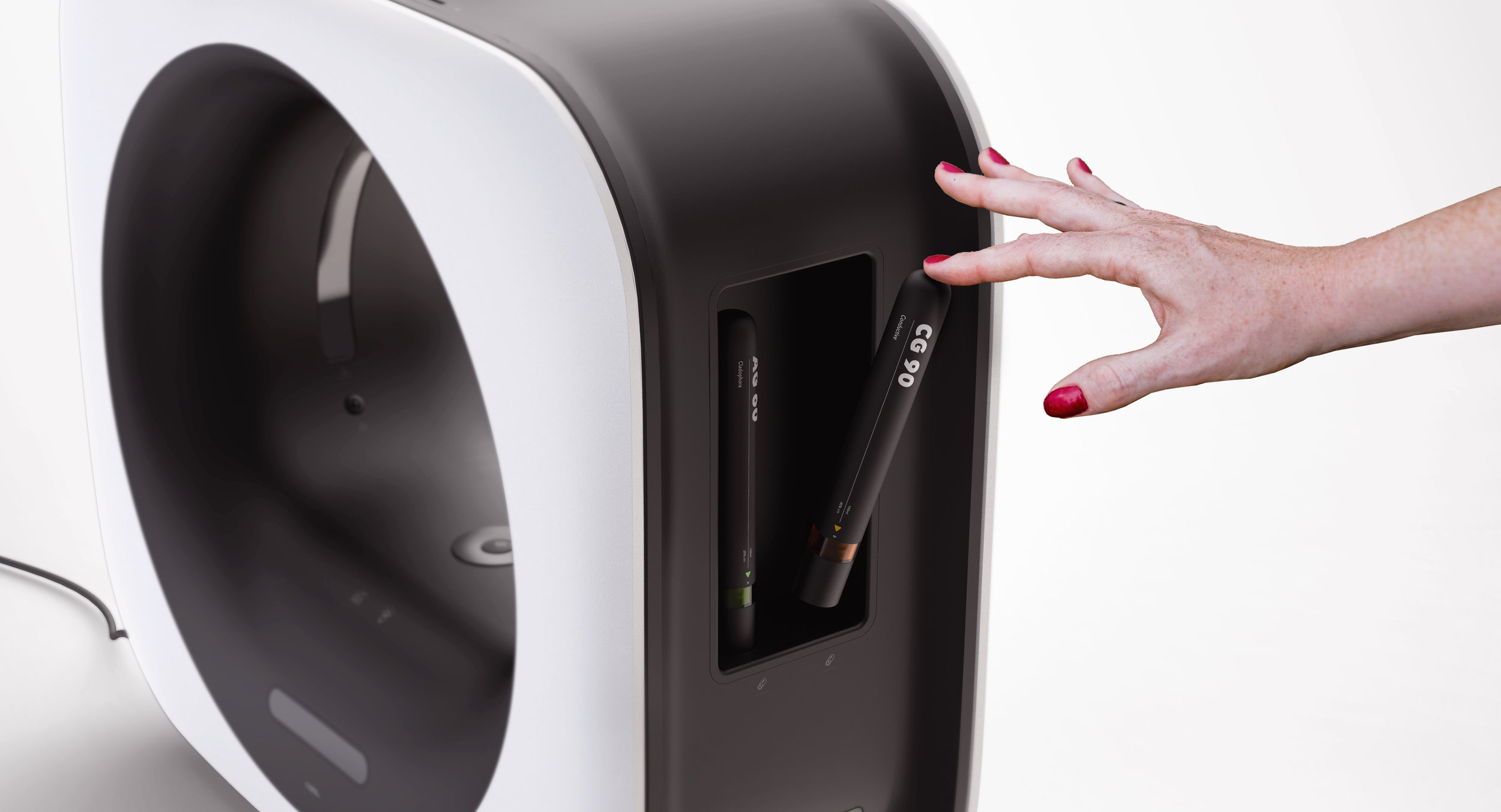
Figure: Concept render showing the dual catridge system for the biomA fabrication system.
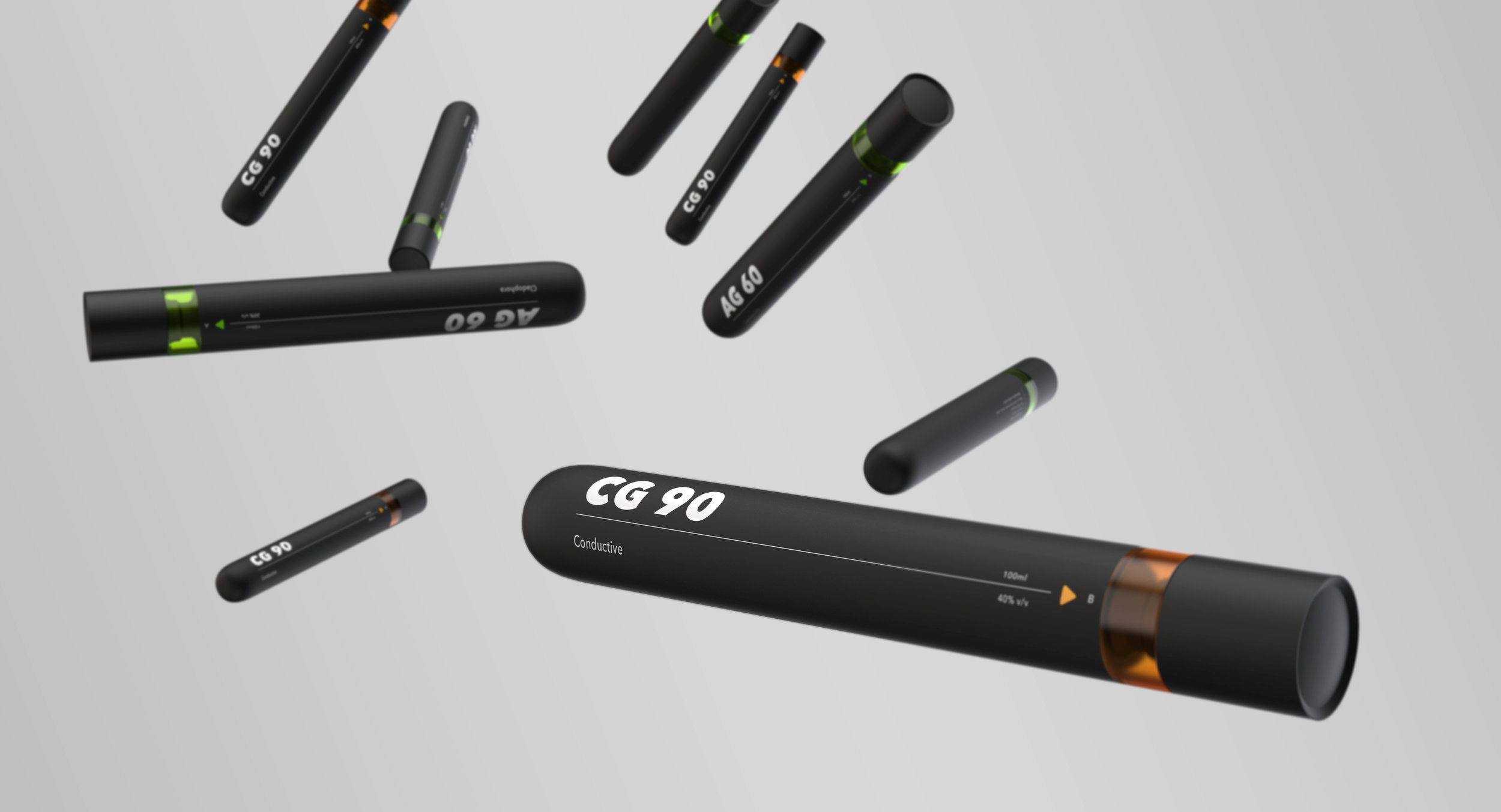
Figure: Concept render showing the 100nl printer cartridges for the system with the conductive chitosan-graphene catridge in the foreground and the Algae catrsidge in the background. CG90 and AG60 nomenclatures represent the concentration formulations for specific use cases.
Ecologies of Scale-Out
Economies of scale perhaps don't need to work here, because at scale, when things fail, they fail big. Maybe instead of thinking on "Giga" scales, we can work with more resilient, adaptive and evolving nano scales. The lesser the inertia, the better the resilience.
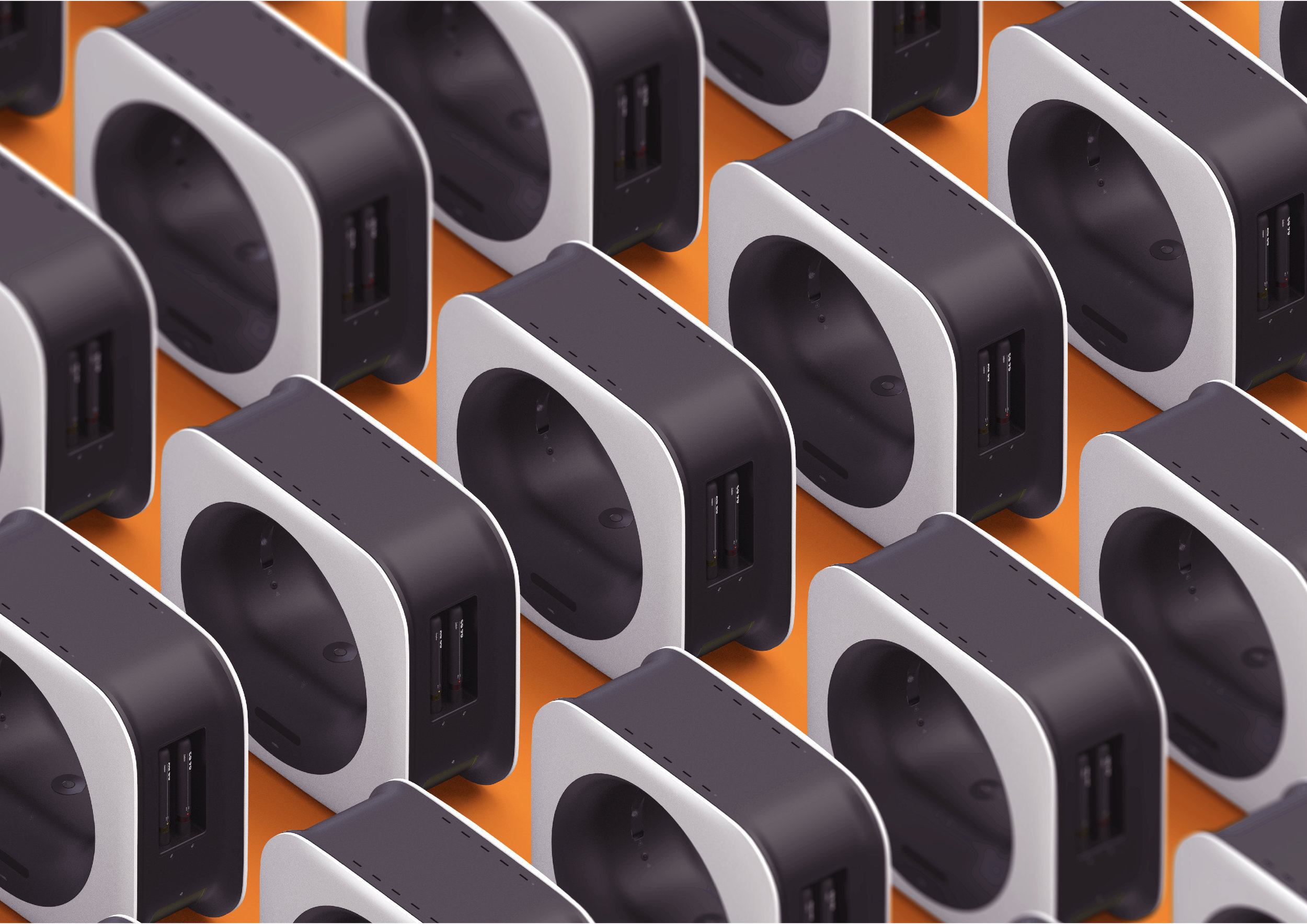
Figure: Concept render showing a biomA nano factory stack.
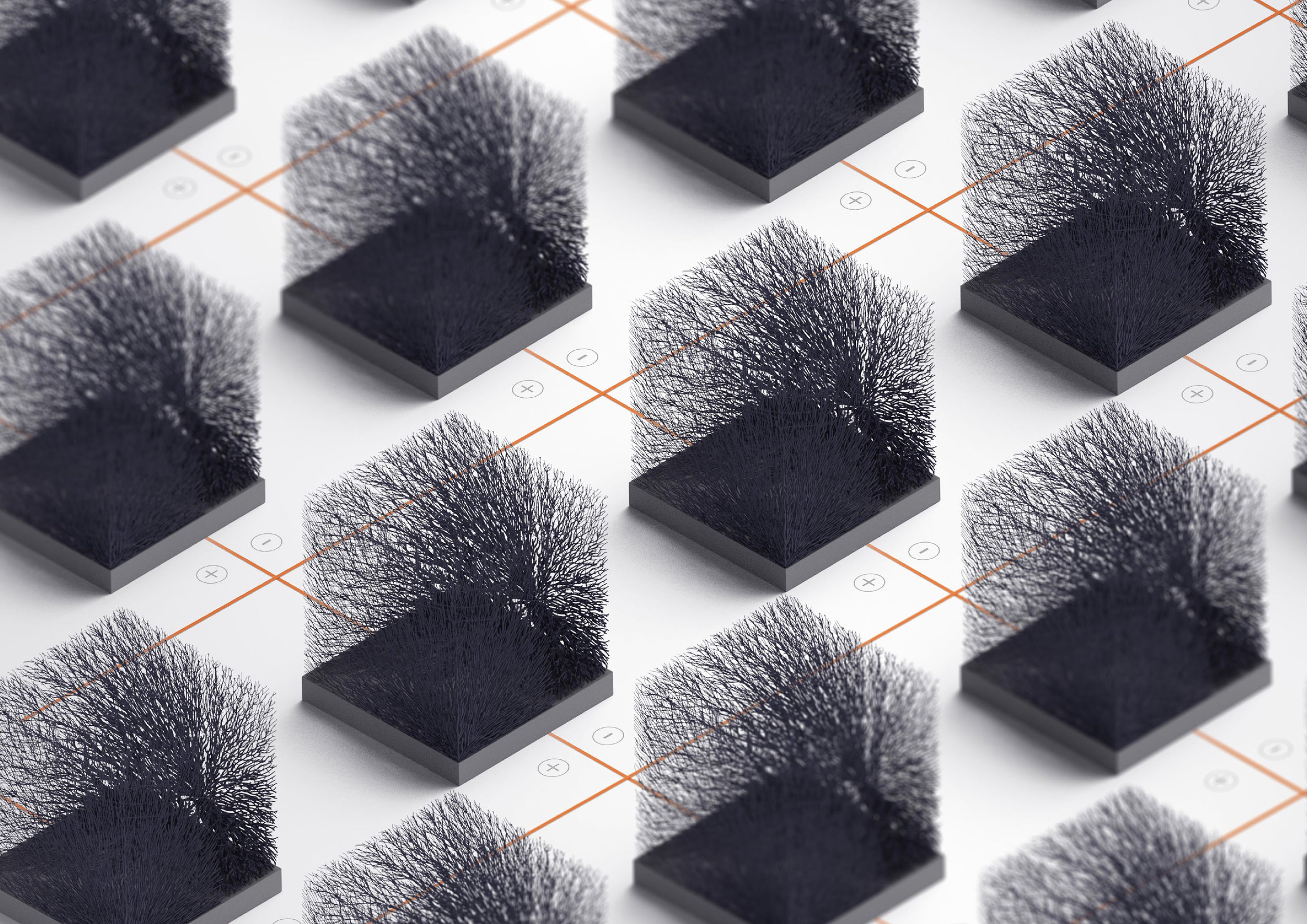
Figure: Concept render showing organic battery anode-cathode junction waiting for their electrolyte bath.
Concept Explorations
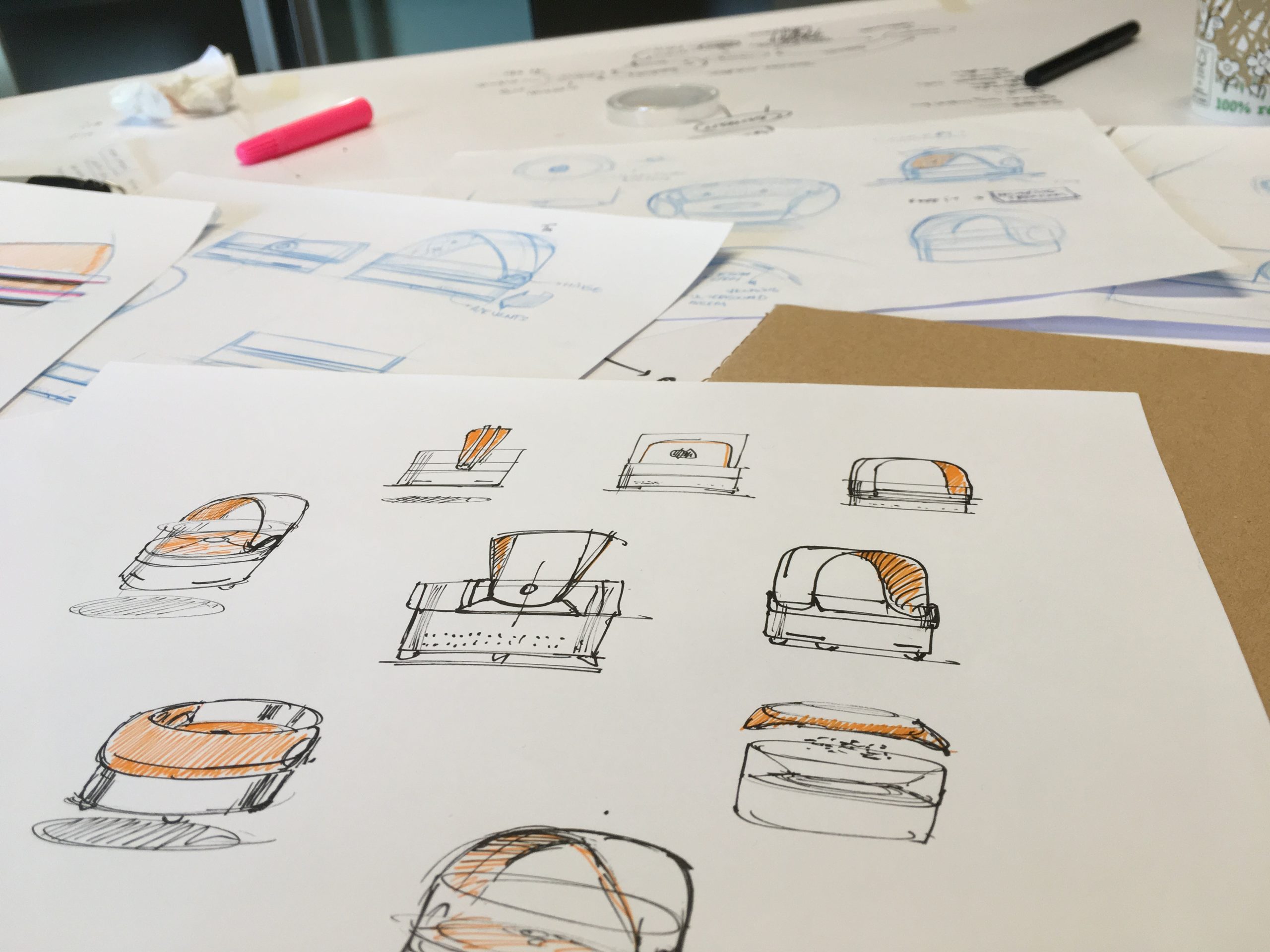
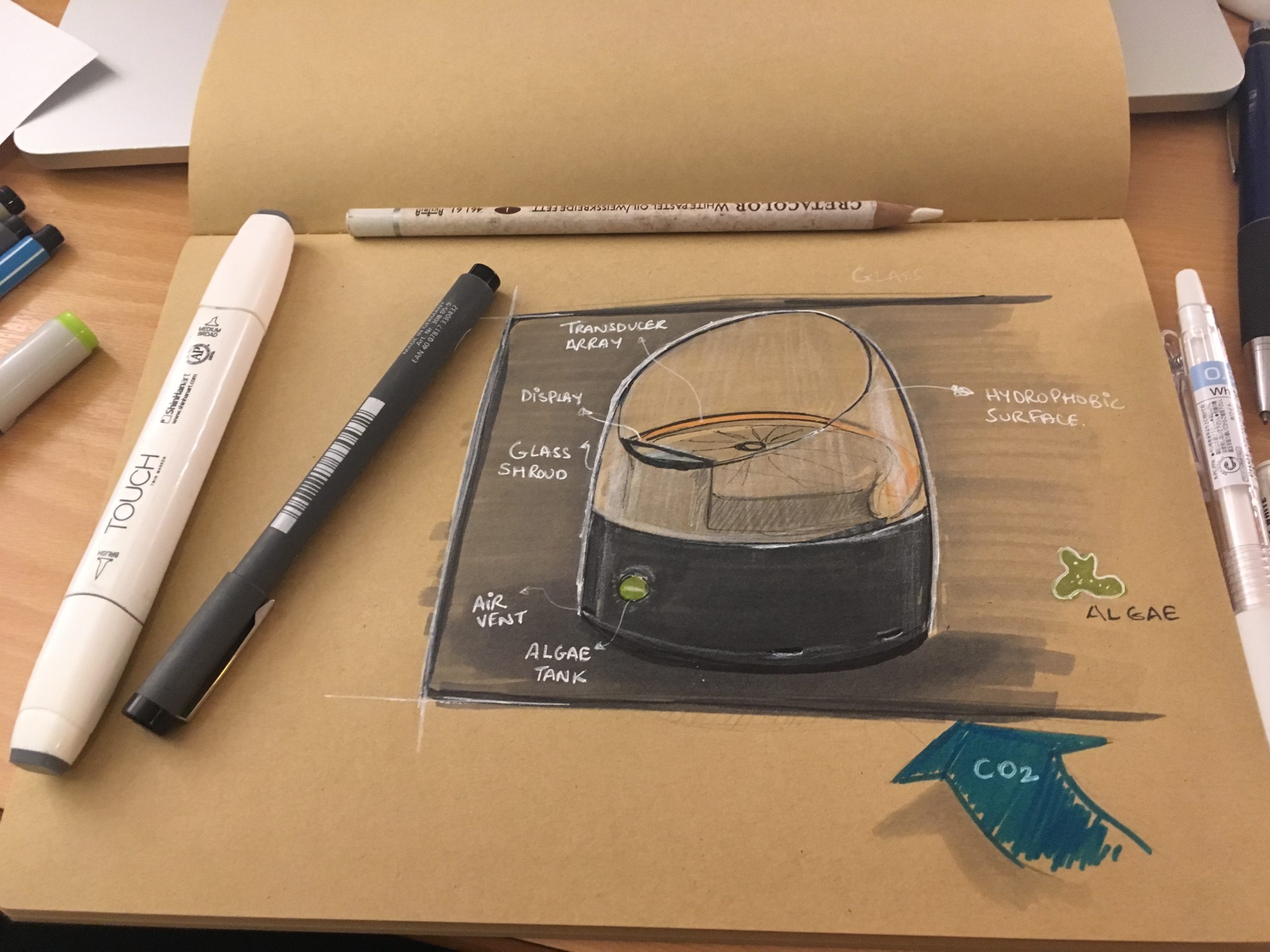
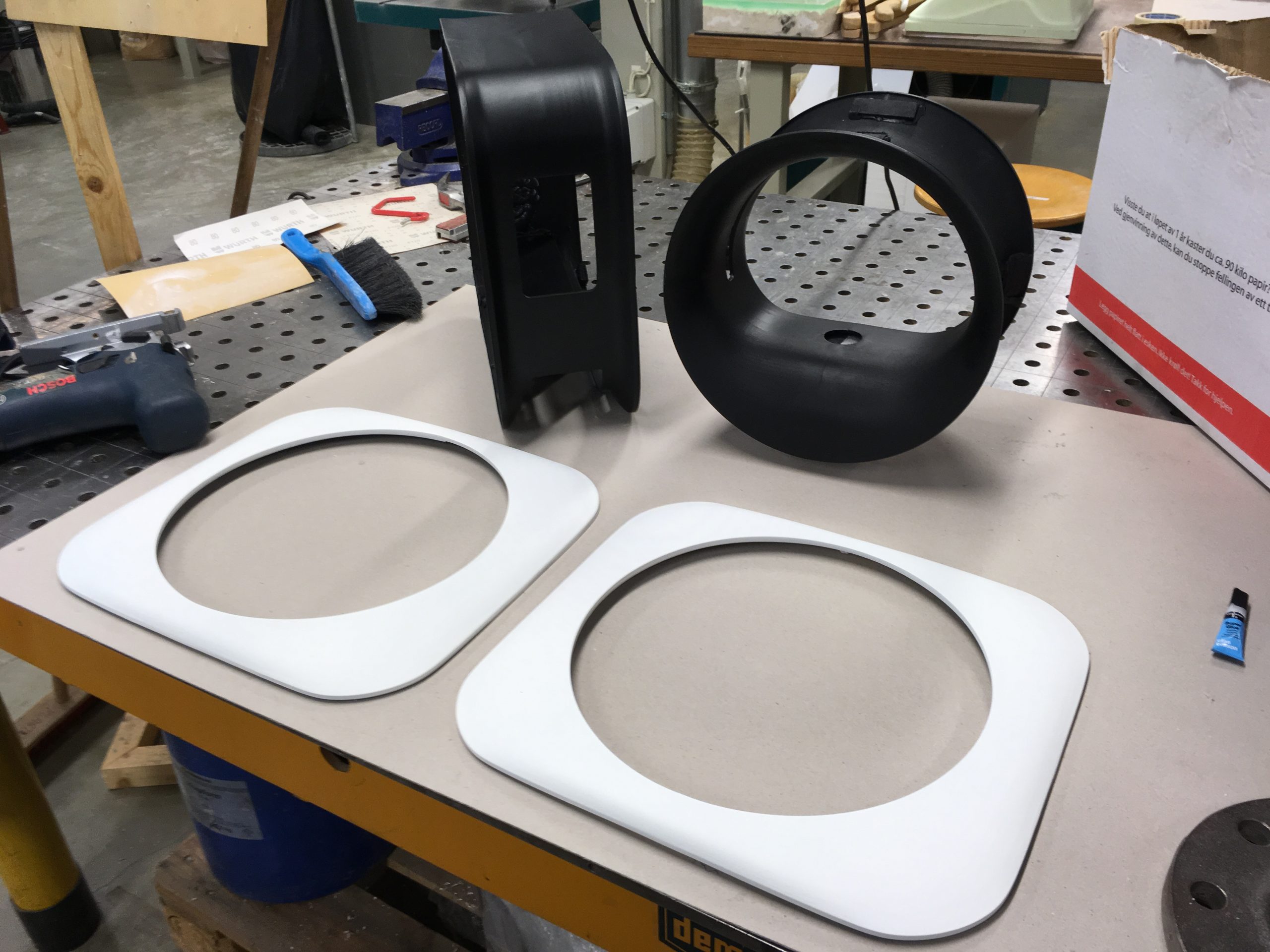
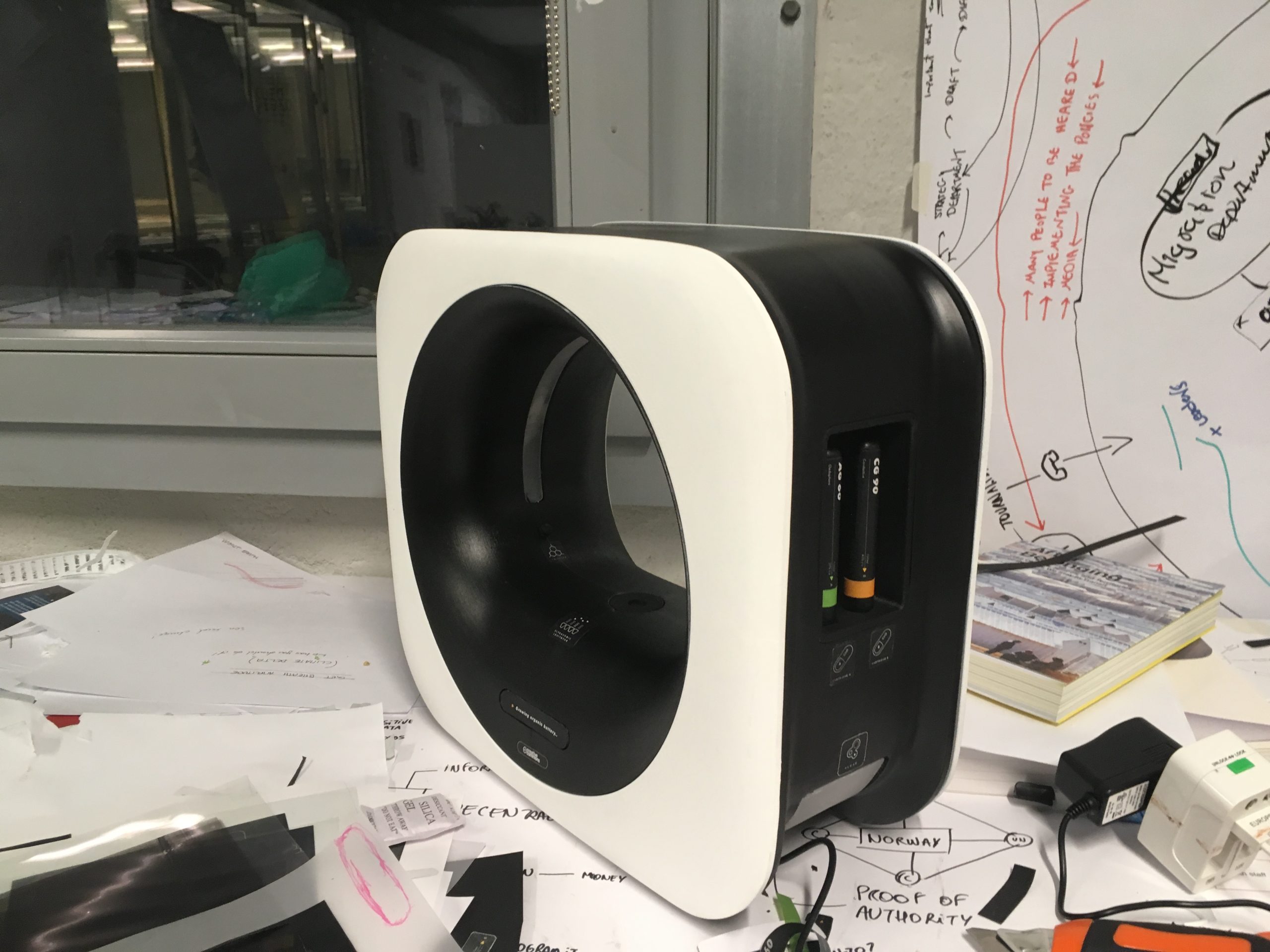
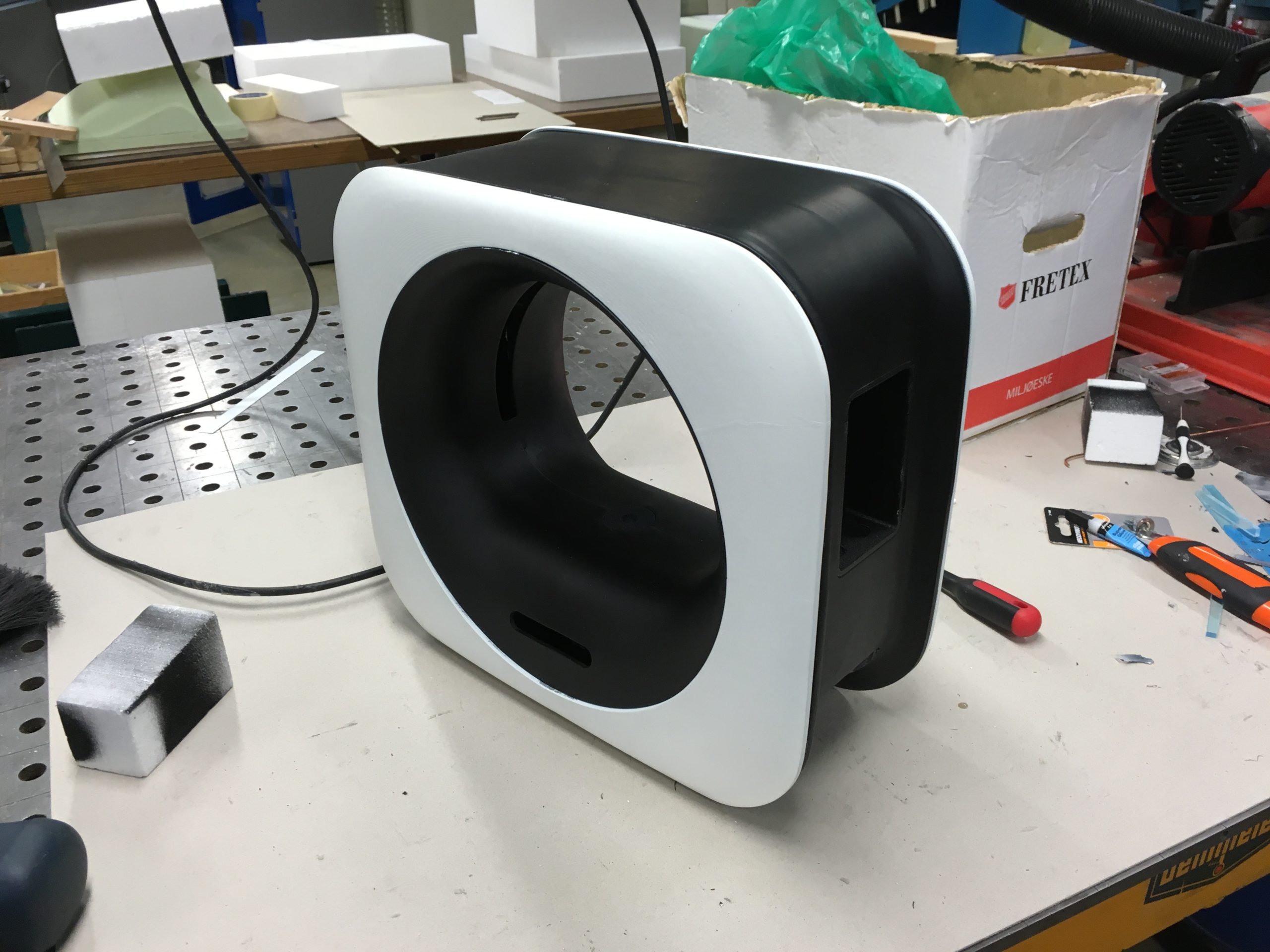
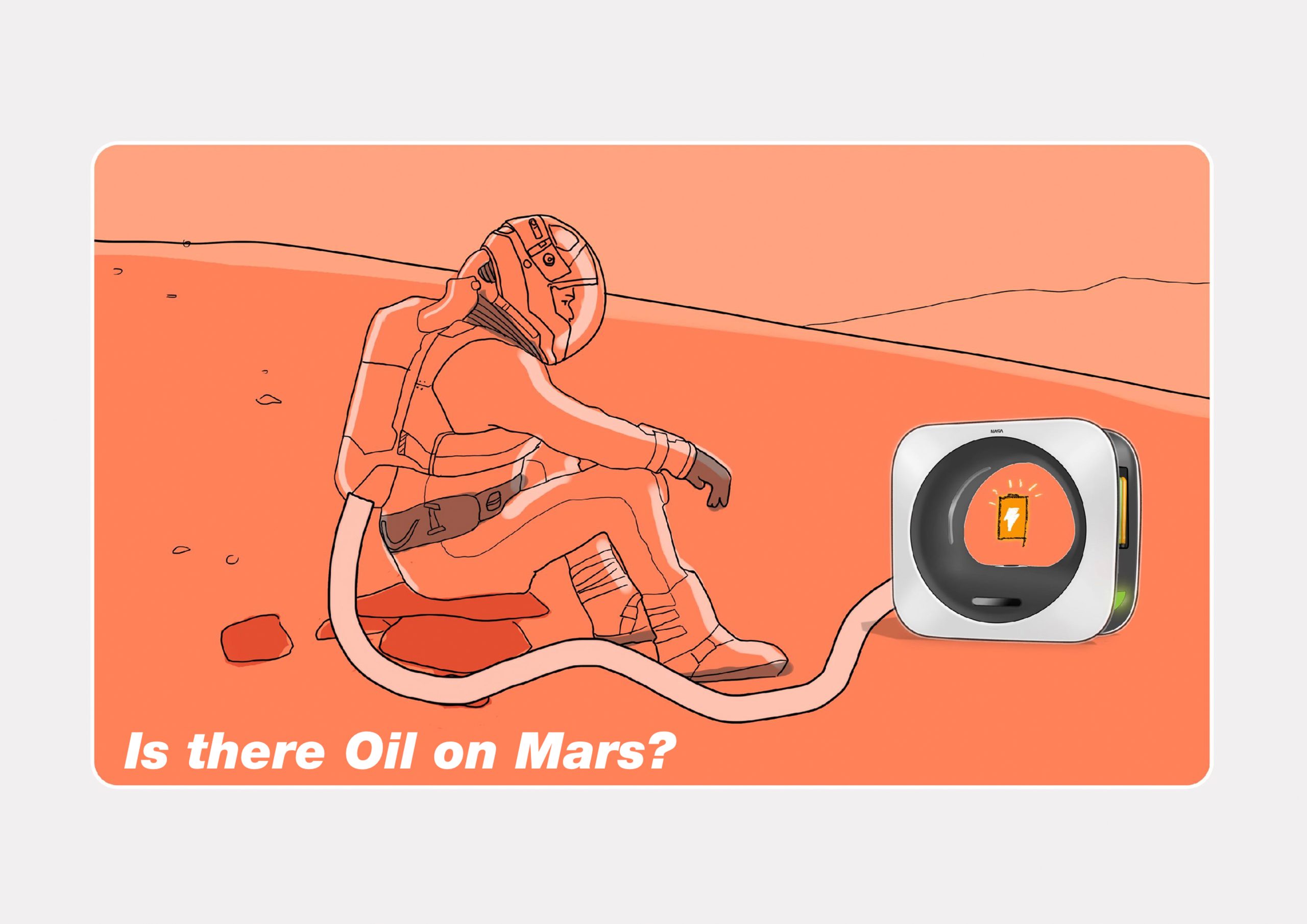
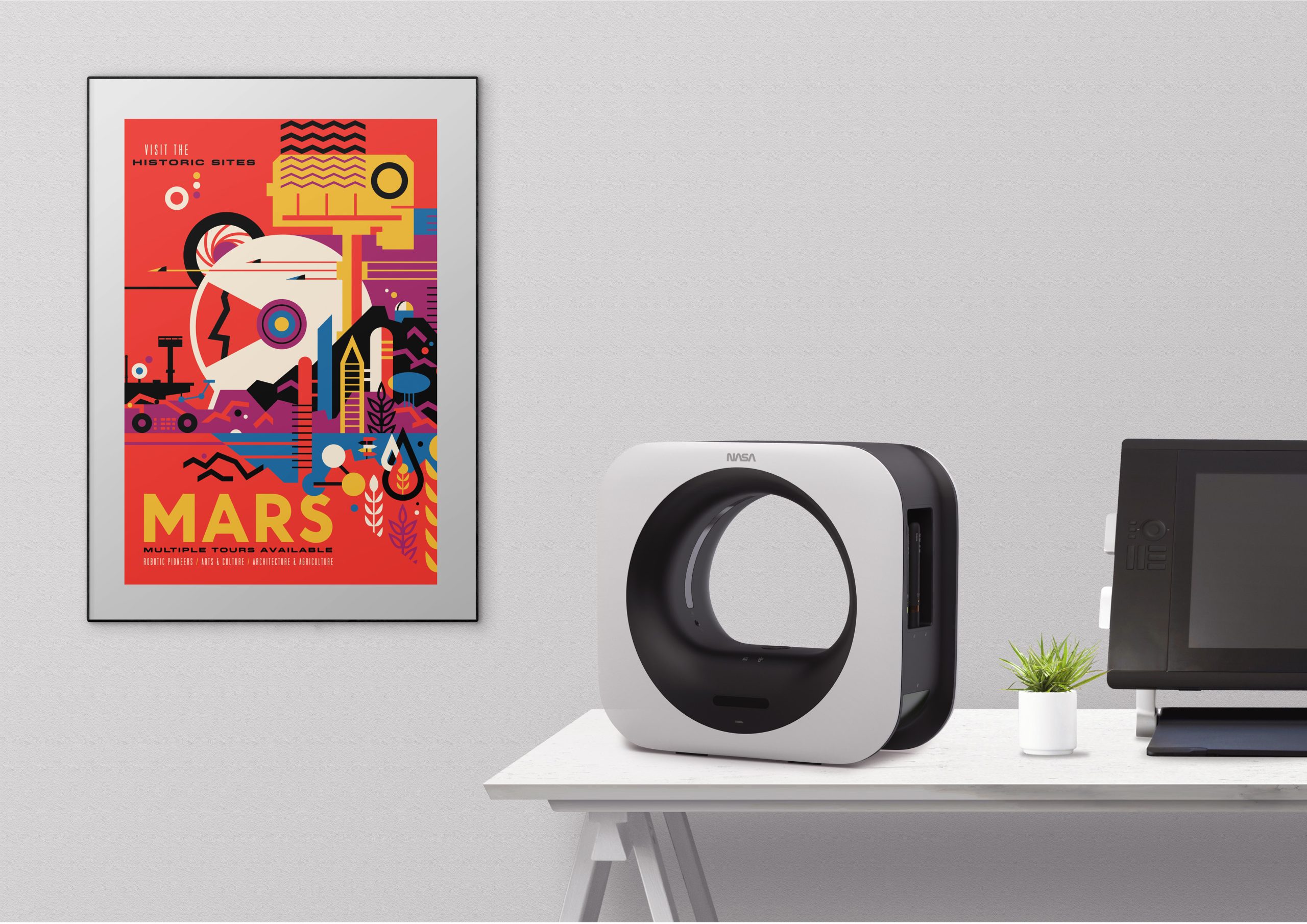
The story of biomA has gone through many explorations that began with misinterpretation on an international field trip to Hunan, China, through conversation with my sketchook, in CAD models, over messy prototyping challenges in the workshop, and flying out all the way to China winning design awards. It is a story that is continuing, as I am exploring ways to making this future real.

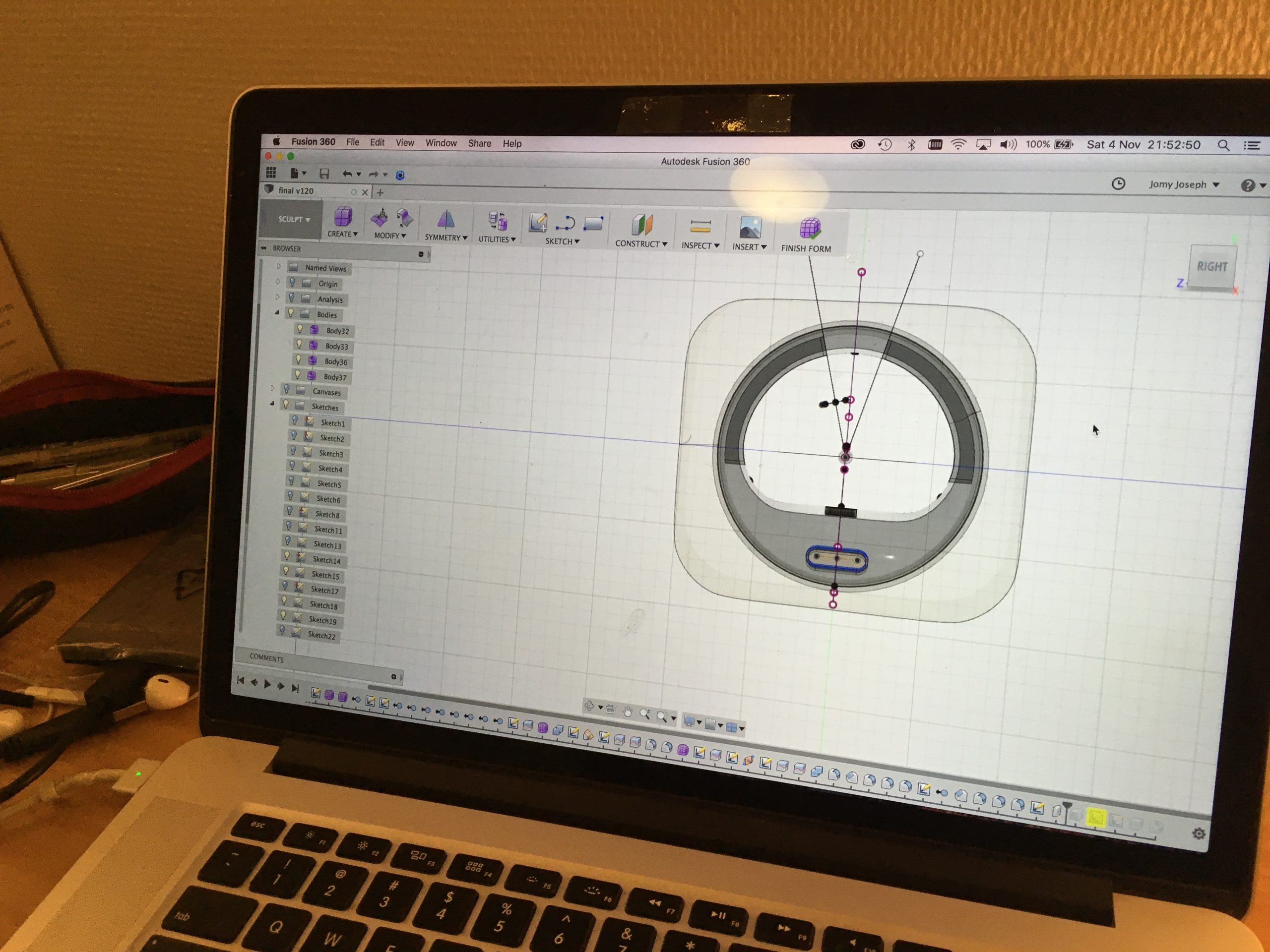
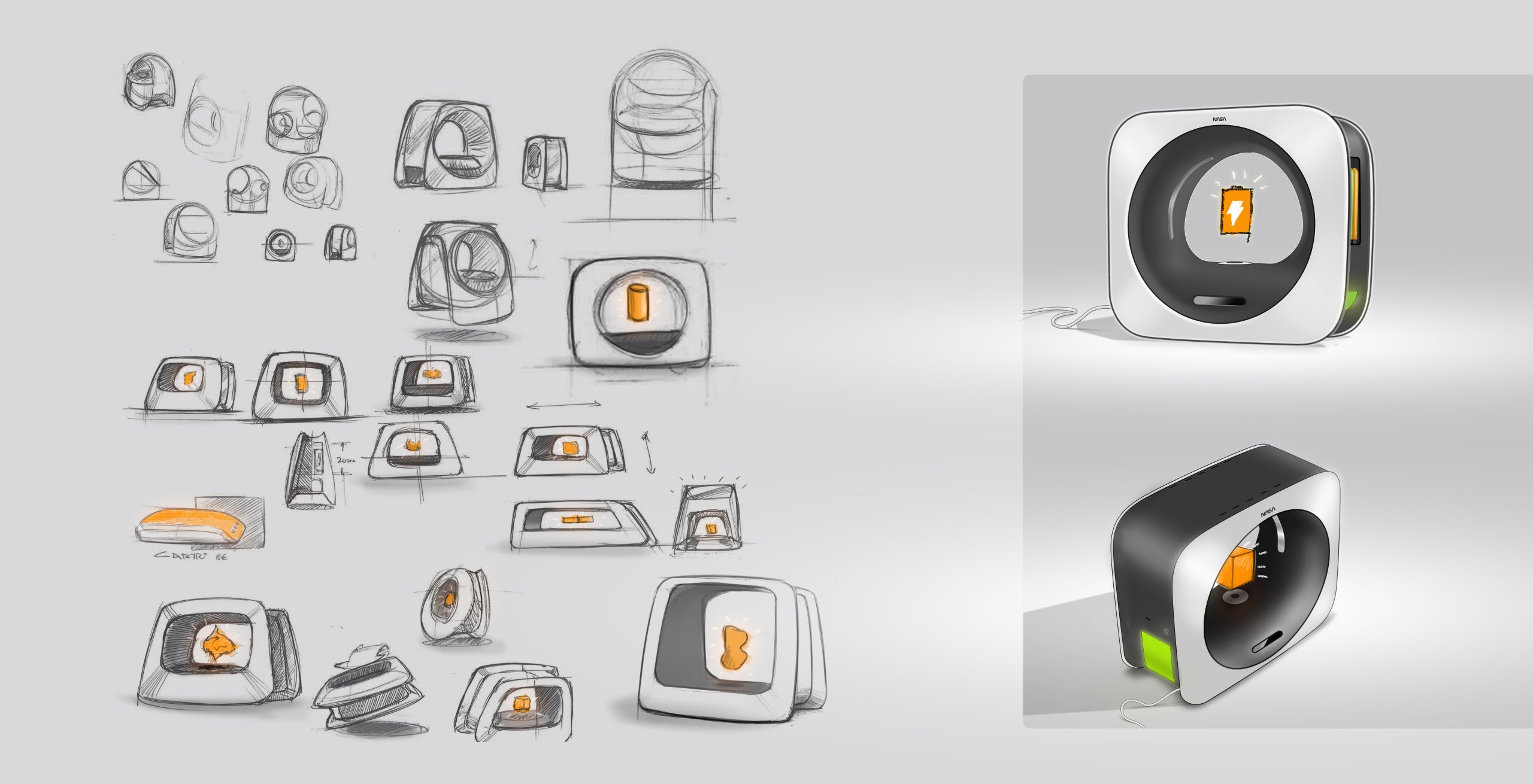
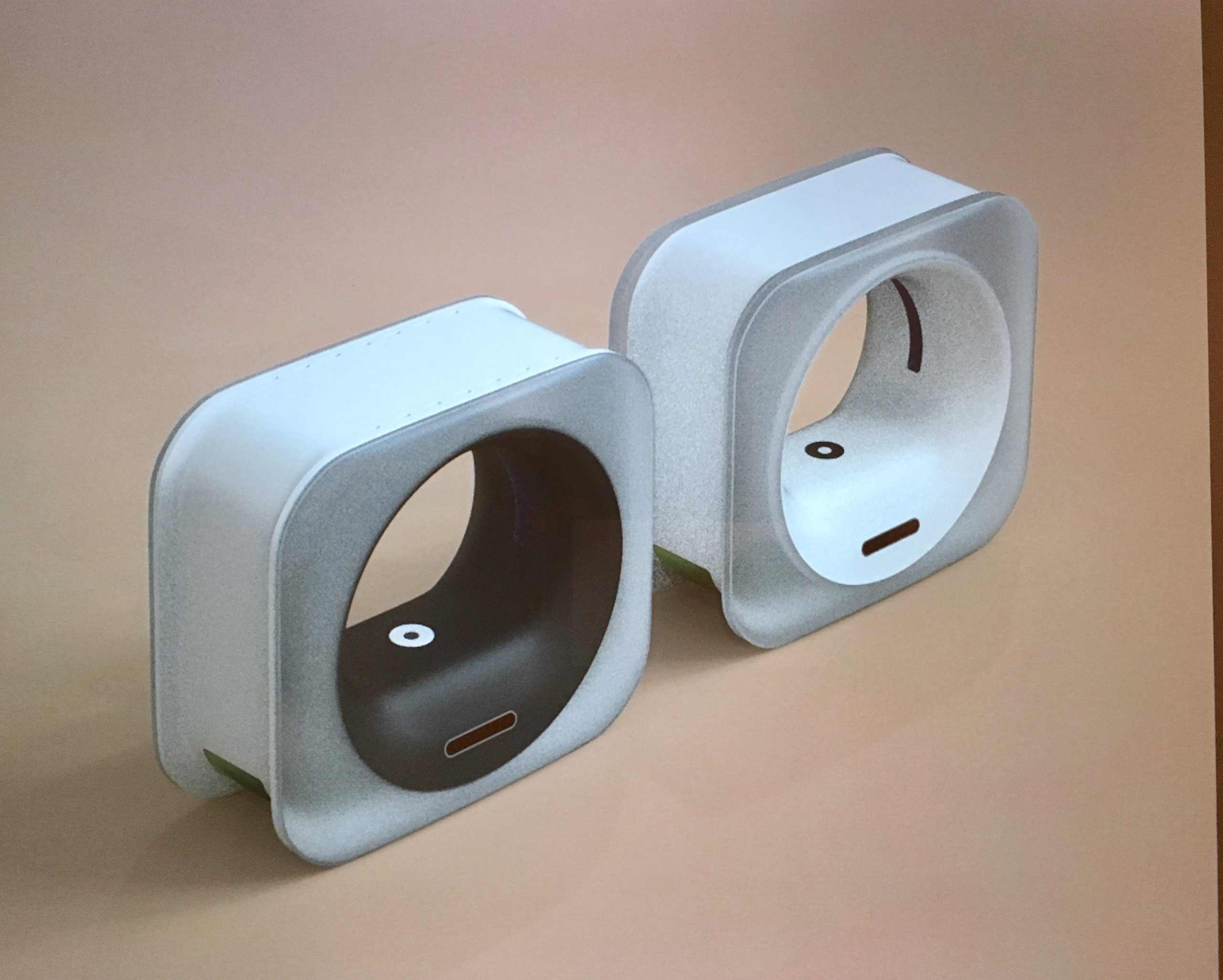
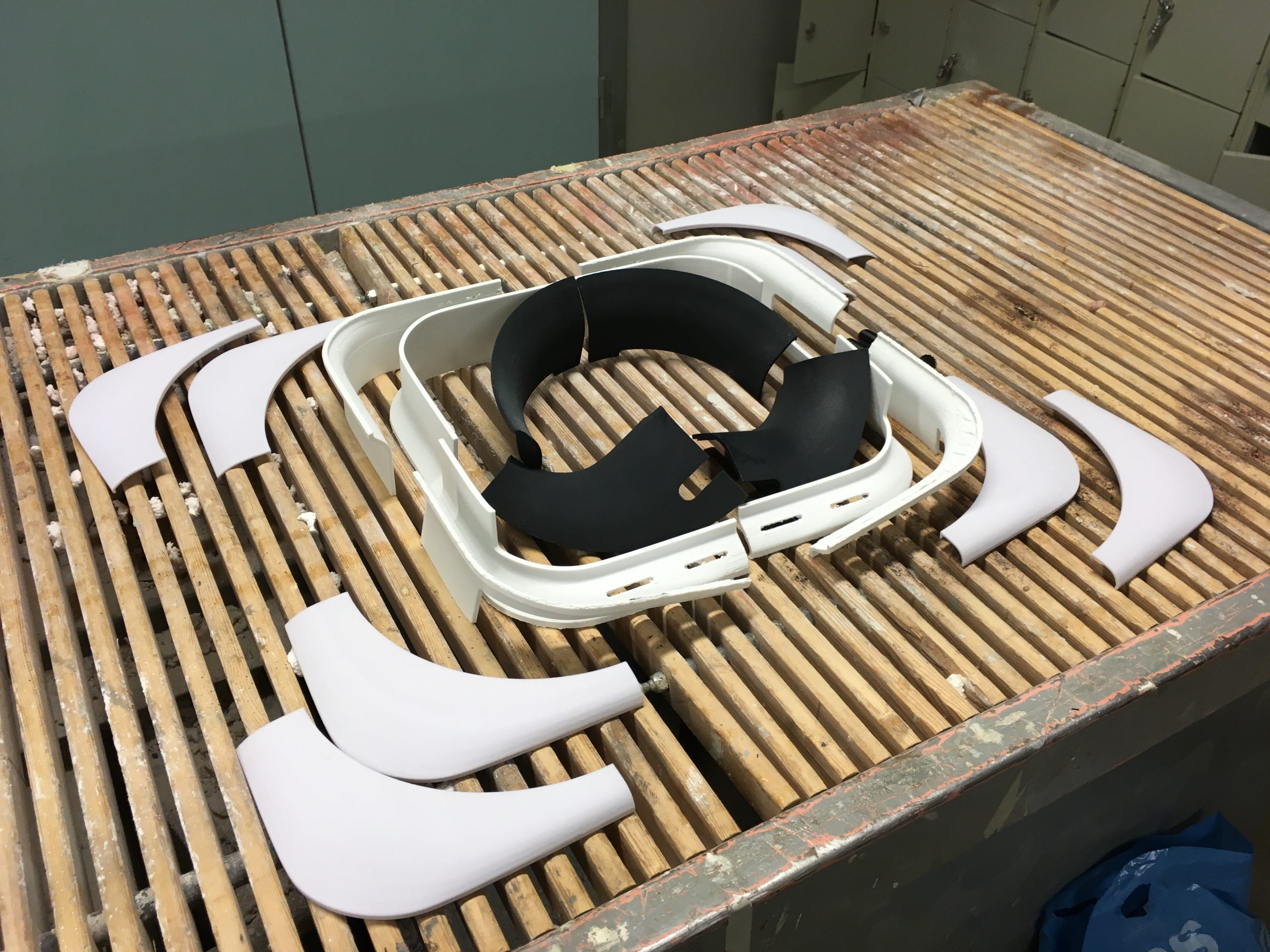
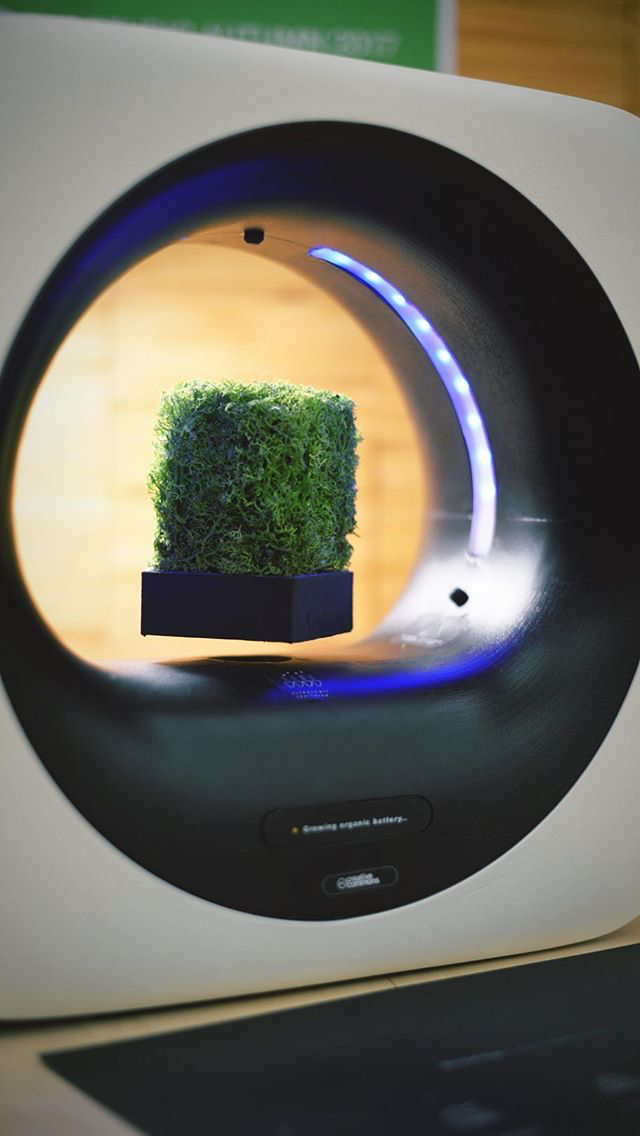
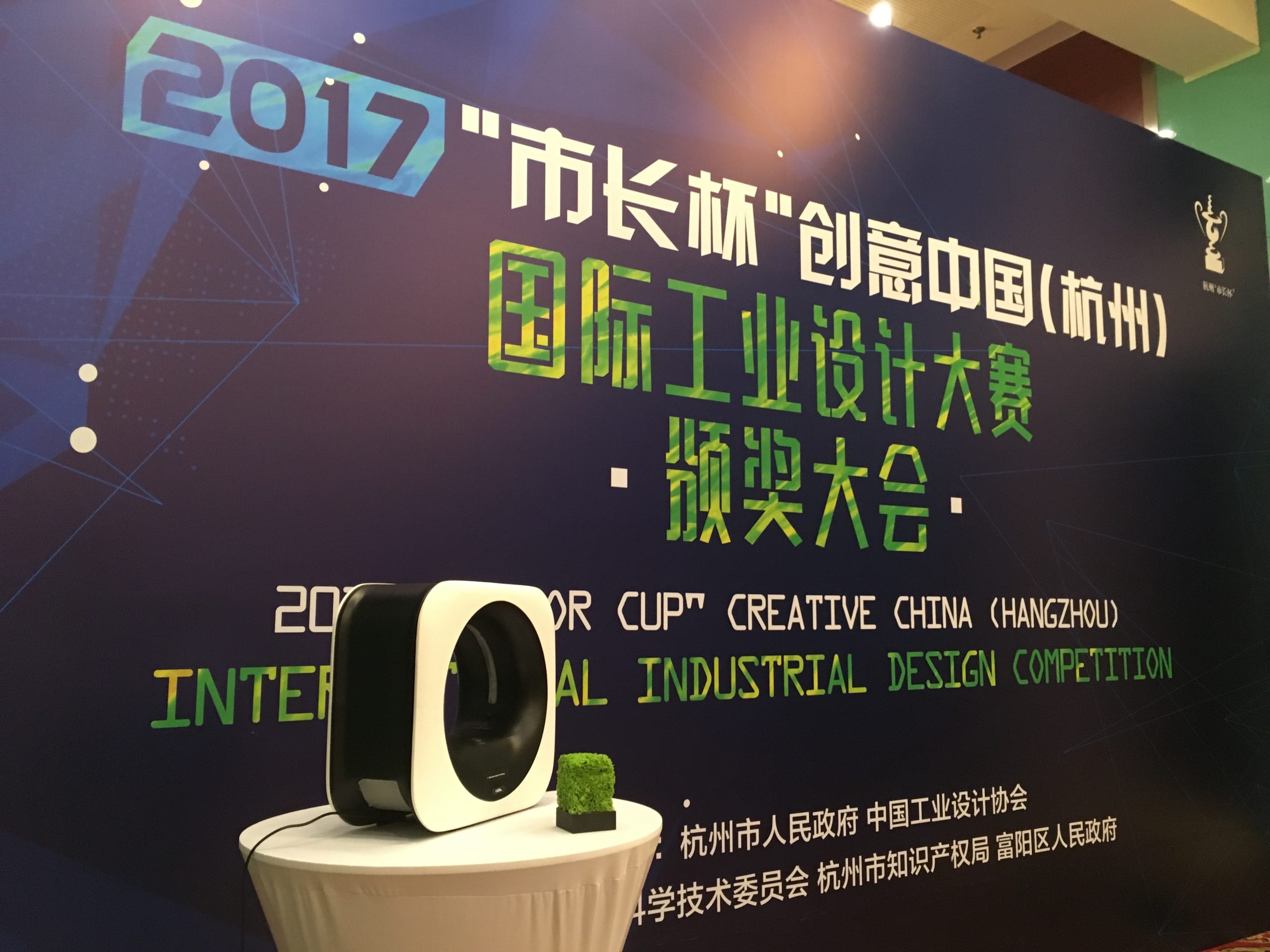
So in the age of fossil-fueled climate breakdown, what choices are we really left with?
Other Projects
Walezi Wa Msitudesign research
S-NodesSpeculative Industrial Design
Kalo Probalresearch product
Biomineralzerresearch product

iPod ProSpeculative Industrial Design
E-scooter DashboardProject type

Fluxfurniture design
nuoMobility
ketoIndustrial Design
Firefly Seeders (螢火蟲)research product
SymFabsresearch product
OrjaSpeculative Industrial Design
SynesthesiaAdditive Manufacturing